🇵🇹 Portugal — a month, or longer, in two different legal shapes
A month in Portugal can mean two very different things, and this page keeps them separate from the first paragraph. The first is a touring month inside the Schengen visa-free allowance — you are a visitor, the calendar is the 90/180 rule, and no national visa is involved. The second is a residence-shaped stay built on a national visa — most often the remote-work route commonly called D8 — where you apply before you travel, prove income to a consulate, and, on the residence track, convert the visa into a residence permit with AIMA after arrival. Confusing the two is the single most common planning error for Portugal, so the comparison comes first and the cities come after it.
How we make money: some buttons on this page are affiliate links. If you book through them, we may earn a commission — your price stays exactly the same. Providers with no affiliate program are included anyway and labelled "Official site", because a comparison that only lists partners isn't a comparison. Prices and terms change often: always check the final price and conditions on the booking site before you pay.
How we compare: no star ratings and no paid rankings — placement is never for sale. Every legal and cost claim below was checked against Portuguese government, consular, AIMA and INE official pages in November 2026; where a figure rests on cross-checked sources rather than a single official page we could open directly, the page says so in a footnote rather than presenting it as settled.
⚠️ The warning that belongs at the top:visa-free stay is not a remote-work permit. The Schengen 90/180 allowance and the EU visa-waiver list govern visiting — short stays for tourism and similar purposes. They are not, by themselves, permission to work, including working remotely for an employer or clients abroad. Portugal's national-visa system is precisely the route that names remote work as its purpose. Which side of that line your own situation falls on is a legal question for the official pages and, where it matters, a licensed immigration professional — this page explains the structures, it does not decide your case.
1 · The overview — two ways to stay a month or more
Path one — the Schengen visa-free month. Portugal is in the Schengen area. For US and South Korean passport holders (both listed in Annex II of EU Regulation 2018/1806), a short stay needs no visa: up to 90 days in any 180-day period, counted across the whole Schengen area combined, not per country. A single month of touring, visiting and slow travel fits comfortably inside that allowance — with days to spare in the same window. Path two — the D8 residence-shaped track. If the point of the stay is to live in Portugal while working remotely for an employer or clients outside Portugal, or to stay beyond what the short-stay allowance holds, the structure changes completely: a national visa applied for at a Portuguese consulate in your country of residence, income evidence, insurance evidence, and — on the residence track — a second step with AIMA after arrival. The table below is the whole page in miniature.
2 · The four stay routes, side by side
Route
Who it is for
How long
Can you work?
Where you apply
Schengen visa-free month
Visitors on US or Korean passports touring, visiting, or testing a place for a month
Up to 90 days in any 180-day period, Schengen-wide combined
No — this is a visiting allowance, not work permission (see the warning above)
No application — you travel on the passport; the allowance is counted at the border and, since April 2026, recorded by the EES system (section 5)
D8 temporary-stay track
Remote workers whose employer or clients are outside Portugal, planning under a year
Under 1 year; the visa itself covers the stay and allows multiple entries
Yes — remote professional activity is the stated purpose of this visa category
Portuguese consulate in your country of residence (filing may be handled by a designated filing centre such as VFS Global; the consulate decides)
D8 residence track
Remote workers settling for longer than a year, building a life in Portugal
The visa is valid 4 months with 2 entries; within it you must apply to AIMA for a residence permit — the permit structure is 2 years, then renewals of 3 years*
Yes — remote professional activity is the stated purpose of this visa category
Step 1: Portuguese consulate in your country of residence. Step 2: AIMA, after arrival in Portugal
D7 — retirement / own income
People living from their own income — pensions, rentals, investments and similar passive income — rather than from active work
Same skeleton as the residence track: a 4-month, 2-entry visa, then an AIMA residence permit application
It is built for living from passive income, not for an active remote job — the evidence is income-source documents, not an employment contract
* Honesty note on the permit lengths: the 4-month, 2-entry shape of the residence visa and the duty to apply to AIMA within it are stated on the Foreign Ministry (MNE) visa portal. The 2-year initial permit and 3-year renewal lengths rest on multiple sources citing AIMA's remote-work permit guidance, cross-checked against each other — the research behind this page could not open the AIMA original page directly, so treat those two numbers as cross-checked, not as read off a single official page, and confirm them on AIMA's site when you apply. Renewal is subject to meeting the requirements at the time — it is not automatic. The letter codes themselves also need a footnote: "D8" is the common name for the remote-work residence visa, but some consular checklists label the same purpose D9. Apply by the purpose wording — "exercise of a professional activity done remotely" — on your own consulate's checklist, not by the letter alone (see the FAQ).
3 · By passport — the short-stay structure is the same
At the short-stay level there is no US-versus-Korea difference to shop for: both passports sit in the same Annex II visa-waiver list and the same 90/180 Schengen-wide maths applies to both. The one Korea-specific layer that exists is handled in the footnote — honestly, which means without adding its days to anything.
Passport
Short stay in Portugal
Counting unit
Longer / working stays
United States
Visa-free, 90 days in any 180-day period
All Schengen countries combined
National visa (D8 / D7 routes above) via a Portuguese consulate in the US; filings are commonly handled through designated VFS Global centres, and the consulate decides
South Korea
Visa-free, 90 days in any 180-day period
All Schengen countries combined
National visa via the Embassy of Portugal in Seoul — confirm the current filing channel with the embassy directly, as this page's research could not confirm a filing-centre arrangement for Seoul from an official page
Korea–Portugal bilateral note, stated exactly as far as the evidence goes: a bilateral visa-waiver agreement between South Korea and Portugal — in force since September 1979, 60 days, ordinary passports — does appear in the European Commission's published list of member-state bilateral agreements (2019/C 130/07). What that list does not establish is how the bilateral days interact with the Schengen 90/180 count in current practice. So this page does not add them together, and neither should you: do not plan on any "90 + 60" arithmetic. If the bilateral layer matters to your trip, it is a point to confirm directly with official Korean and Portuguese sources before departure — it is listed here as an existence, not as usable extra days.
4 · Four bases — what each place is structurally like
Climate figures are IPMA 1991–2020 normals; rent figures are INE new-contract medians per square metre (the full method, and why there are two different rent numbers, is in section 6). No rankings here — each base trades a different set of things.
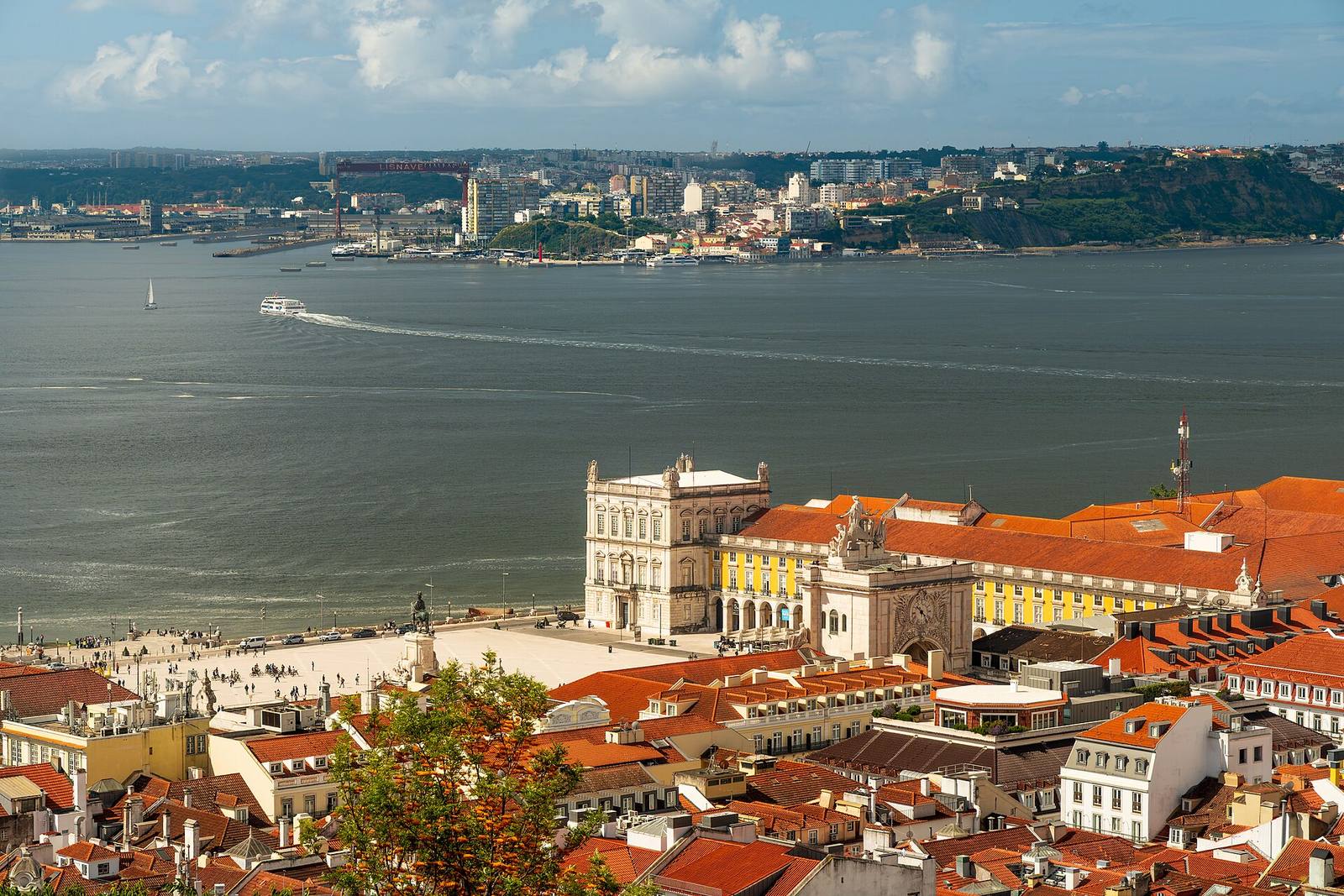
Lisbon (Lisboa) The capital · the fullest infrastructure
Pros
The deepest infrastructure of the four: the country's main international gateway, the densest supply of services, healthcare and work spaces, and the administrative offices a residence-track stay eventually touches
Mild, dry summers by Portuguese standards: IPMA normals put the August average high around 28.8°C, with annual rainfall of 794mm concentrated in the winter season
A single monthly pass covers the city: Navegante Municipal €30/month, or €40 for the metropolitan version (2026 official fare tables — section 7)
Cons
The country's most expensive housing, by both measures this page uses: INE new-contract median €17.42/m² (city, Q1 2026) and an Idealista asking median of €25.1/m² (September 2026) — the gap itself is explained in section 6
Winter is the wet season: the same 794mm that leaves summer dry arrives largely between late autumn and early spring
Best for: a first Portugal base, and residence-track stays where consulates, AIMA appointments and international connections are part of the month — accepting the highest housing costs in the country as the price of the fewest frictions.
Porto The northern second city
Pros
A step down in housing from Lisbon on the concluded-contract measure: INE 12-month new-contract median €14.48/m² for the city (to June 2026), against Lisbon's €17.43 over the same span
Cooler summers: IPMA normals give an August average high around 24.8°C
Its own integrated monthly pass at the same price points as Lisbon's: Andante €30/month (3 zones / municipal) or €40 metropolitan (STCP official — section 7)
Cons
The wettest of the four bases, clearly: 1,147mm of rain a year on IPMA normals, over roughly 105 days — a winter month in Porto is a rainy month, and that is a real variable for a one-month stay
Cooler also means cooler: annual mean 15.3°C against Lisbon's 17.6°C
Best for: a smaller-city month with housing a step below Lisbon and a genuinely cool summer — chosen with eyes open about northern winter rain.
The Algarve Faro · Lagos · the southern coast — a region, not a city
Pros
The driest, warmest mainland climate of the four: Faro's IPMA normals show an annual mean of 18.2°C and only 455mm of rain over about 49 days — the strongest winter-weather case on the mainland
Rent medians sit below the two big cities at regional level: INE Q1 2026 median €10.71/m² for the region
Cons
It is a scatter of small and mid-sized coastal towns — Faro (the regional capital and airport), Lagos, Albufeira and others — not one city with one centre; popular towns price above the regional figure (Lagos alone: €12.77/m² on INE's 12-month measure)
Strong seasonality is structural here: supply and prices move with the summer season in a way the annual medians smooth over, and this page has no official source for a seasonal price figure — so none is quoted
This page does not publish a monthly total for the Algarve: the non-rent cost cross-checks available for Lisbon and Porto do not exist at the same quality here, so only the €/m² structure above is stated (section 6 explains the rule)
Best for: a winter or shoulder-season month where weather is the priority and a small coastal town — chosen town by town — is the point, rather than city infrastructure.
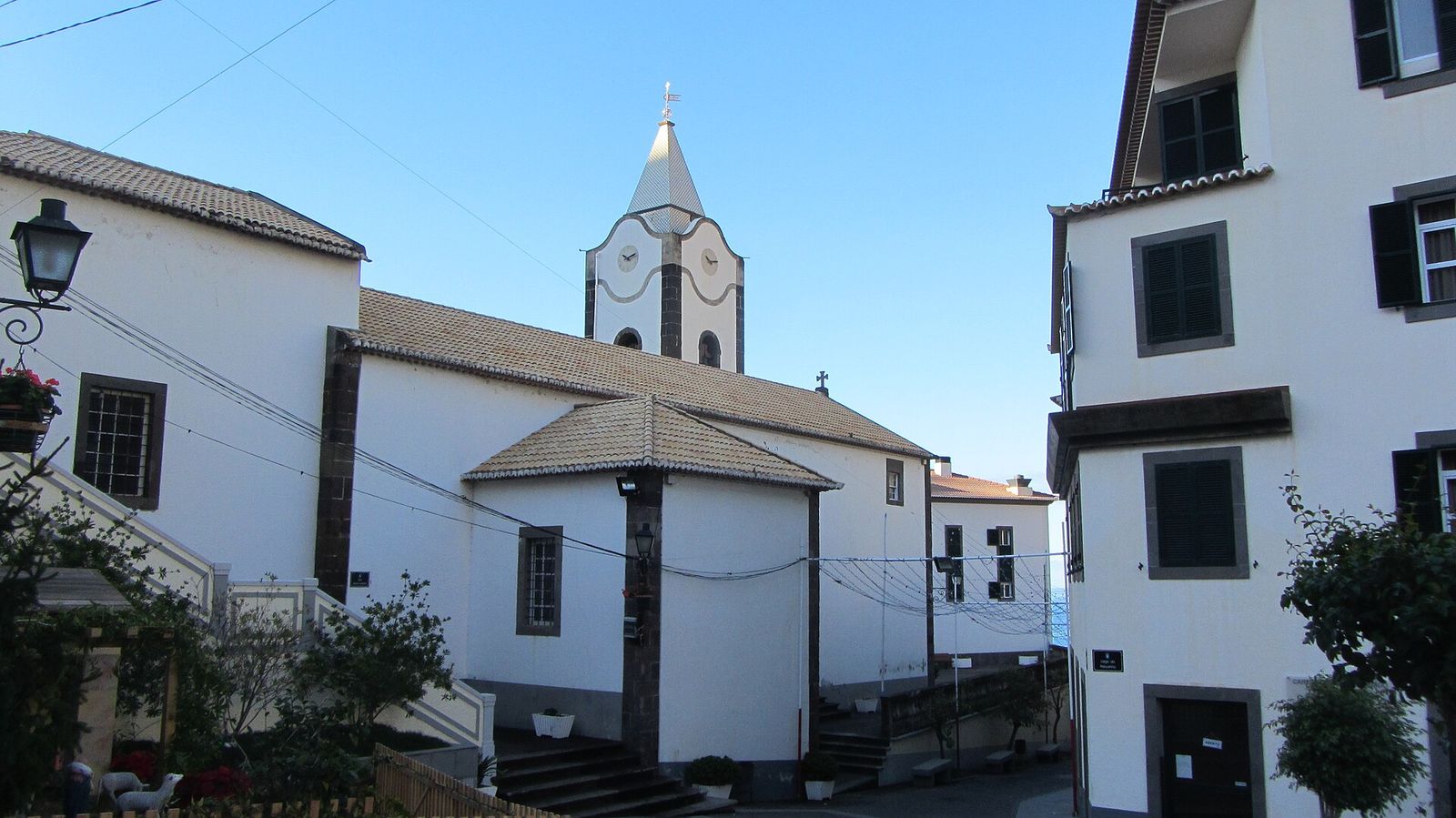
Madeira — Funchal & the Nomad Village Atlantic island · regional-government project
Pros
The warmest, steadiest climate of the four: Funchal's IPMA normals show an annual mean of 20.0°C with a small annual range; rainfall (574mm) concentrates in winter
A real, official remote-work welcome structure: Digital Nomads Madeira Islands, run by Startup Madeira (an agency of the Madeira regional government) since February 2021. Its official site lists what registration offers: community channels, a free working space at Ponta do Sol, lists of private work spaces and local accommodation, events and local-community connections
Cons
Keep the geography straight: daily life, services and the airport centre on Funchal, the capital — the Nomad Village itself is in Ponta do Sol, a smaller town west of Funchal (the project also names Machico and Santa Cruz as community points). The village is a project within the island, not the island's capital
Rent medians are not the bargain the island image suggests: INE Q1 2026 regional median €11.97/m² — second only to Lisbon among these four regions — and, as with the Algarve, this page publishes no monthly total for Madeira, only the €/m² structure
Programme details (registration steps, working-space conditions) change: the official site is the place to re-confirm them when you actually register
Best for: a mild-climate island month with an organised welcome structure around it — based in Funchal for services, with Ponta do Sol as the project's home ground.
5 · The judgement layer — the maths of stay permission
How 90/180 actually counts. There is no half-year that resets. On each day you are in Schengen, look back at the previous 180 days and count your days present: the total must never exceed 90. Entry day and exit day both count as full days, and the count is Schengen-wide — 30 days in Portugal plus 30 in Spain plus 30 in Italy is 90 used, not 90 per country. Spend all 90, and new days only open up as old days roll out of the 180-day window, one by one. The European Commission publishes an official short-stay calculator (Check and Planning modes) — use it with your real dates rather than estimating. Time spent in Portugal under a residence permit or a long-stay (D-type) national visa is not entered into the 90/180 count: long stays sit outside this rule, which is exactly the structural difference between path one and path two.
EES — the counting is now automatic. The EU's Entry/Exit System records non-EU short-stay travellers at the external border — passport data, fingerprints, a facial image, and entry and exit dates — and, per the European Commission, it became fully operational on 10 April 2026, replacing passport stamps and automatically identifying overstays. In plain terms: the rolling window is no longer something you reconstruct from stamps; it is a record the system keeps. Planning a stay that only works if nobody counts carefully is planning on a system that no longer exists.
When D8 stops being optional. The research behind this page divides it by pattern, not by country — a one-off month is a short-stay question; these patterns are not:
You want to stay in one place beyond 90 days — four months in Lisbon, six in Athens-style slow settling. The visa-free allowance cannot hold it, in any rolling window. A national long-stay route is the structure built for this.
Your months repeat until they add up past 90 in a window — a month every quarter is roughly 120 days a year, which crosses the allowance even though each single trip looks modest. Repetition is a long-stay pattern wearing short-stay clothes.
You need the work itself to have a legal basis — the allowance covers visiting; the remote-work visa categories exist to name remote work for a foreign employer or clients as an authorised purpose. If that distinction matters to your employer, your contract or your conscience, it is the national-visa track that answers it.
You need resident-side administration — a long-term lease in your own name, local registrations and the paperwork that attaches to a residence permit. Those attach to path two, not to a visitor's month.
ETIAS, stated at its real certainty level. ETIAS is a planned pre-travel authorisation for visa-free travellers — not a visa. EU sources through early 2026 described it as forthcoming with the exact start still to be confirmed, and this page's research did not establish a live, current status from the EU's official portal. So: do not treat ETIAS as something you can state as currently required, and do not treat it as cancelled either. Check its status on the EU's official travel pages shortly before any trip — that check, close to departure, is the honest procedure.
6 · Practical layer ① — what a month costs, shown with its workings
This section refuses the usual single number, and shows you why. Portugal has two very different official-grade rent figures, and the gap between them is the most useful cost information on this page:
Measure
Lisbon (city)
Porto (city)
What it actually measures
INE — new rental contracts, median €/m²/month
€17.42 (Q1 2026)
€14.48 (12 months to June 2026)
Rents actually signed, from tax-authority contract records — the whole new-contract market, including ordinary residential streets
Idealista — asking-price index, median €/m²/month
€25.1 (Sept 2026)
€19.0 (Sept 2026)
Rents advertised on the country's main portal — weighted toward new listings, central areas and furnished or premium stock
Neither figure is "the rent". A 50m² flat multiplied out at the INE median is about €871/month in Lisbon and about €724 in Porto; at asking medians, about €1,255 and €950. A real search lives somewhere in that corridor, and where depends on neighbourhood, furnishing and lease type. Adding non-rent essentials — food at local household levels, a monthly transport pass, utilities — the research behind this page arrives at these one-person monthly ranges, on a long-term-lease cost basis:
Base
One person, per month
Basis
Lisbon
€1,400 – €1,900
50m² rent corridor above (≈€870 concluded-median to ≈€1,255 asking) plus roughly €500–650 of non-rent essentials
Porto
€1,150 – €1,550
50m² rent corridor above (≈€724 to ≈€950) plus roughly €450–600 of non-rent essentials
Algarve · Madeira
No total published
€/m² structure only (€10.71 and €11.97 regional INE medians, Q1 2026): the non-rent cross-checks behind the two totals above do not exist at the same quality for these regions, so no total is invented
The limits, on the record: these ranges are arithmetic built on long-term lease prices. The product a one-month stay actually buys — a furnished, monthly, mid-term rental — is a different product, and it is structurally more expensive than the long-term figures: landlords price in furnishing, flexibility and vacancy risk. There is no official statistic for that mid-term premium, so this page names the direction (above the ranges, often above their top) and refuses to invent the amount. Treat the ranges as the floor logic of a settled resident's month, not as a quote for a furnished month booked from abroad. For background: INE's Household Budget Survey 2022/2023 put an average Portuguese household's spending at €23,900 a year, with housing at 39.3% of it — a local-household floor reference, from 2022/23 prices, not a visitor's budget. Boundary note: these are long-stay, lease-based figures and have nothing to do with the short-trip daily prices used on this hub's trip budget calculator — do not mix the two systems.
7 · Practical layer ② — housing, insurance and the paperwork layer
Housing — the contract decides what you are actually buying
The NIF is the hinge. Under Portugal's urban-letting framework (the NRAU regime), a long-term residential lease is a written contract that carries both parties' names and NIF tax numbers — which makes having a NIF a precondition of signing one, not an errand you run afterwards. The landlord registers the contract with the tax authority (Finanças). Deposit practice is a separate, market layer on top of the legal structure, and guarantor requests are common for tenants without local income — custom, not statute. Know which product you hold: a long-term lease (typically structured in years, NIF, registration, unfurnished norms) is a different instrument from a furnished monthly rental or a registered tourist-accommodation stay (Alojamento Local), which is a lodging contract, not a tenancy — different deposit, registration and rights structure. A one-month stay usually lives in the second and third categories; a D8 residence-track stay eventually needs the first. Long-let listings concentrate on portals such as Idealista, Imovirtual and Casa Sapo — named here as market structure only; this hub has no partnership with them and quotes no portal prices. For the monthly-stay shelf itself, compare the structures below and confirm, per property, which contract type you are signing.
Monthly stays — the comparison shelf Structure, not portal prices
Pros
Airbnb and Vrbo carry the deepest monthly-stay inventory for a first month — entire homes with kitchens, monthly pricing mechanisms, and a lodging-contract structure that does not require a NIF to book
Stay22 aggregates monthly and hotel stock in one search, useful for comparing a furnished month against an aparthotel month in the same neighbourhood
Cons
None of these is a long-term Portuguese lease: if your plan needs a registered tenancy (the residence-track life), this shelf is a bridge, not the destination
Monthly prices on this shelf sit above the long-term ranges in section 6 by structure, and no official statistic measures by how much — compare per property, per contract type
Best for: the first month — visa-free or newly arrived — while a longer base is arranged on the ground.
Insurance & healthcare — two different stages, two different covers
Portugal's public system is the SNS (Serviço Nacional de Saúde). Its registration structure — a health-centre registration and an SNS user number — is built around residence-permit holders: official guidance ties SNS cost coverage to records holding an identity document, a NIF, a Portuguese address and a valid residence document. A visa-free visitor is outside that registration structure, which is why the working cover for a short stay, and for the pre-permit stage of a longer one, is private travel / nomad insurance. Separately, at the visa application stage, valid travel insurance covering emergency medical care and repatriation is a standard required document on consular checklists — one Toronto consulate checklist states a minimum cover of €30,000 explicitly. Whether any specific policy satisfies a specific consulate's requirement is a terms-and-checklist comparison you must make policy in hand: this page states the requirement structure, and does not certify any product against it.
Insurance for the pre-permit stages Compare against the checklist, not the marketing
Pros
SafetyWing's nomad-oriented cover is built for exactly this shape of trip — month-by-month, multi-country, outside a home system — and is this hub's affiliate partner in this category
VisitorsCoverage and World Nomads are included as official-site comparisons with no affiliate arrangement, so the shelf is not limited to partners
Cons
For a D8 filing, the test is documentary: emergency-medical and repatriation cover, the stated minimum on your consulate's checklist, and validity for the required period. A policy that is excellent travel cover can still be the wrong document — check the certificate wording against the checklist before you file
Best for: visa-free months and the months between arrival and SNS registration on the residence track.
NIF. The NIF is a 9-digit tax identification number issued by the tax authority (AT). It is the number a lease, an employment relationship, many bank accounts and social-security interactions run on — which is why it appears in section 7's housing structure before any flat is signed. Non-residents can obtain one: in person at a tax office (Serviço de Finanças) or citizen shop (Loja do Cidadão), by appointment, with passport and proof of address abroad — issued as a non-resident — or online through a legal representative filing via the tax portal's e-balcão. Issuance itself is free; paid intermediaries charge for their service, not for the number. In some cases a fiscal representative may be required for later tax relations — a point to confirm with the AT at application, and as far as this page goes on tax matters: a NIF is an administrative key, and this page offers no tax advice. A visa-free month spent in lodging-type accommodation can run entirely without one; a lease cannot.
Bank account. Under the central bank's (Banco de Portugal) identification rules, opening an account involves an identity document, a tax number — a Portuguese NIF or a documented foreign one — and proof of address, with banks free to ask for more by product. Non-resident accounts exist as a category, but which bank and product will take an application at which stage of your stay is bank discretion, not a single official rule — in practice the standard sequence people follow is NIF first, account second. A one-month visitor rarely needs a local account; the need appears at the lease-and-utilities stage, which is another way of seeing the line between path one and path two. This page names no bank as open to anyone in particular, because no official source does.
Phone & data. Mobile networks are regulated by ANACOM and run by four operators — MEO, NOS, Vodafone and DIGI. Two layers matter for a month: prepaid SIMs, sold without a contract structure, and travel eSIMs, which give data without a local number or a local contract at all. (Whether a 2026 proposal to tighten prepaid identification has become law was not confirmed in this page's research — take a passport when buying a physical SIM, as a practical matter.) For the eSIM shelf, the affiliate labelling below is the registry's own:
eSIM & data Arrive connected, or buy local
Pros
Airalo and Saily sell Portugal and Europe data eSIMs you can install before departure — the practical choice for a visa-free month with no local paperwork
Holafly is included as an official-site comparison with no affiliate arrangement on this hub
Cons
A travel eSIM is data-only in structure: if your stay needs a Portuguese number — some local registrations and deliveries assume one — that is the local prepaid SIM layer, bought in person
Best for: data from day one; pair with a local SIM later if a residence-shaped stay starts asking for a local number.
Transport passes (confirmed cities only). Lisbon's Navegante: €30/month municipal, €40/month metropolitan, on a personalised card (2026 fare tables, Metro Lisboa / Carris). Porto's Andante: €30/month for 3 zones / municipal, €40 metropolitan (STCP). This page's research did not verify an equivalent integrated monthly-pass structure for the Algarve or Madeira at the same level, so no fare is borrowed across cities — check locally there.
A good fit — the one-off slow month: you want a month of touring and living in one base inside the 90/180 allowance, with no work-permission question attached to the trip. All four bases serve this; choose by climate and cost structure, not by reputation.
A good fit — the deliberate residence-track move: your income is genuinely remote (foreign employer or clients), it clears the D8 evidence bar in the FAQ with documents to prove it, and you are prepared for a two-step process — consulate first, AIMA after arrival — with the permit lengths re-confirmed on official pages as you file.
A good fit — passive-income living: your money arrives whether you work or not, and you can document its sources. That is the D7 shape, with its lower, minimum-wage-anchored means structure — a different evidence file from a remote worker's.
Not a fit — working a month "on the visa waiver" as a plan: if the honest description of the month is "I will live there and do my job from there", the visa-free path is not designed to be its legal basis. That is not a moral judgement on this page; it is the structural distinction the whole system is built on, and section 5 lists the patterns it catches.
Not a fit — a dry-winter expectation in the north: Porto's 1,147mm of annual rain and Lisbon's winter-concentrated 794mm are IPMA normals, not bad luck. A January month in either city is a wet-season month; if winter dryness is the point of the trip, the Algarve's 455mm and Madeira's steadier pattern are the structures that match it — with their smaller-city and island trade-offs attached.
Not a fit — budgeting a furnished month at long-term lease prices: section 6's ranges are settled-resident arithmetic. If your month must be furnished, central and booked from abroad, plan above them — and be suspicious of any source that quotes you one tidy total for "a month in Portugal" without showing which rent measure it used.
English, stated carefully: in EF's English Proficiency Index 2025, Portugal scored 612 — 6th of 123 countries, in the "Very high" band. EF's own caveat applies: its test-takers are a self-selected sample, so this measures the tested population's proficiency, not a share of everyone you will meet. Treat it as "a strong measured English level", useful context for a first base — not a promise about any particular office, landlord or clinic.
9 · Questions that decide the application
What income does the D8 remote-work visa actually require?
The consular checklists state it as a formula, and the formula is the fact: proof of average monthly income over the last three months of at least four times the Portuguese monthly minimum wage. For 2026 the minimum wage (RMMG) is €920/month (Decreto-Lei 139/2025), so the threshold works out to €3,680/month, averaged over the last three months. Because it is a multiple, the euro figure moves when the minimum wage does — usually each January. The evidence shape differs by work type: employees file a work contract or an employer's declaration of the employment relationship; freelancers file a company or services contract, or a document proving services provided to one or more entities — plus, in both cases, a document attesting fiscal residence. Accompanying family is assessed on the general means scale (next question).
How are a partner and children counted?
On the Foreign Ministry's general means-of-subsistence scale, which is expressed against the same minimum wage: the first adult at 100%, each additional adult at 50%, and each child under 18 (and dependent adult children) at 30%. At the 2026 minimum wage of €920, that arithmetic is €460/month for an additional adult and €276/month per child. Officially, family members applying together with the main applicant have their own visa categories in both the residence and temporary-stay lists — an accompanying application is a recognised structure. Bringing family later, after a permit exists, is a separate family-reunification procedure with its own rules; this page does not state a waiting period for it, because the current official detail was not established in its research — ask AIMA and the consulate about your exact sequence.
What does the visa itself cost?
The national-visa filing fee given in embassy guidance is €110 — for both the residence visa and the temporary-stay visa. If your consulate routes filings through an external filing centre, that centre's service fee is separate and varies by country and centre, and this page quotes no figure for it. AIMA's residence-permit fees are set in AIMA's own fee table, which this page's research could not obtain directly — check it on AIMA's site rather than trusting any secondary figure, including ours.
Do I need €11,040 in savings in the bank?
That figure circulates widely in secondary guides — twelve months at the minimum wage — as a supposed bank-balance requirement for this visa. It does not appear in the official consular checklists this page's research examined. What those checklists require is the income evidence above: the three-month average at four times the minimum wage, with the contract and fiscal-residence documents. Individual consulates can ask for additional evidence in individual cases, and a healthy bank record is never a weakness in a file — but as a stated, official requirement with that number attached, it is not something this page can confirm, and you should not treat a blog's figure as a rule. If your consulate's own checklist says something extra, that checklist — for your consulate, for your filing — is the word that counts.
Is it D8 or D9? My consulate's form says something different.
A real and documented confusion. "D8" is the widely used common name for the remote-work residence visa, and many official and semi-official documents use that framing — but this page's research also found consular checklists that label the remote-work residence visa D9 (a Guangzhou consulate checklist file is named for D9, and a Washington embassy checklist URL carries the same marking), alongside secondary reporting that the codes have been reshuffled, with D8 used for accompanying family. The research did not confirm a single, current, universal mapping from an official page. The safe procedure is the one in section 2's footnote: find your consulate's checklist by its purpose wording — a residence or temporary-stay visa "for the exercise of a professional activity done remotely" — and file against that document, whichever letter sits at the top of it.
Where do I start, officially?
Three official doors cover almost everything on this page: the Foreign Ministry's visa portal for categories, documentation and the means-of-subsistence page; AIMA for the residence-permit stage after a residence visa; and INE for the rental statistics behind the cost section. Start there, and treat every other source — this page included — as a map to those doors, not a substitute for them.
🌍 Portugal in the wider Europe picture: this page is the first country file in the long-stay line. The Europe guide is the entrance to the hub's European coverage as a whole, and Long Stays is this line's own front door — the other country files will hang off it as they are built, each on the same rule: official structures first, marketing last.
🧭 Before the month becomes a move: work through the hub's travel insurance comparison for the pre-permit cover in section 7, the eSIM comparison for arriving connected, and the 3H Smart Trip app — the guide-and-trip-record companion for keeping the month itself: itinerary, budget against plan, receipts and your own end-of-trip review, stored on your device.
Facts checked against Portuguese government, consular, AIMA and INE official pages, November 2026. Where a figure on this page rests on cross-checked secondary reporting of an official source rather than a directly opened official page, the page says so at the point of use. This page explains structures, not legal advice — immigration rules change; official pages and a licensed immigration professional are the final word.