
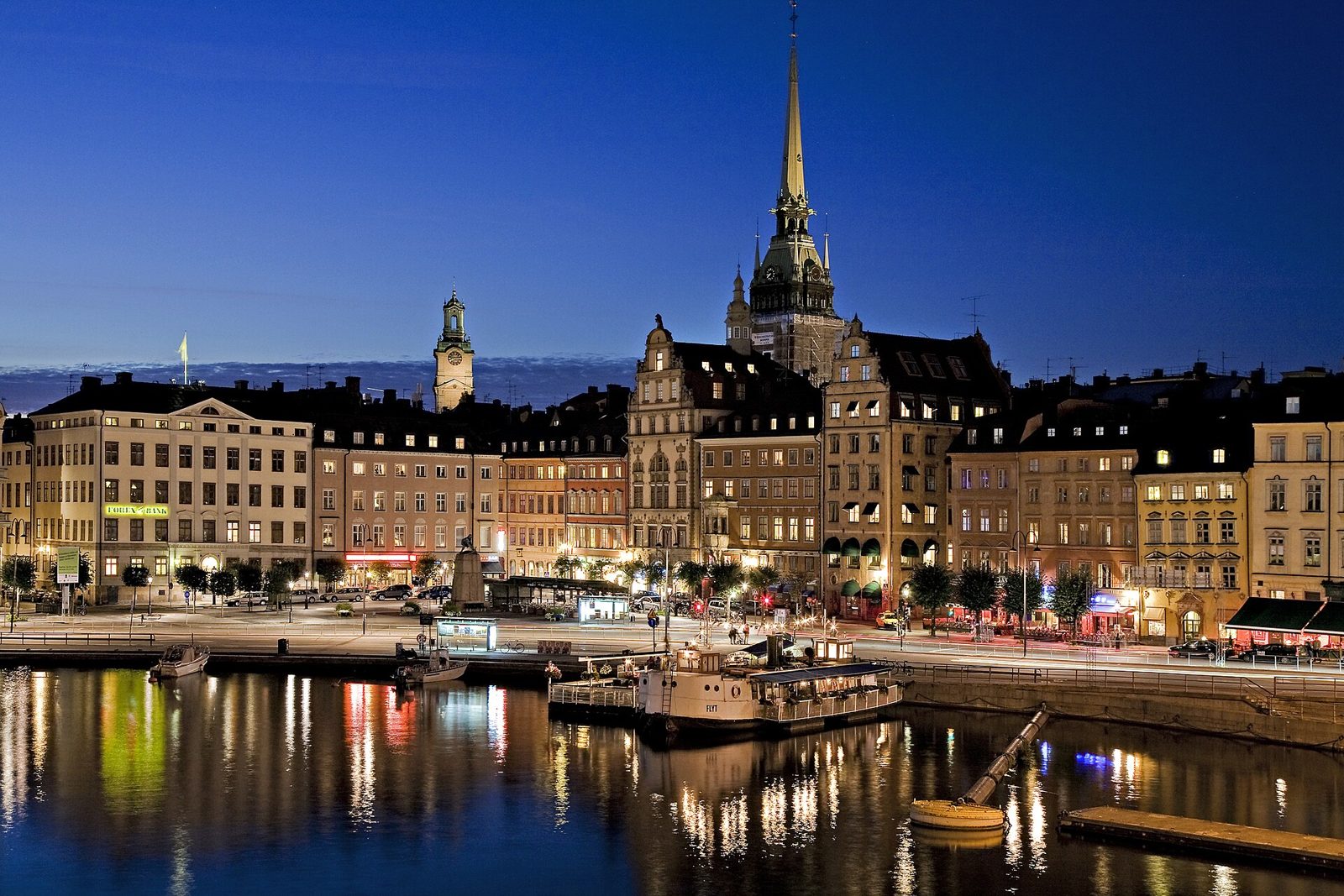
🇸🇪 Sweden, planned around distance
Sweden is the European country where distance itself is the variable. In the south, Stockholm, Gothenburg and Malmö form a working triangle on SJ high-speed trains. In the north, the same railway keeps going overnight — past Umeå and Luleå, through Boden, to Kiruna, Abisko and Narvik in Norway. Stockholm is not the only door: Arlanda serves the capital, Malmö is also Copenhagen's Swedish neighbour across the Øresund, and Gothenburg stands on its own west coast. The Swedish problems are rarely about whether a train exists. They are about when you booked it — SJ fares are dynamic — whether your night train runs through or asks you to change, and whether your wallet is built for a country that runs on cards and kronor, not cash and euros.
The lay of the land — a southern triangle, a northern line
Almost every Swedish itinerary is built from the same pieces. The south is a triangle you ride in daylight; the north is a line you ride in your sleep. The two obey different booking logic, and planning them as one trip is where Sweden goes wrong.
| Layer | What it is | How booking works | Watch out |
|---|---|---|---|
| SJ long-distance trains | The national long-distance network — high-speed, InterCity, regional and night trains from one operator | One official channel: sj.se and the SJ app, bought before you travel | Fares are dynamic — the same seat costs differently by departure, demand and booking day |
| Stockholm Arlanda | The capital's airport, with express, commuter and long-distance trains in one station complex | Arlanda Express is its own product; SL commuter and SJ trains use Arlanda Central Station | Arlanda Central carries a station fee structure — check whether yours is inside your ticket |
| SL — Stockholm transport | Metro, buses, trams, commuter trains and commuter boats under one ticket in the Stockholm region | Tap a contactless bank card or phone, use the SL app, or carry the green SL card | SL is Stockholm's system only — Gothenburg and Malmö run their own regional systems |
| The southern cities | Gothenburg on the west coast and Malmö in the far south, both on SJ high-speed lines from Stockholm | Booked as ordinary SJ journeys; Malmö also connects onward across the Øresund | Malmö works as a door from Copenhagen as well as a destination from Stockholm |
| The north — night trains | SJ night trains from Stockholm toward Umeå, Luleå, Kiruna, Abisko and Narvik | Booked on sj.se like any SJ journey — sleeper and couchette are part of the same booking | The through-versus-change pattern is in transition; your booking screen is the truth for your date |
The railway — SJ, in four layers
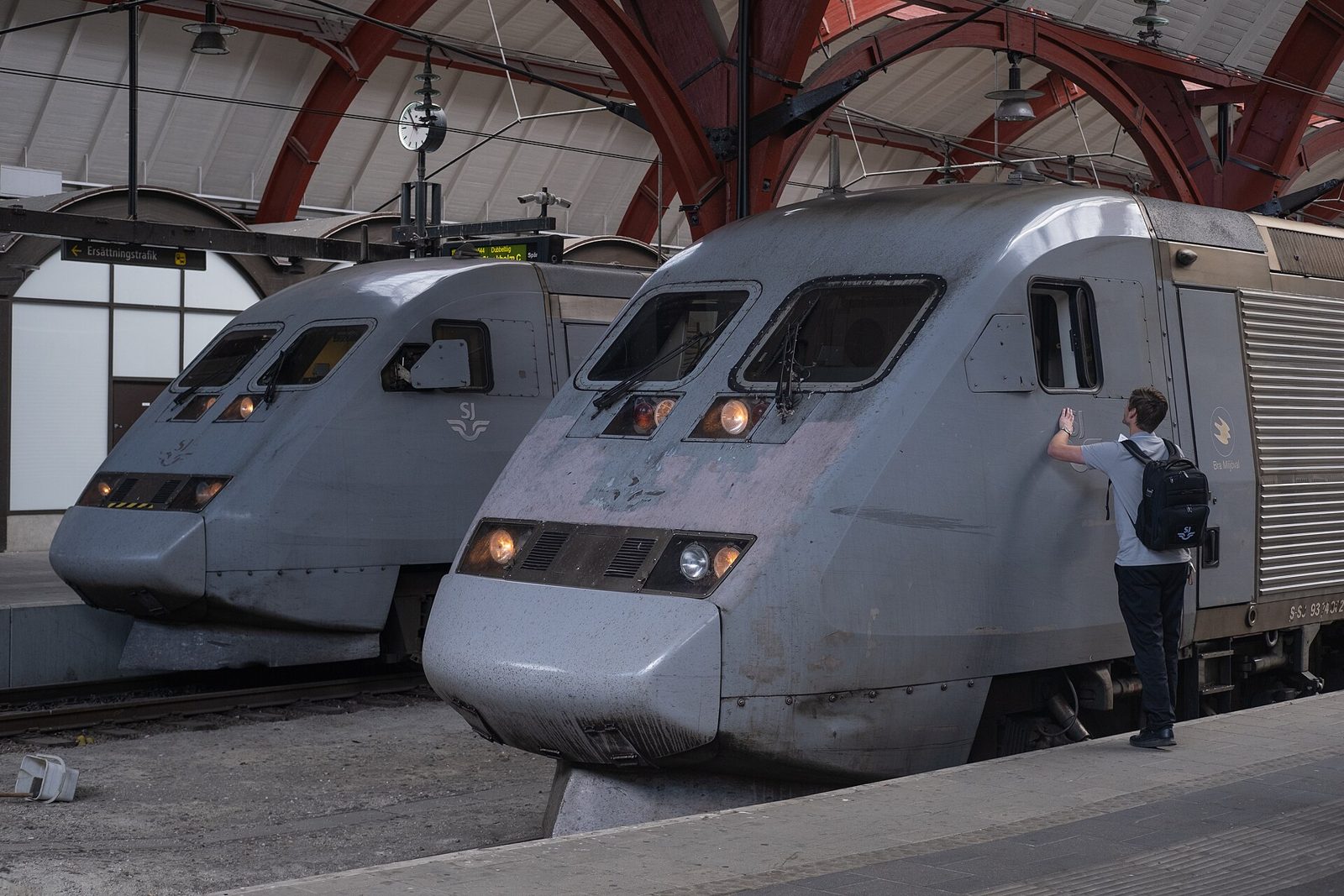
SJ high-speed trains (Snabbtåg) Day trains — the southern triangle
Strengths
- The triangle is one product: Stockholm–Gothenburg west and Stockholm–Malmö south run as high-speed services — the X 2000 and SJ 3000 fleets — on one booking site, in English
- City centre to city centre on every leg, with Stockholm Central doubling as the junction for Arlanda, the SL network and the night trains
- InterCity and regional layers fill the same map underneath, so smaller stops stay reachable without a car
Watch out
- There is no walk-up flat fare to fall back on: a high-speed seat is a priced seat, and the flexible version of it is a different product from the cheap one
- Other operators run on parts of this map and are not sold inside SJ's shopfront — an SJ search result is SJ's network, not the whole market
- Buy before you travel: the system is built around advance purchase, not buying on board
Best for: the entire southern shape of this trip — Stockholm plus one or both southern cities, no car, no internal flights.
The fare structure — dynamic, and decided by the calendar
SJ fares — price follows demand Domestic fares — book the structure, not a figure
Strengths
- The logic rewards the organised: seats are released in limited cheaper batches, so a fixed date booked early is the cheapest version of Swedish rail
- Flexibility is a visible choice at booking — cheaper, restricted tickets and rebookable, refundable ones sit side by side, and you pick which risk you carry
- One shopfront prices every layer the same way, from a southern high-speed leg to a northern sleeper berth
Watch out
- The corollary is unforgiving: the same train, booked late or at a peak departure, is the expensive version — this page states the structure, never a figure, because your figure is a booking-screen fact
- The cheapest batch sells out first, and on night trains and summer southern departures it can sell out entirely — a sold-out cheap fare is not a glitch
Best for: travellers with fixed dates — in Sweden, the booking day is part of the itinerary.
Rail passes (Eurail) Pass — read the structure first
Strengths
- Sweden exists inside the pass system as a one-country product, inside a Scandinavian grouping, and inside the Global pass — the shape for a trip that crosses borders by train
- Sold by Eurail itself; we link the official site and label it as such
Watch out
- For a southern triangle alone, judge the pass against SJ's early-booked singles first: two or three dynamic-priced legs are exactly what a pass finds hardest to beat when they are booked early
- The pass case strengthens with distance — a northern night-train leg or a multi-country route changes the arithmetic, and pass travel on reservable trains still runs through the operator's reservation flow
- We have no affiliate arrangement here and do not summarise pass prices or terms we have not verified — the official terms are the comparison
Best for: trips where Sweden is one country among several, or where the north is ridden as well as the south.
Stockholm Arlanda — three trains, one airport Airport rail — express, commuter, long-distance
Strengths
- Swedavia lists express trains, commuter trains and long-distance trains at Arlanda — you can land and ride straight into the SJ network, not only into Stockholm
- The Arlanda Express is a dedicated non-stop product to Stockholm Central, separate from everything else on this page
- SL commuter trains tie the airport into the same ticket world as the metro and the commuter boats
Watch out
- Trains through Arlanda Central Station carry a station fee, charged for the station and railway's financing — if it is not inside your ticket, it is paid at the gates in SkyCity
- An SL ticket is not an Arlanda Express ticket: the express is its own fare system, and boarding it on a city product is the airport's classic mistake
Best for: almost everyone arriving by air — pick the train by destination, not by habit.
See Arlanda trains on Swedavia →Official siteThe cities — capital, west coast, southern door
Stockholm earns the longest stay, Gothenburg the west-coast counterweight, and Malmö a double role — a destination in itself, and the Swedish end of the bridge from Copenhagen. Each runs on its own local logic once you step off the SJ train.
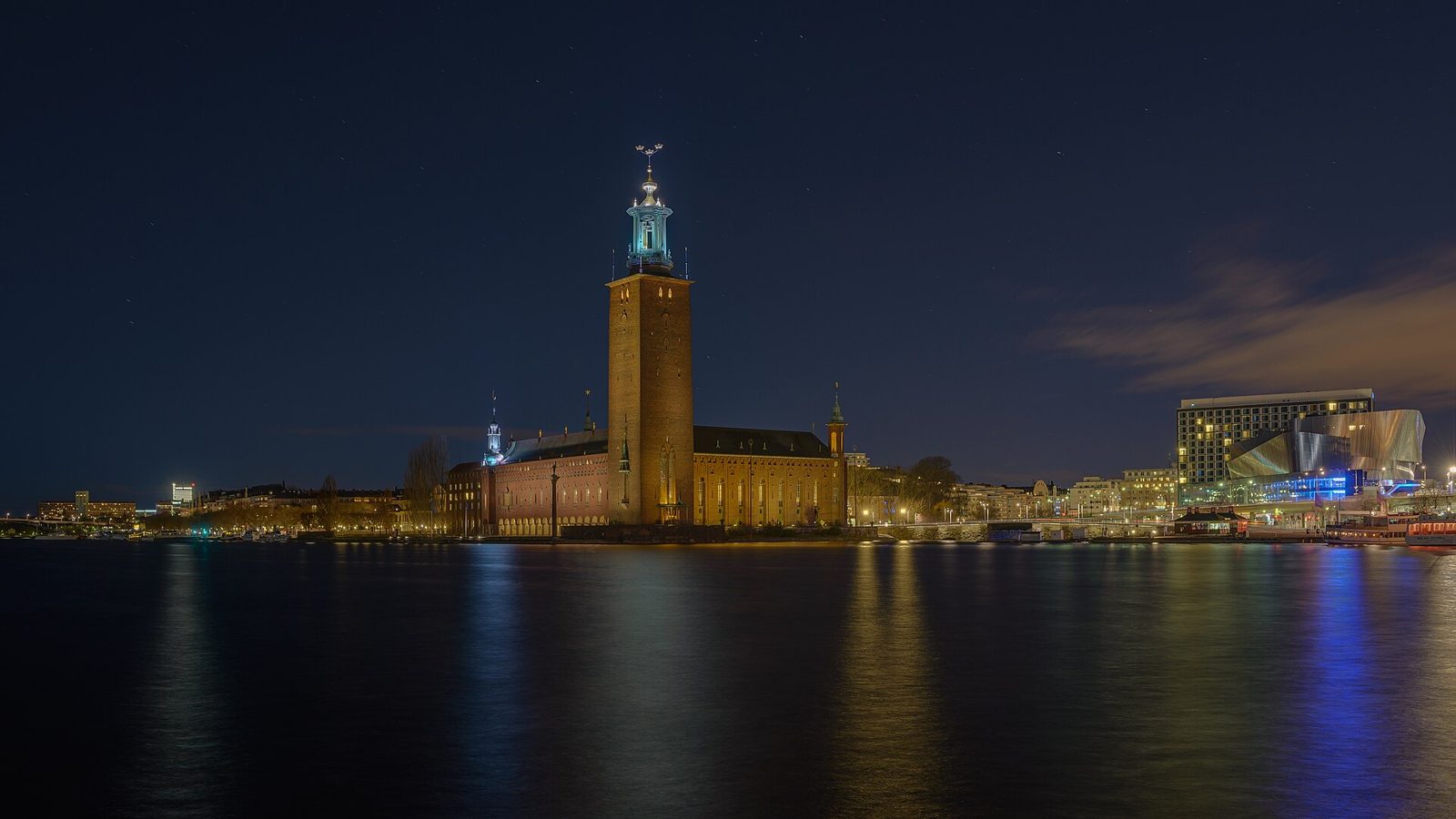
Stockholm Base — the capital & the junction
Strengths
- Gamla Stan, the old town that has been the city's heart since the thirteenth century: the Royal Palace, the city's oldest square at Stortorget with the Nobel Prize Museum, and a lived-in tangle of cobbled alleys behind the postcard façades
- The museum island of Djurgården, anchored by the Vasa Museum — and the city is a junction as much as a sight, with every southern and northern line on this page starting under its central station
- SL folds the whole region into one ticket — metro, tram, commuter train and harbour boats alike — so the archipelago edge of the city is a transit ride, not an excursion product
Watch out
- Stockholm is spread across water: districts that look adjacent on a map are a bridge, a boat or a metro ride apart, and the day's shape follows the SL map, not the street map
- Gamla Stan's cobbles and crowds peak together at midday — the old town rewards the early and the evening hours
Best for: the base of almost every Swedish trip, and the museum-first trip.
See Visit Stockholm →Official site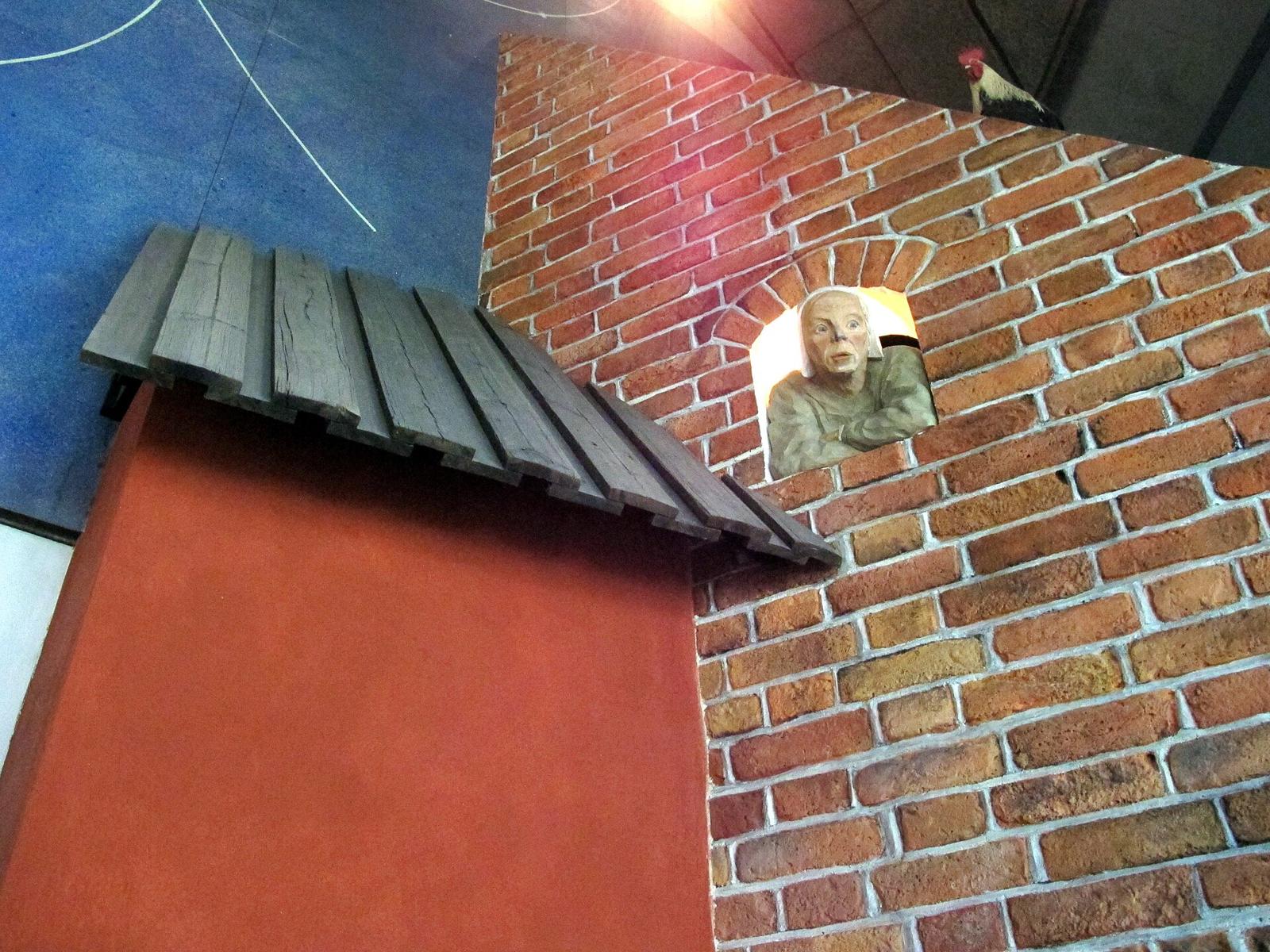
The Vasa Museum Anchor sight — a queue to manage, not a slot to book
Strengths
- A whole warship from the seventeenth century, raised and housed in its own hall on Djurgården — the museum presents the ship itself, and a combined ticket structure links it with Vrak, the neighbouring Museum of Wrecks
- It is among Scandinavia's most visited museums, and it behaves like a walk-up sight: you come, you queue, you enter
Watch out
- Do not buy your way past a queue that does not work that way: the museum itself states that pre-purchased tickets give no priority in the entrance queue — the afternoon, not the advance ticket, is the quieter door
- Hours are seasonal, with a weekly late opening in the quieter season and specific closing days around the winter holidays — check the museum's own page for your date
- It is a cash-free museum: the card in your pocket is the ticket desk's currency
Best for: one unhurried Djurgården block — Vasa first, the island after.
See the Vasa Museum →Official site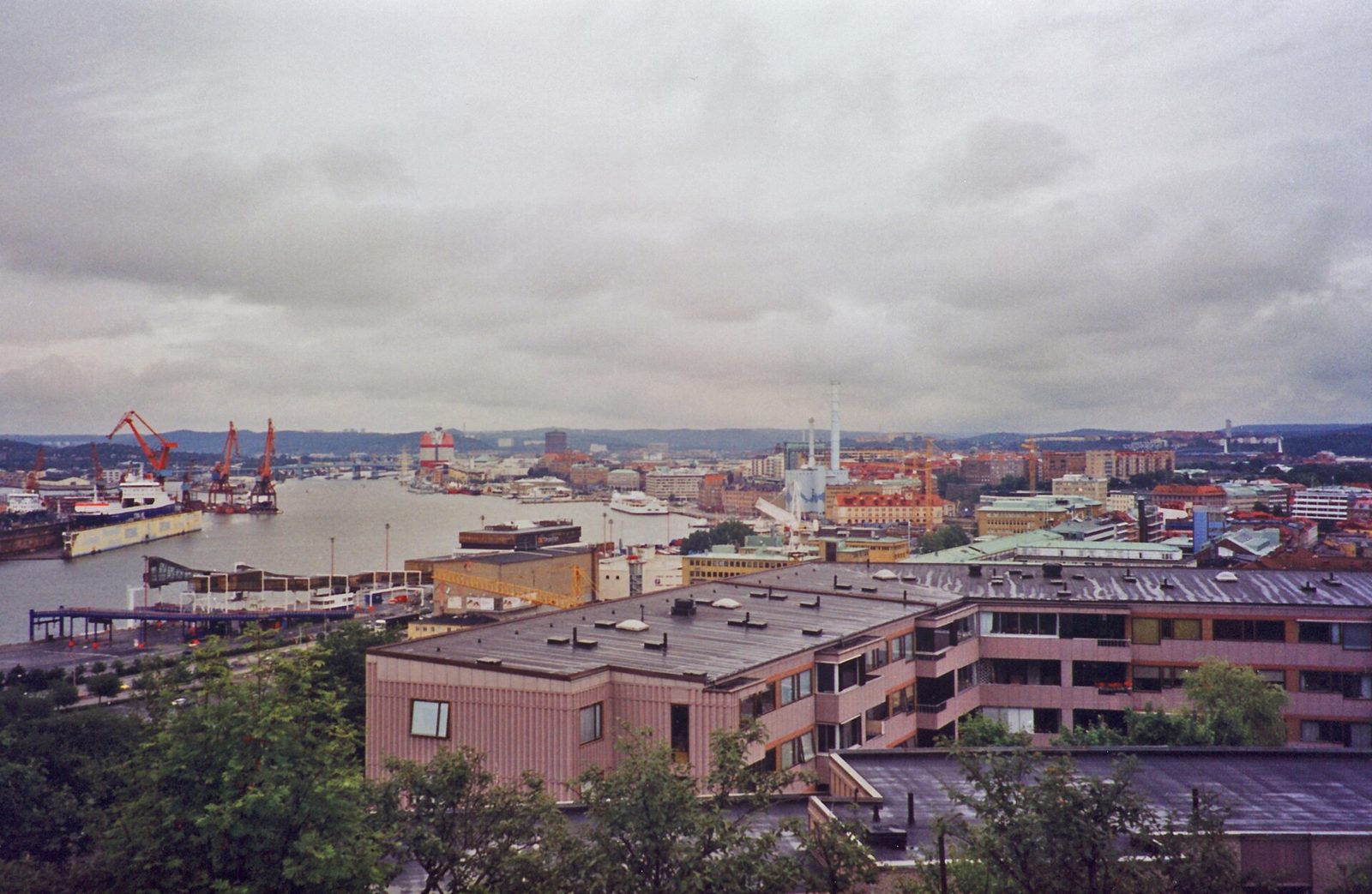
Gothenburg Second city — the west coast
Strengths
- A working port city with a softer centre: the Haga old district's fika streets, the design shops around Magasinsgatan, and Liseberg as its big-ticket anchor
- The archipelago is part of the city here — tram and ferry carry you out to the near islands on the regional system's own logic
- As a triangle corner it balances Stockholm: same SJ ease, a different, maritime city at the end of it
Watch out
- City transport here is Västtrafik, not SL — your Stockholm ticket habits do not transfer, and the regional rules are read on the day, in the local app
- We have not verified one official reservation rule for its headline sights in every season, so we state none: check each sight's own page before fixing the day
Best for: the west-coast overnight — the triangle's second sleep, not its spare day.
See Visit Sweden →Official siteMalmö Southern door — the third city
Strengths
- Sweden's third-largest city, in Skåne at the country's southern tip — a compact centre, a reinvented waterfront, and a food-and-culture scene that Visit Sweden tracks as the country's fastest-rising city break
- It is the one Swedish city with two front doors: SJ from Stockholm, and the Øresund crossing from Copenhagen — a Denmark trip can sleep in Sweden, and the reverse
Watch out
- Its local transport is Skånetrafiken's system, a third set of regional rules on a three-city trip — no Swedish city shares another's city ticket
- As a day trip from Stockholm it is the triangle's longest leg: Malmö rewards an overnight, or an arrival from Copenhagen, more than a there-and-back day
Best for: the southern overnight — especially paired with Copenhagen across the water.
See Visit Sweden →Official siteThe night train — Sweden's second country, after dark
North of Stockholm the railway changes character. The distances stop fitting inside a day, and SJ's answer is the night train: board in the capital in the evening, and wake on the way to Umeå, Luleå — or, on the line through Boden, Kiruna and Abisko, all the way to Narvik on the Norwegian coast.
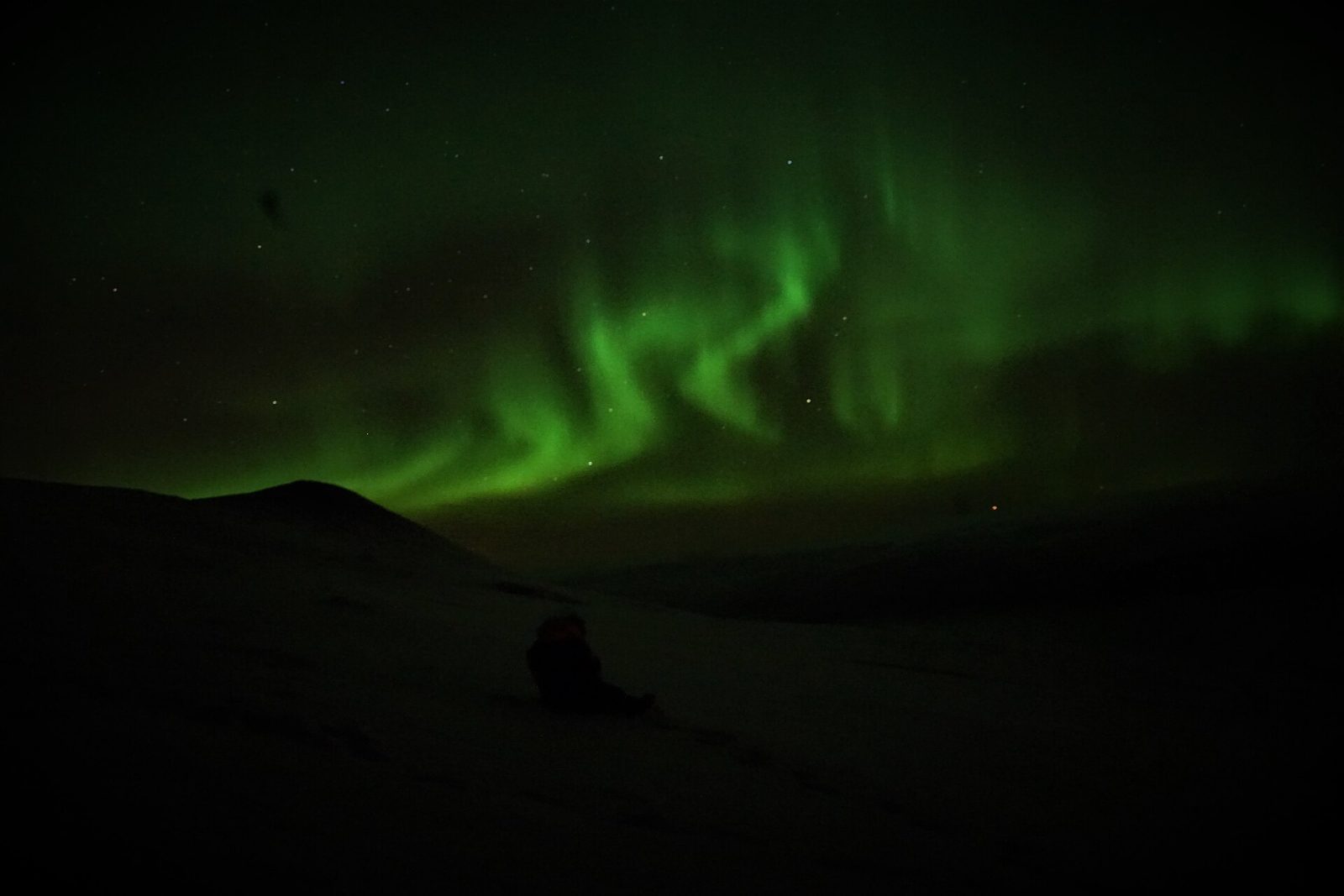
SJ night trains to the north Night trains — sleeper & couchette
Strengths
- The route is the destination's front door: Abisko — the aurora and national-park stop — is a station on this line, not a transfer puzzle at the end of it
- A berth replaces both a flight and a hotel night, and the journey crosses the Arctic Circle in your sleep — no domestic flight itinerary assembles the same trip
- One booking, one operator: the whole run, seat or sleeper, is sold inside the same SJ shopfront as the southern triangle
Watch out
- The pattern is in transition through 2026: on some dates the northern journey changes at Boden, on others the sleeping cars run through — neither version can be assumed, and your sj.se booking shows which one you hold
- Capacity is one train, not a service pattern: berths on peak aurora and holiday dates sell out, and the dynamic fare means the late booker pays for the same berth twice over in everything but name
- Narvik is in Norway: the line crosses a border in the night, which is a feature of the trip — and a reason to keep documents with you, not in the luggage rack of another carriage
Best for: the Lapland trip built around Abisko — and for travellers who count the journey itself as part of the holiday.
Where to sleep — bases that match the railway
Guided tours of the same cities are a different product from the trains and tickets above. Judge a listing on what it actually includes — your own train ticket may already cover the journey it bundles.
Browse Sweden tours on Viator →Affiliate link — you pay the same Browse Sweden tours on GetYourGuide →Affiliate link — you pay the sameThe practical layer — how Sweden differs from a US trip
Which Sweden is yours?
Decisions that actually matter
When should I book SJ trains?
As early as your dates are real. SJ pricing is dynamic: cheaper batches are limited and sell first, flexible tickets cost more by design, and night-train berths on peak dates sell out. The booking screen on sj.se — not any guide's figure, including ours — is the price of your train.
Does the night train run through to Narvik?
It depends on the date, and through 2026 the pattern has been in transition: some journeys change at Boden, others carry sleeping cars through to Kiruna, Abisko and Narvik. Your booking on sj.se shows the pattern for the departure you are buying — check for a change at Boden before you build connections around the arrival.
Can I visit Sweden without cash?
That is the normal way to do it. Sweden prices in kronor but pays by card: transport, museums and much of daily spending are card-based, and the Vasa Museum is cash-free outright. Bring a contactless Visa or Mastercard and a backup card — not a wallet of banknotes, and not euros, which do not spend here.
Do I need Swish, Stockholm's SL card, or a rail pass?
None of the three by default. Swish requires a Swedish bank account and identity setup a visitor cannot have. In Stockholm a tapped bank card or the SL app covers the visitor's travel without buying the physical card. And a rail pass earns its place only against your real SJ legs priced as early singles — strongest when the north or another country joins the route.
Can I do Sweden without a car?
For the trip on this page, Sweden without a car is not a compromise — it is the design. The triangle, the airport trains, the city systems and the night train cover every leg above. A car earns consideration only beyond the rail web, judged leg by leg.
Prices and terms change often — the booking site is the final word. Timetables, fare conditions and the night trains' running pattern change by season and by timetable; check the operator's own page for your date. Facts on this page checked against providers' official pages, November 2026.


