
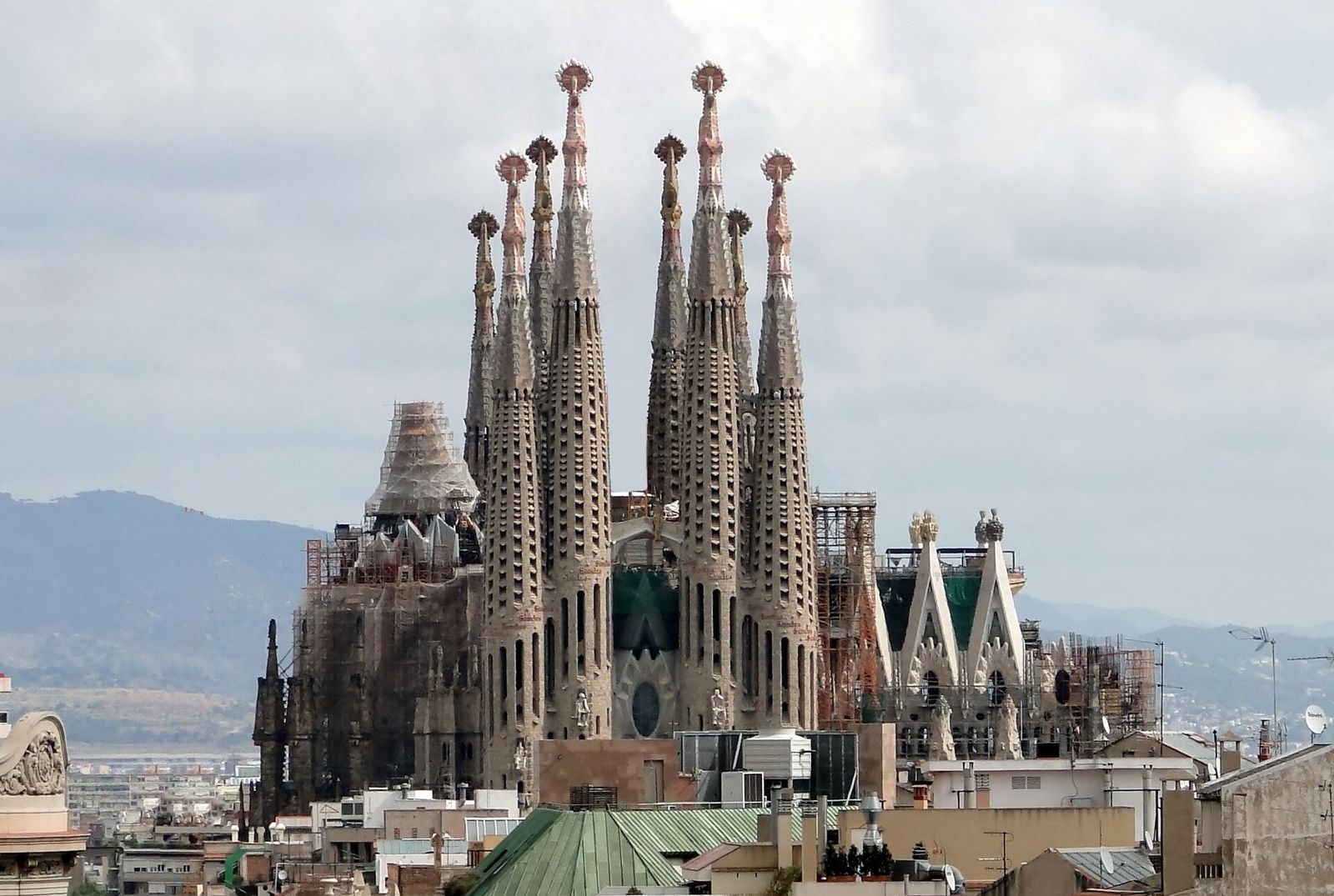
🇪🇸 Spain — smaller by train, different by region
Spain misleads the map-reader twice. First, distance: a country that looks like a week of driving collapses once the high-speed network is understood — on OUIGO's own published times, Madrid–Barcelona is a 2h30 rail move and Madrid–Valencia 1h50, so the Mediterranean is a short hop from the capital, not a separate trip. Second, uniformity: Spain is a set of regions with their own languages on the signs, their own kitchens and their own hubs — Madrid is a radial rail hub, Barcelona is a second one, and Andalusia works as a southern cluster rather than a list of day trips. The third thing to understand is competition: since the high-speed network opened up, the busiest corridors offer three operators — Renfe, OUIGO and iryo — and no single website shows them all. This page covers the operators' structures, the two monuments whose booking rules decide itineraries (the Sagrada Família and the Alhambra), and how to base yourself. Structure only, from official pages: this hub quotes no Spanish fares.
The lay of the land — two hubs, three operators, one southern cluster
Renfe's own route list is the evidence for the shape: long-distance routes radiate from Madrid and from Barcelona (Barcelona–Málaga, Barcelona–Córdoba, Barcelona–Seville and Barcelona–Zaragoza all appear alongside the Madrid radials). Plan from the shape, then choose the operator per leg.
| Corridor / piece | What it is | Who runs it | Watch out |
|---|---|---|---|
| Madrid ↔ Barcelona | The flagship corridor — OUIGO publishes 2h30 between Madrid-Puerta de Atocha and Barcelona-Sants | Renfe (AVE / Avlo) · OUIGO · iryo | Three operators, three websites: a single-operator search is a partial timetable by definition |
| Madrid ↔ Valencia / Alicante | The Levante corridor to the Mediterranean — OUIGO publishes 1h50 Madrid-Chamartín ↔ Valencia | Renfe · OUIGO · iryo on the core routes | These trains use Madrid's OTHER high-speed station, Chamartín-Clara Campoamor — not Atocha (see the station judgement below) |
| Madrid / Barcelona ↔ Andalusia | Córdoba, Seville, Málaga on the high-speed axes; Granada as a deliberate branch off them | Renfe and competitors per route — check per leg | Granada is not a stop on the way to anywhere else in this plan; give the Alhambra its own base night(s) |
| Barcelona | Sagrada Família — online-only, nominative, timed tickets (official FAQ) | Fundació Junta Constructora (sagradafamilia.org) | Late for your slot means no entry; the ticket cannot be changed after booking |
| Granada | The Alhambra — a zoned complex whose core, the Nasrid Palaces, runs on a specific timed slot inside a general visit | Patronato de la Alhambra y Generalife (tickets.alhambra-patronato.es) | The slot, not the day, is the appointment: build the Granada day around the Nasrid time on your ticket |
| Everywhere else | Regional and medium-distance Spain — the north, Galicia, the Basque Country, the islands | Renfe (incl. Alvia / Media Distancia / Cercanías) is the default structure | Competition lives on the headline corridors; beyond them, plan on Renfe's network and its rules |
The operators — what each one actually is
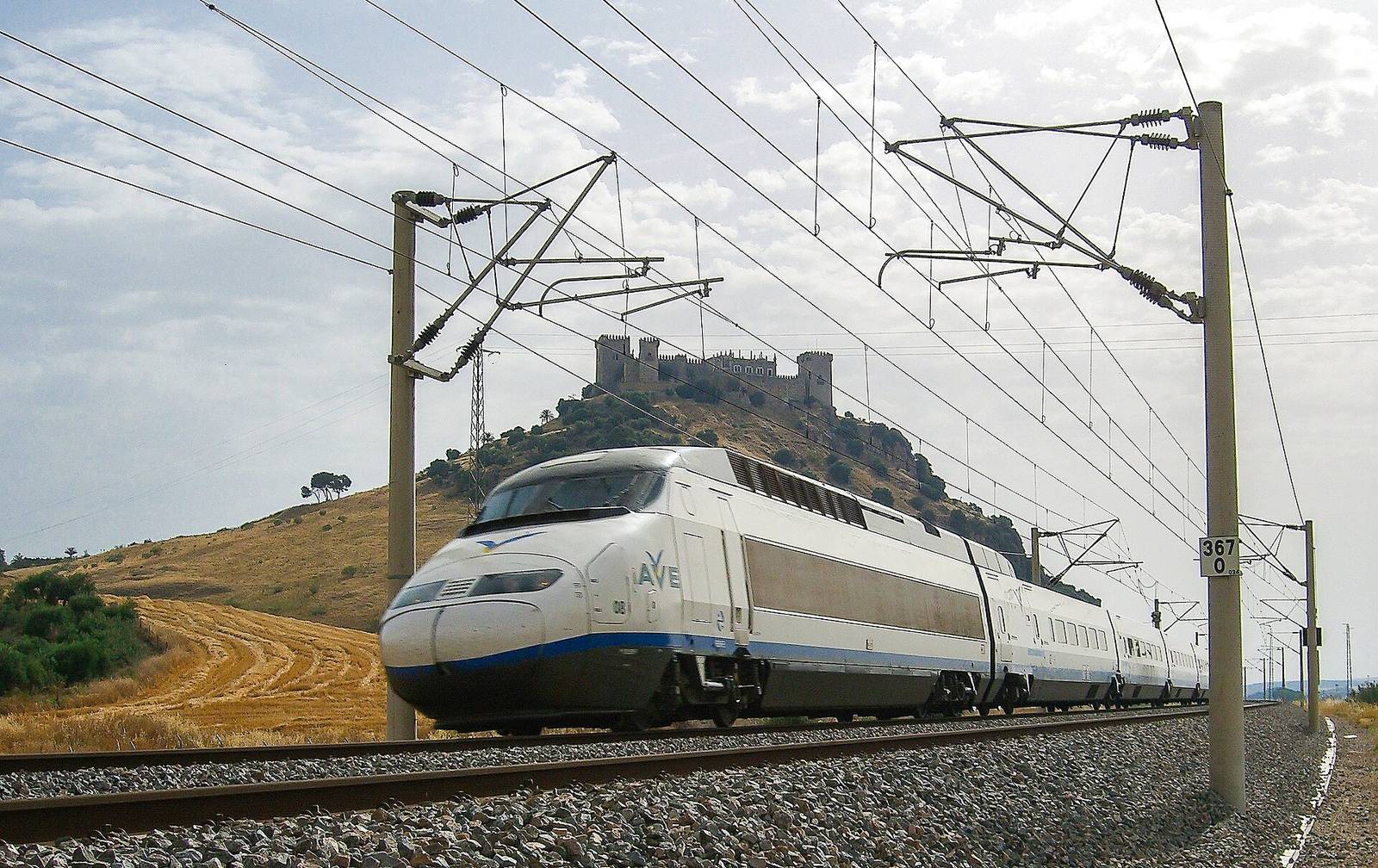
Renfe — AVE & Avlo State operator · the whole network
Strengths
- The network itself: AVE high-speed long-distance, Alvia and Media Distancia beyond it, and the Cercanías commuter systems — Renfe is the only operator that can complete most Spanish rail journeys end to end
- Two high-speed products in one shop: AVE, its full-service high-speed brand, and Avlo, its own low-cost high-speed brand with its own fare rules
- Both hubs in one timetable — Madrid and Barcelona radials alike (its homepage route list runs from León–Madrid to Barcelona–Seville)
Watch out
- Renfe's site sells Renfe: OUIGO and iryo departures on the same corridor do not appear
- AVE and Avlo are different products sharing a brand family — inclusions, luggage structure and fare flexibility differ by the fare you pick, so read the fare, not just the train time
- Station literacy matters on Renfe's map: Madrid Atocha and Madrid Chamartín are different stations across the city from each other
Best for: every itinerary's backbone — and the only starting point beyond the competitive corridors.
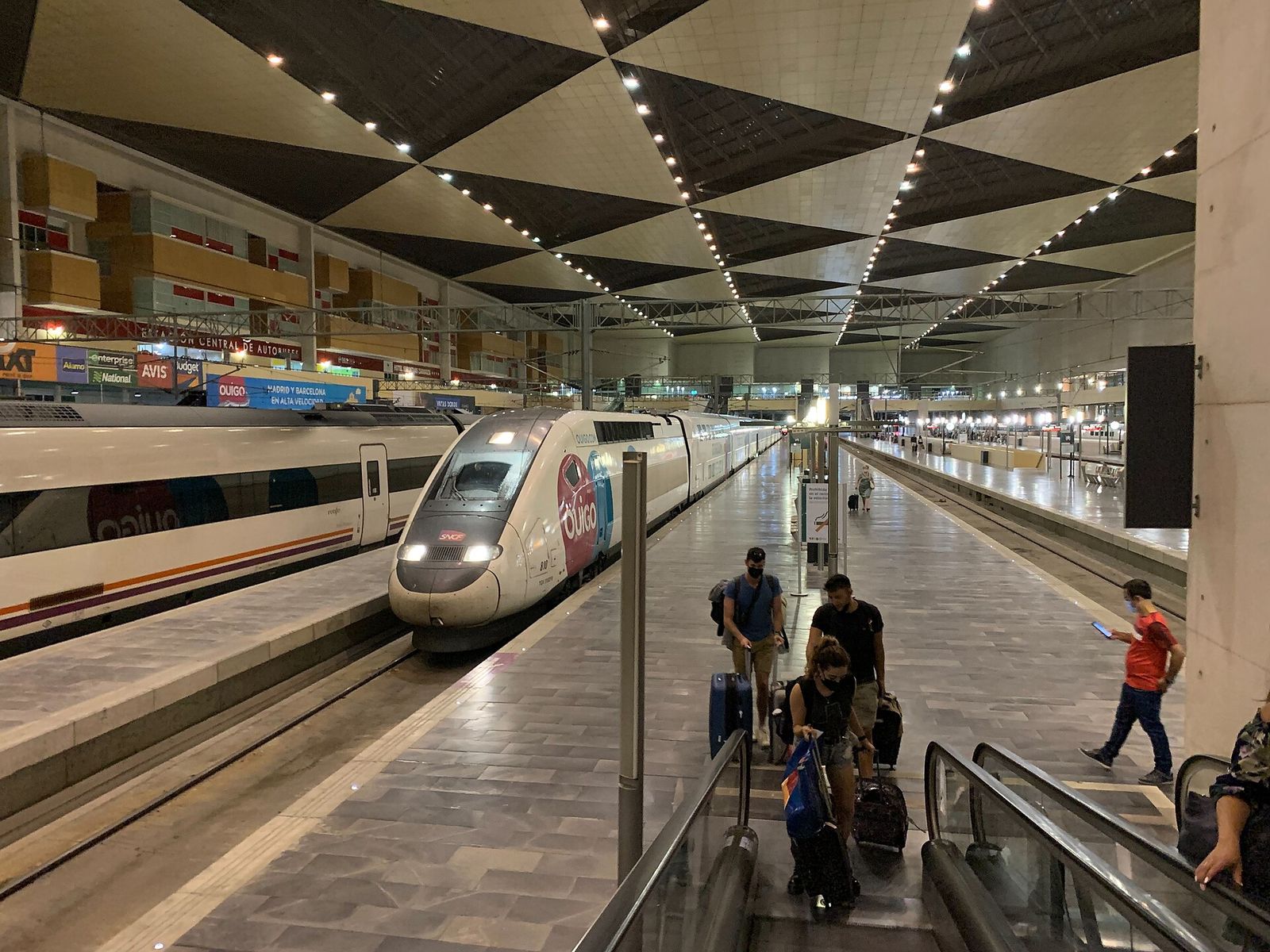
OUIGO España Low-cost high-speed · SNCF in Spain
Strengths
- A clear low-cost structure on the core corridors: a base seat, with paid add-on layers (its OUIGO Plus bundles seat choice, extra luggage and entertainment) — you can see exactly what the base fare leaves out before you pay
- Operating in Spain since spring 2021 (its own history: Madrid–Barcelona–Zaragoza–Tarragona first, the Levante routes after) with double-deck trains
- Its destinations page publishes its own journey times — the 2h30 Madrid–Barcelona and 1h50 Madrid–Valencia figures this page quotes are OUIGO's
Watch out
- Corridors only: OUIGO does not run the regional Spain that Renfe covers
- Low-cost means the extras are the product design — luggage and seat choices are decisions at booking, not defaults
- Its Madrid departures split by corridor between Atocha and Chamartín, like everyone else's (see below)
Best for: travelling light on a headline corridor with fixed plans — the add-on structure rewards knowing your own luggage before you book.
iryo Private full-service high-speed operator
Strengths
- The third timetable on the competitive corridors — a private, full-service operator (ILSA) running on the same high-speed network as Renfe and OUIGO
- Its existence is itself traveller value: three operators' departure boards cover the day more fully than any one of them
Watch out
- An honesty note from this hub: iryo's official site did not render for our November 2026 check, so we describe iryo at operator level only — its current fare families and their conditions must be read on iryo.eu itself, and we assert none of them here
- Like the others, it shows only its own trains
Best for: corridor legs where its departure time fits your day better than the other two boards.
The two monuments that set the itinerary
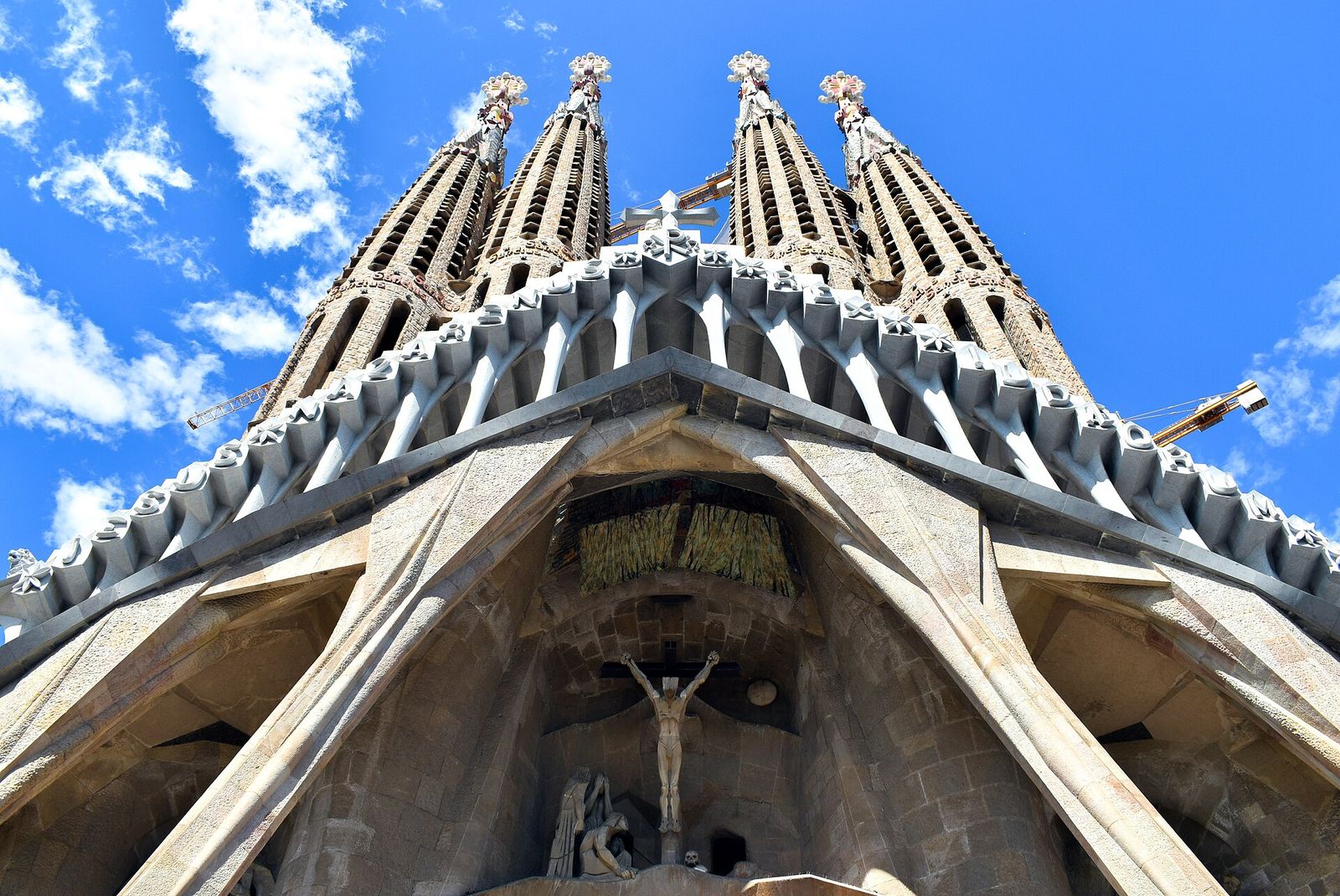
Sagrada Família, Barcelona Basilica · online-only timed tickets
Strengths
- The official FAQ is unusually plain: tickets are nominative, personal and non-transferable, ID is shown at entry, and tickets "can only be purchased online" — there is no walk-up plan to fall back on, which at least makes the decision simple
- The official calendar currently opens roughly two months before the visit (the Basilica's own wording), and the official app carries the ticket and audioguide
- Same-day hope exists only in one official form: direct-purchase QR codes around the Basilica, strictly subject to occupancy at the time
Watch out
- "Tickets are only valid for the time chosen. If you arrive late, you won't be able to enter." — the Basilica's own sentence; build slack around the slot
- Personal details cannot be changed after booking, and as a general rule there are no exchanges or returns — book names and dates carefully the first time
- No suitcase lockers (only small-bag storage while visiting the towers), and the towers are the one non-accessible part
Best for: everyone going to Barcelona — book it when the trip is decided, not when you arrive; it is the city's fixed point the way Alcatraz is San Francisco's.
See the Sagrada Família →Official site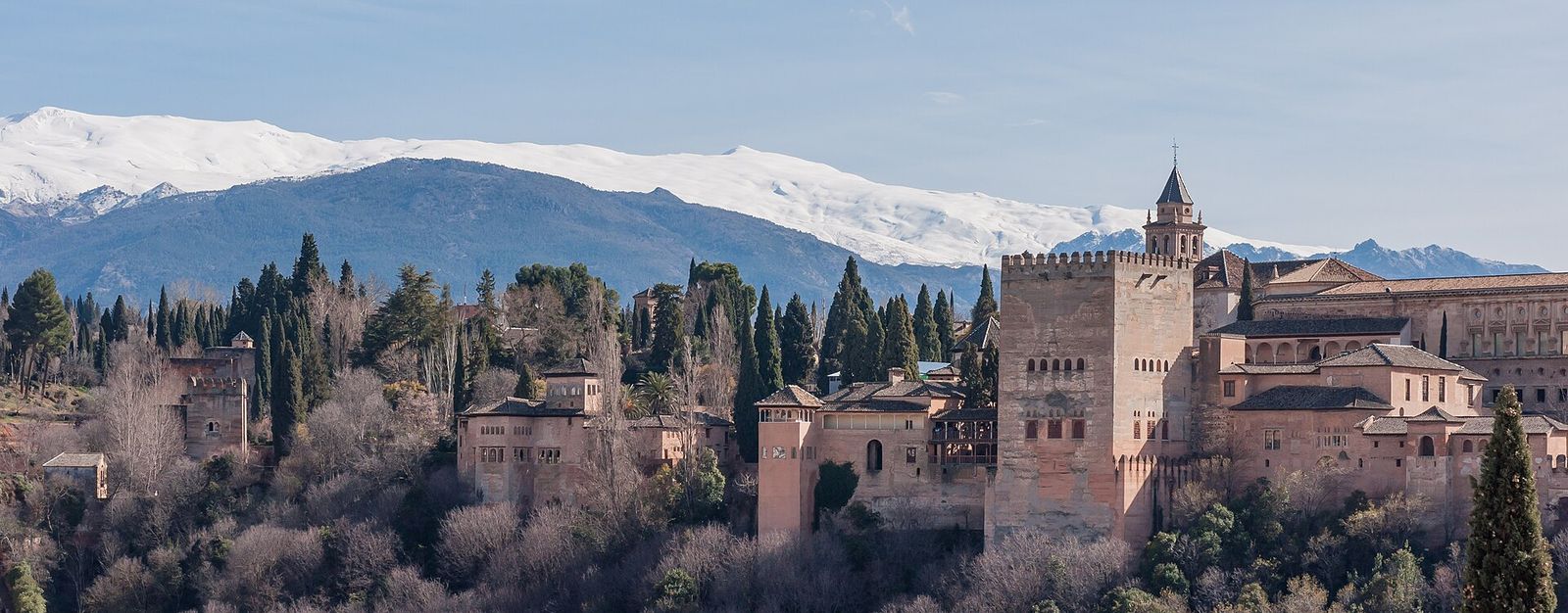
The Alhambra, Granada Patronato · zoned complex, timed core
Strengths
- One managing body, one official ticket portal: the Patronato de la Alhambra y Generalife sells through tickets.alhambra-patronato.es, linked from its own site — the reference against which every other seller is a reseller
- The visit is a complex, not a single hall — the Alcazaba fortress, the Generalife gardens and the Nasrid Palaces — so a general ticket buys a half-day landscape, not a one-room stop
Watch out
- The Nasrid Palaces — the core of the visit — are entered at the specific time carried by your ticket, inside the general visit: the slot is the appointment, and the rest of the complex is arranged around it
- Tickets in the Patronato system are personal; carry the ID the booking names
- This hub asserts no booking-window length, capacity figure or sell-out claim for the Alhambra — none was published on the Patronato pages we checked, and guides that quote them are quoting each other. Book as early as the official calendar allows for your date
Best for: a Granada base of at least one night — the Alhambra as the day's anchor, the city below it as the evening.
See the Alhambra (Patronato) →Official siteViator Marketplace · Spain tours
Strengths
- Guided tours and day excursions across Spain's regions in one basket — the format that suits a base-and-branch trip (a guided day out of Madrid or Barcelona, a Granada day with logistics handled)
- Operator reviews let you compare formats before you commit
Watch out
- For the Sagrada Família and the Alhambra, a tour product still stands on the monuments' own nominative, timed systems — read how the entry itself is secured before you buy the guiding around it
- Plain entry belongs on the official portals above; the marketplace layer is the guide, the transport and the organisation
Best for: guided days beyond your base cities, once the monuments' own tickets are understood.
Browse Spain tours →Affiliate link — you pay the sameGetYourGuide Marketplace · tours & tickets
Strengths
- A second marketplace basket for tours and activities across Spain
Watch out
- No confirmed affiliate tracking for GetYourGuide exists on this hub — this is a plain official link and we earn nothing from it
- The monuments' official pages remain the reference for what a ticket is and when it is valid
Best for: comparing guided formats in the regions where you will not self-guide.
See GetYourGuide →Affiliate link — you pay the sameThe judgement layer — stations, bases and regional sense
The practical layer — names, clocks and two languages
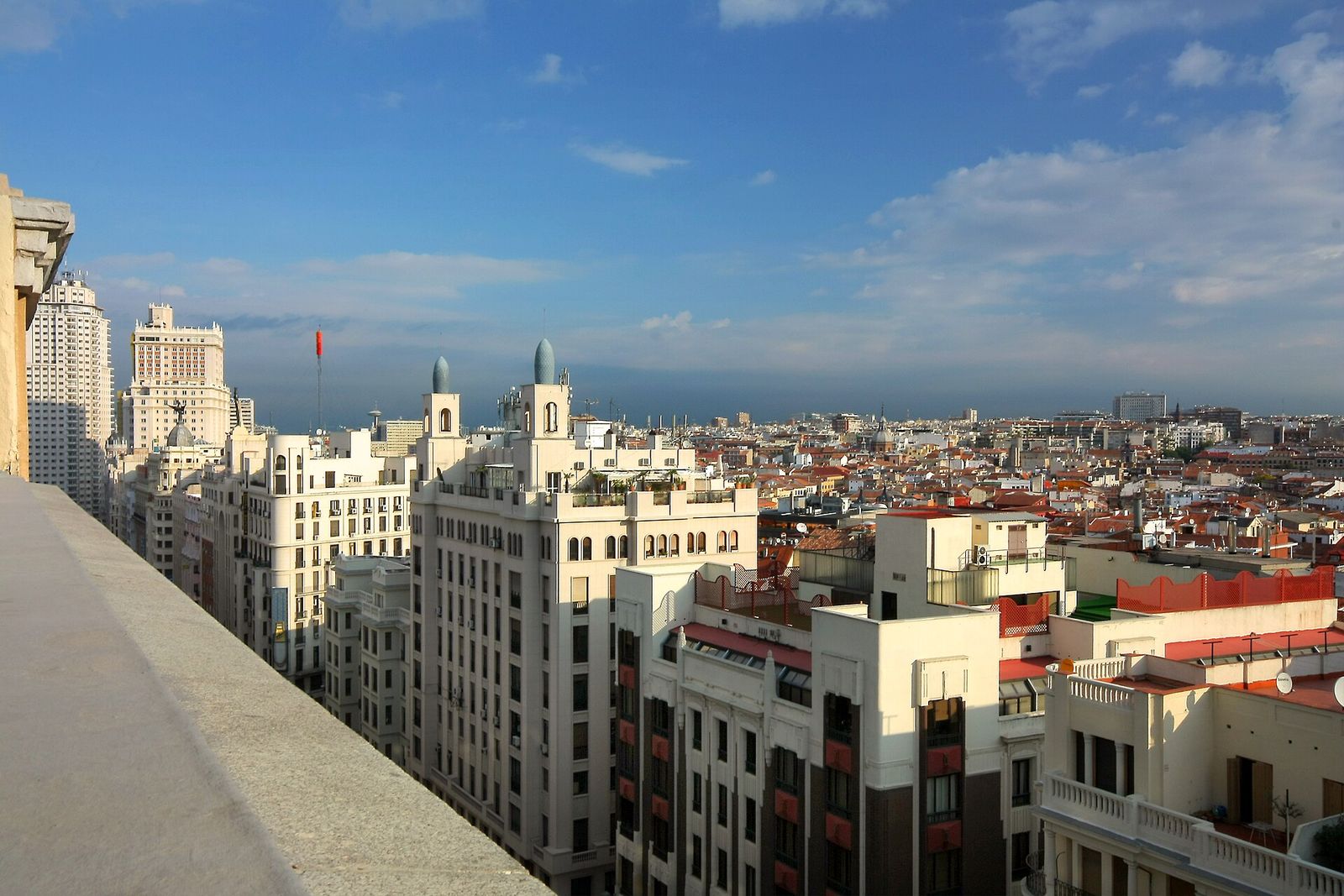
Which Spain is yours?
Decisions that actually matter
Why can't I see all the Madrid–Barcelona trains in one place?
Because there is no single seller of the corridor: Renfe (AVE and Avlo), OUIGO and iryo each sell only their own trains on their own sites. Aggregators merge the boards for convenience; the operators' own sites are the reference for each train's fare conditions. Check the boards individually before you decide a departure "doesn't exist".
Atocha or Chamartín — does it really matter?
Yes — they are different stations in different parts of Madrid, and corridors are assigned between them (Barcelona trains at Atocha; Valencia/Alicante trains at Chamartín, on OUIGO's published pattern). Your ticket names the station; arrive at that one, and choose Madrid lodging with your departure station in mind.
Can I buy Sagrada Família tickets when I get there?
The Basilica's official position is that tickets can only be purchased online; the only on-the-day channel it describes is direct-purchase QR codes around the building, subject to occupancy at the time. Treat that as luck, not a plan — and remember the ticket is nominative, timed, and cannot be changed after booking.
What exactly must I get right at the Alhambra?
Three things: buy through the Patronato's official portal (tickets.alhambra-patronato.es), with the name matching the ID you will carry; note the Nasrid Palaces time on the ticket and build the whole Granada day around arriving for that slot; and stay in Granada rather than attempting it as a rail day trip squeezed between two other cities.
Is a rail pass the simple answer for Spain?
Not automatically. Passes are built around Renfe's network, while two of the three corridor operators run separate commercial systems. Verify validity and reservation requirements operator by operator with the pass issuer before you rely on a pass for a competitive-corridor leg.
Prices and terms change often — the booking site is the final word. Operator timetables, monument calendars and entry rules change by season and by year; check the operator's own page for your date. Facts on this page checked against official pages (Spain.info, Renfe, OUIGO España, Sagrada Família, Patronato de la Alhambra y Generalife), November 2026. iryo's official site did not render for this check — its treatment here is operator-level only, as its card states.


