
🇸🇮 Slovenia, planned from one base
Slovenia is the rare country where one bed can honestly hold the whole trip. The capital, Ljubljana, sits in the middle; Lake Bled lies to the north-west, the great caves to the south-west, and the Adriatic town of Piran at the end of the same south-western line of travel. The Slovenian problem is rarely distance. It is structure: which of Bled's two very different stations a train actually serves, why the bus quietly beats the train to the lake, which of the two famous caves matches the day you want, and whether a city card built for the capital earns anything on a trip spent mostly outside it.
The lay of the land — one base, three spokes
Almost every Slovenian itinerary is built from the same pieces. Ljubljana's railway station and its main bus station stand side by side, and the country's sights fan out from that one forecourt — Bled up the north-western line, the caves and the coast down the south-western one.
| Layer | What it is | How booking works | Watch out |
|---|---|---|---|
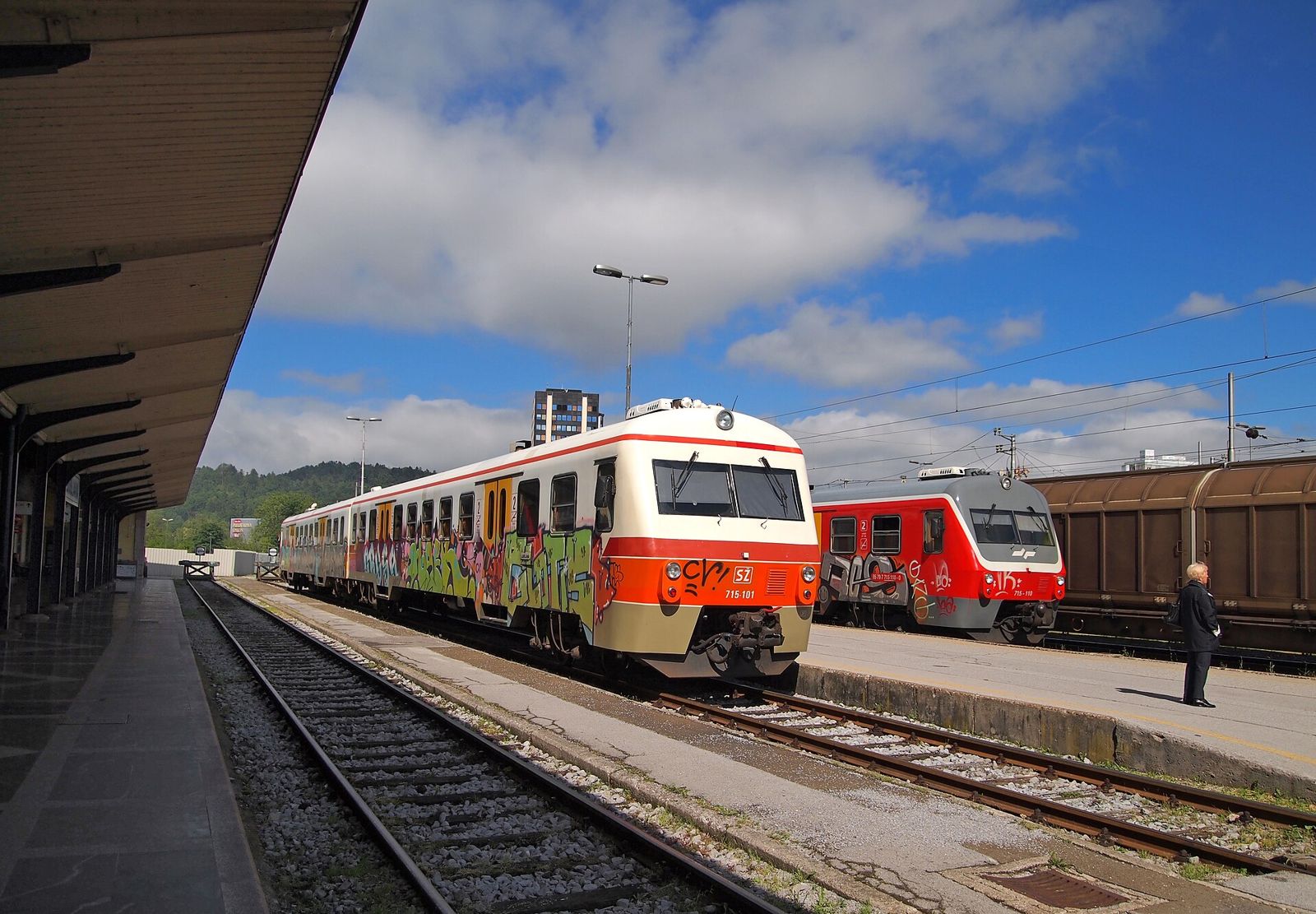
| SŽ trains | The national railway — Slovenske železnice — radiating from Ljubljana toward Jesenice and Bled, toward Postojna, Divača and Koper, and east toward Maribor | One official passenger portal: potniski.sz.si, plus station counters | Bled has two stations with similar names and very different usefulness — read the Bled section before booking |
| Intercity buses | The layer that completes the map — direct buses from Ljubljana's main bus station to Bled town itself, and onward links to places the railway never reaches | Sold through the bus station and the operators; the bus station stands beside the railway station | Piran has no station at all: for the coast, the bus is not the backup, it is the system |
| LPP city buses & Urbana | Ljubljana's city bus network, run by LPP, paid for with the reloadable Urbana card | Urbana cards come from LPP offices, tourist information centres and kiosks; a payment card also works on board, with a catch below | Pay by bank card and the free-transfer window does not apply — the card you pay with changes the fare logic |
| Ljubljana Airport (LJU) | The country's international gateway at Brnik, north of the capital | No station and no rail link: the connection is by road — airport bus, shuttle, taxi or pre-booked transfer | Do not plan an airport train. There isn't one, however natural it would feel |
The railway — a radial fan out of Ljubljana
SŽ — Slovenian Railways National rail — one operator, one hub
Strengths
- One operator and one official passenger portal for the whole country: the timetable logic you learn for the Bled line is the logic of every line
- The fan shape matches the trip: the cave country and the line toward the coast run one way out of Ljubljana, Bled and the Julian Alps foothills the other
- Postojna, the cave town, is a railway town — the train is a genuine option for the cave day, not a scenic detour
Watch out
- The railway's map and the sights' map are not the same map: Bled's useful station is not its lakeside one, and Piran is not on the railway at all
- Engineering works are handled with replacement buses on the affected sections — normal in Slovenia, and the reason the SŽ notices matter more than any printed timetable
- International trains thread through the same hub on their own rules; a cross-border arrival is planned on the SŽ international pages, not the domestic habit
Best for: the cave day, cross-country legs and the shape of the whole trip — with the bus layered over it where the rails stop short.
Rail passes (Eurail) Pass — read the structure first
Strengths
- One pass across many trains and borders — the natural shape for a multi-country rail trip that passes through Slovenia
- Sold by Eurail itself; we link the official site and label it as such
Watch out
- For Slovenia alone, judge the pass against ordinary SŽ singles first: a small country with short spokes is the shape a country pass finds hardest to beat
- We have no affiliate arrangement here and do not summarise pass prices or terms we have not verified — the official terms are the comparison
Best for: trips where Slovenia is one country among several — judge it on the whole route.
Ljubljana — the base that is also a sight
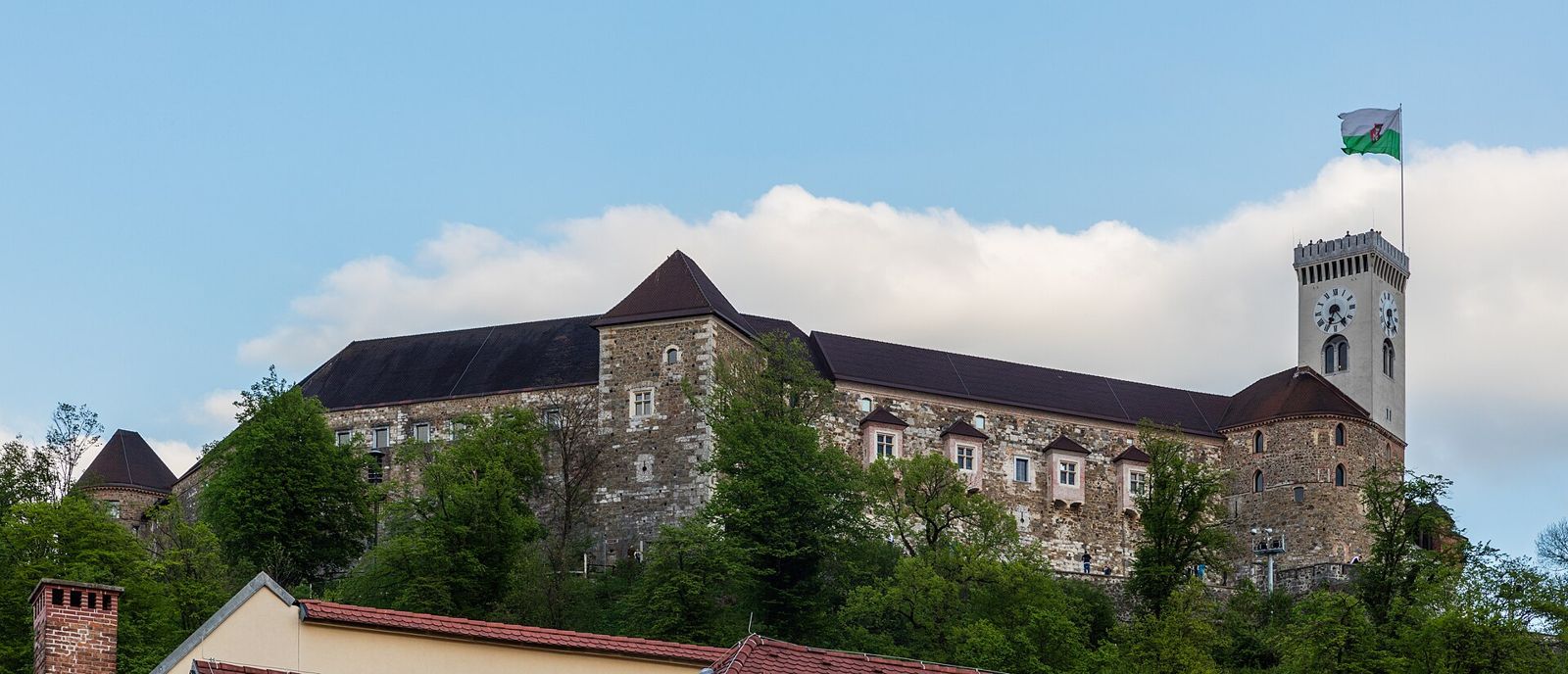
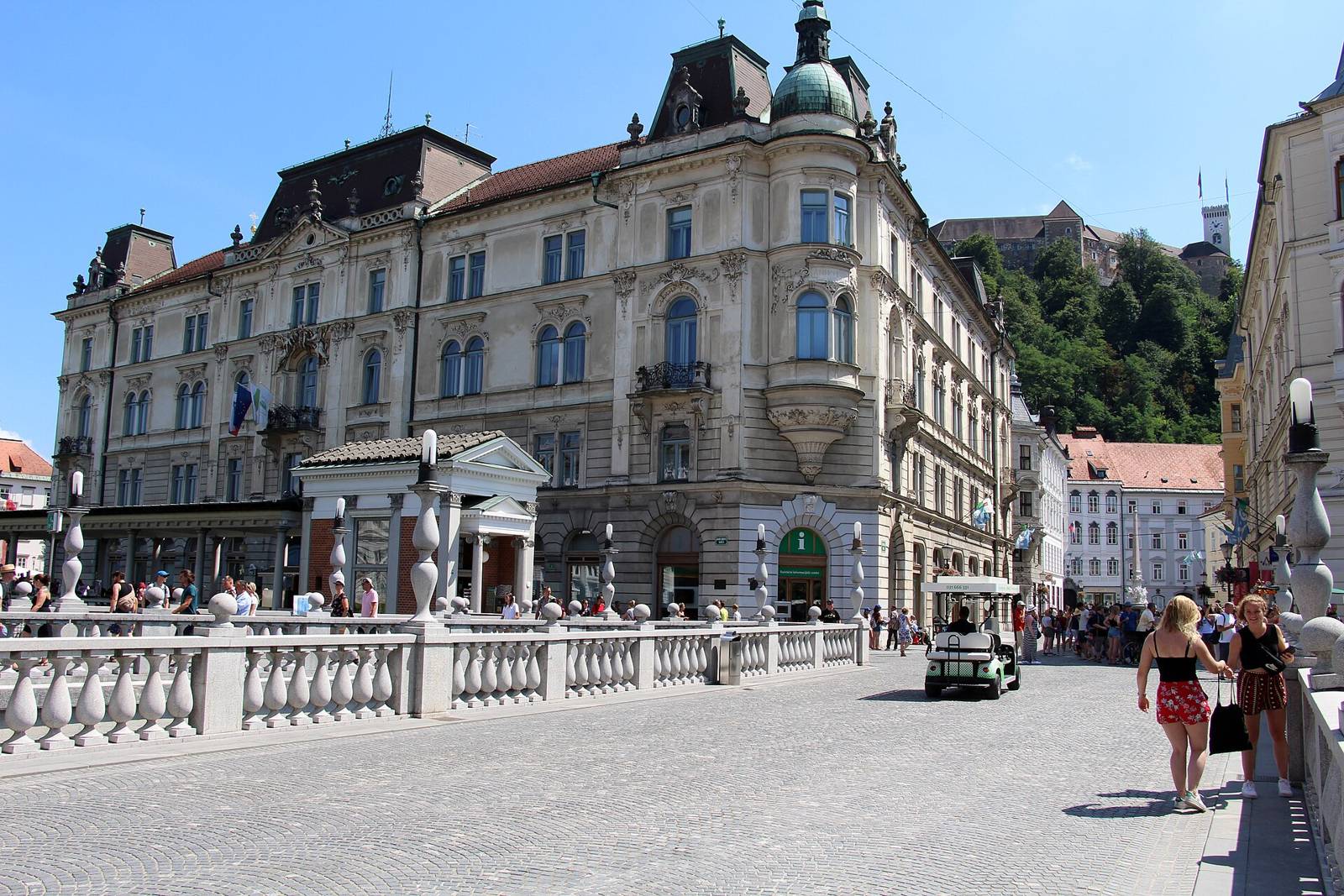
The capital earns its place twice: as the bed every spoke returns to, and as a small, walkable old town in its own right — a castle on its hill, a river bent through the centre, and the bridges of Jože Plečnik stitching the two banks together.
Ljubljana old town & the castle Base — the capital & the hub
Strengths
- The old town is compact and legible: Prešeren Square and the Triple Bridge at the centre, the Ljubljanica embankments as the walking spine, the market and cathedral a few steps away
- Ljubljana Castle watches from the hill above it all, reached by a funicular from beside the central market or by footpaths up through the trees — the city's panorama without leaving the city
- As a base it removes the country's only real logistics problem: every spoke on this page starts from the same station forecourt, beside the old town itself
Watch out
- The centre's ease can eat the trip: Ljubljana rewards wandering, but Bled and the caves are day trips with last buses and tour times attached — give the spokes their mornings
- City buses are a card system, not a cash one: sort out Urbana or a payment card before the first ride, not at the bus door
Best for: the single base of this whole page, and a gentle first or last day around the spokes.
See Visit Ljubljana →Official siteBled — the postcard, with a station puzzle attached
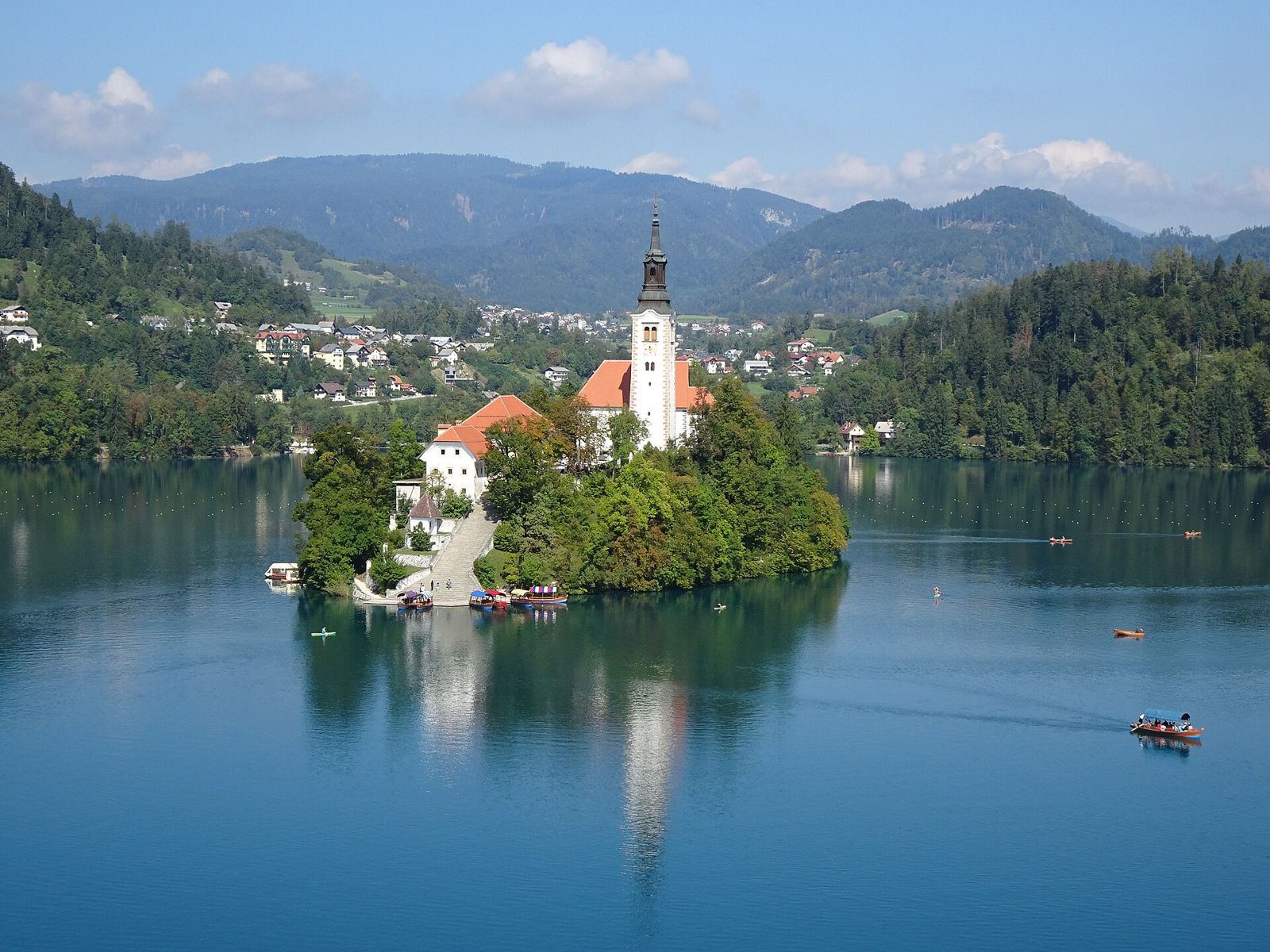
A glacial lake, an island with a church in the middle of it, a castle on the cliff above, and the Julian Alps behind — Bled is Slovenia's postcard, and the day trip almost every Ljubljana base makes first.
Lake Bled & Bled Island Day trip — the lake, the island, the castle
Strengths
- The island is the visit: reached by the traditional wooden pletna boats, rowed standing, or by the electric passenger boat and rowing boats — the crossing is part of the sight, not transport to it
- From the landing, a long stone stairway climbs to the island church — arrive, climb, and look back at the lake you crossed
- Above the shore, Bled Castle — presented by the castle itself as the oldest castle in Slovenia, first mentioned in 1011 — holds the panorama over island, lake and Alps in one frame
Watch out
- The island's moorings are protected: only the pletna boats, the passenger boat and supply boats may land there — you cannot simply row any hired boat ashore, whatever the rental pitch implies
- Bled is the country's crowd magnet in season: the early bus is not a tip, it is the product — and the station trap above decides whether the trip home stays simple
Best for: the essential Slovenian day — taken early, with the castle saved for the light at the end of it.
See Bled tourism →Official site See Bled Castle →Official siteThe caves — one word, two opposite days
Slovenia's karst holds two world-famous caves an easy drive apart, and choosing between them is this page's cleanest judgement. Postojna is the show cave: a train ride underground, an easy path, every day of the year. Škocjan is the natural wonder: a UNESCO-listed underground canyon you cross on foot. They share a word and nothing else.
Postojna Cave & Predjama Castle Show cave — the train underground
Strengths
- The visit runs on rails: an underground train carries you deep into the cave — on what the park presents as the world's only double-track cave railway — before an easy guided walk past the great halls and the five-metre white stalagmite called the Brilliant
- It is built for everyone: open every day of the year, guided in several languages with audio guides beyond them, and presented by the park as suitable for all visitors, including families with young children and visitors with mobility impairments
- The pairing is ready-made: Predjama Castle, the great cave castle set into its cliff, stands a short shuttle ride away in high season — cave in one half of the day, castle in the other
Watch out
- Timed entry is real: buy online or at the park's ticket office and be at the entrance well before your tour — the park asks visitors to arrive at least half an hour ahead, and a sold-out slot is sold out
- The cave keeps one temperature all year: the park's own advice is warm clothing and sports footwear, in midsummer too
- Predjama's castle is year-round, but the cave beneath it opens only in the summer months, when the bats are not hibernating — do not build a winter day around it
Best for: the cave day that asks nothing of you — the default for families, mixed groups and any-weather itineraries.
See Postojna Cave →Official site See Predjama Castle →Official site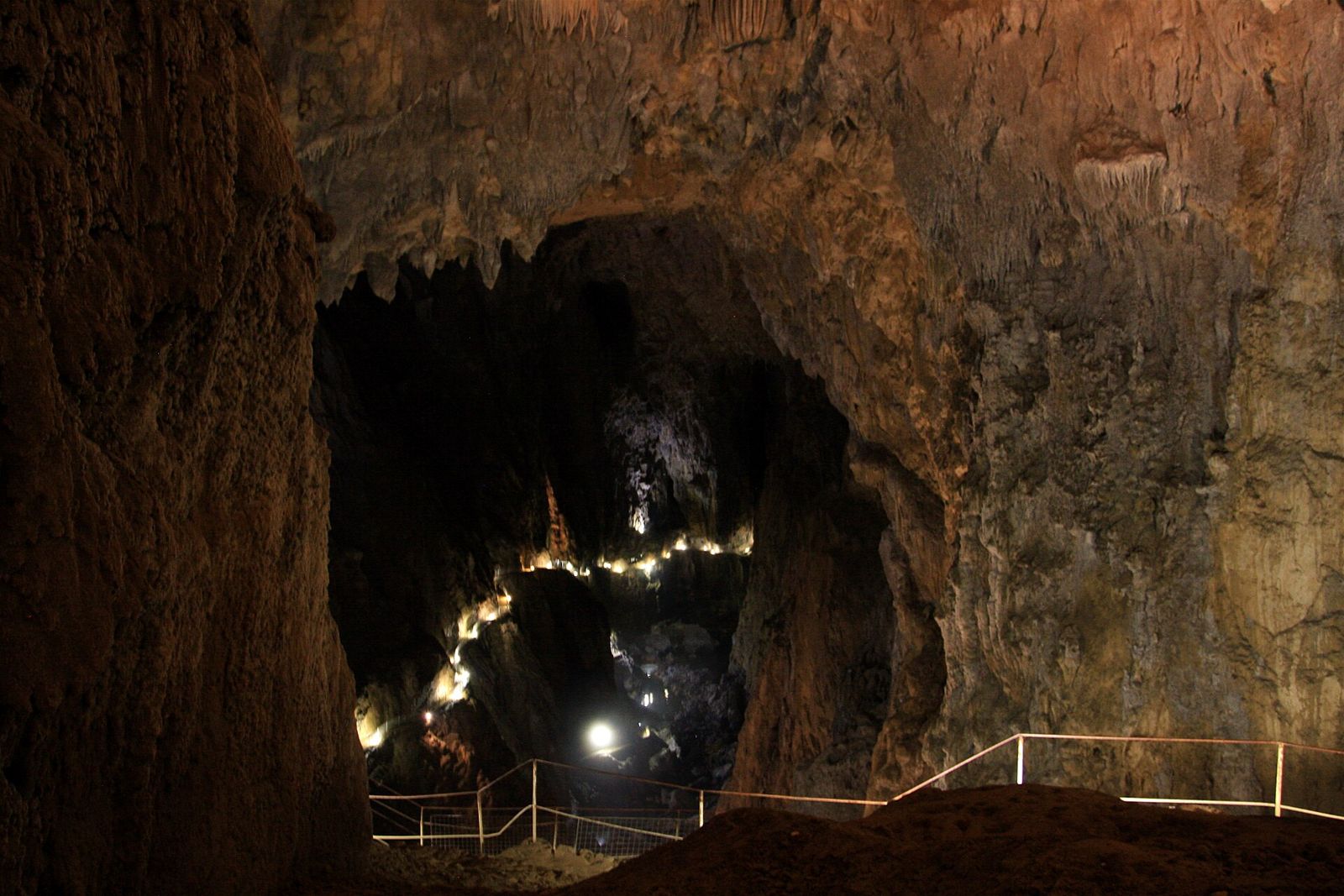
Škocjan Caves World Heritage — the underground canyon
Strengths
- The scale is of a different order: a cave system holding one of the world's largest known underground river canyons, cut by the Reka River, with collapsed dolines above it and what the park presents as probably Europe's largest underground chamber
- The protection matches the scale: UNESCO World Heritage since 1986, with Ramsar wetland and biosphere-reserve listings layered on since — this is the cave Slovenia itself treats as a natural treasure of the planet
- It pairs with the coast, not against it: Škocjan sits in the karst behind Koper, on the same south-western spoke as Piran
Watch out
- There is no cave train here: the canyon is experienced on foot, on the park's guided routes — the walking is the visit, which decides the question for some travellers outright
- It is a regional park with its own seasonal rhythm, not a daily show machine: check the park's own pages for your date's tours before fixing the day around it
Best for: the traveller who wants the wonder raw — one of the great underground landscapes of Europe, earned on foot.
See Škocjan Caves Park →Official sitePiran — the coast at the end of the spoke
Piran Day trip or overnight — the Adriatic old town
Strengths
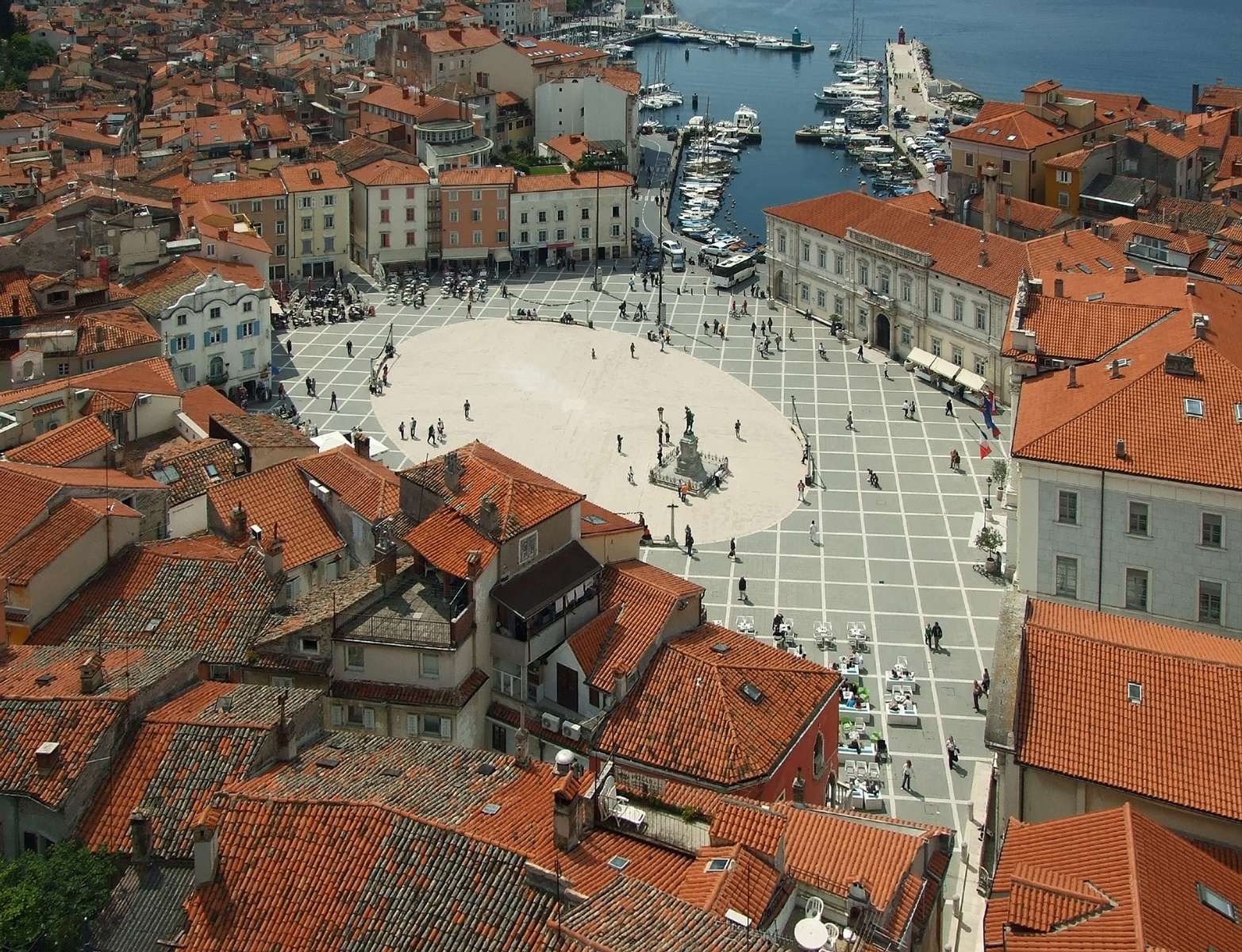
- A Venetian old town on a narrow peninsula: Tartini Square — named for the composer Giuseppe Tartini, born here, and laid over the town's old inner harbour — the church and bell tower above it, the town walls, and the lighthouse point at the tip
- It is Slovenia's sea: the one place on this page where the trip changes element, an hour of karst and motorway from the cave country
- Small enough to hold in a day, atmospheric enough to reward the night: Piran after the day buses leave is a different, quieter town
Watch out
- No railway reaches Piran — the last leg is bus or road whatever the map suggests, so the coast day is planned around road times, not train times
- As the longest spoke from Ljubljana, it is the day trip most easily squeezed: give it the full day, or sleep there and let the caves share the journey out
Best for: the sea day — or the trip's final night, with the airport run saved for the morning after.
See Portorož & Piran tourism →Official siteThe Ljubljana Card — the one pass judgement in the capital
Ljubljana has a city card of its own, sold by the city's official visitor organisation: the Ljubljana Card, in versions counted in consecutive hours, opening more than thirty of the city's attractions — the castle, a river cruise and a guided city tour among them — with unlimited city bus travel while it runs. One limit decides most purchases: it is a card for the capital, on a trip designed to leave the capital.
Guided tours of the same sights are a different product from the trains and tickets above. Judge a listing on what it actually includes — a Bled or cave tour's transport may be the part you are paying for, or the part you already have.
Browse Slovenia tours on Viator →Affiliate link — you pay the same Browse Slovenia tours on GetYourGuide →Affiliate link — you pay the sameWhere to sleep — one base, honestly held
The practical layer — how Slovenia differs from a US trip
Which Slovenia is yours?
Decisions that actually matter
Train or bus to Bled?
Bus, for most visitors: it leaves from beside Ljubljana's railway station and arrives in Bled town, by the lake. The train is entirely workable — but only once you know you want Lesce-Bled, the main-line station outside town with a connecting bus, and not Bled Jezero, the lakeside station the Ljubljana trains largely pass by. If your plans already run on rail, take the train knowingly; if they don't, the bus is the simpler product.
Postojna or Škocjan, if I only have one cave day?
Postojna if the group is mixed, the weather is uncertain or Predjama Castle is on your list — it runs daily, rides most of the way and asks little of anyone. Škocjan if you are fit, curious and travelling for the landscape itself: the underground canyon is the greater natural wonder, and it is experienced on foot. Neither answer is a compromise; they are different days wearing the same name.
Can I really do Slovenia from one base?
Yes — that is the country's structural gift. Ljubljana sits in the middle, Bled, the caves and Piran all sit on spokes out of it, and the station and bus station stand together. The base stops being enough only when you want Bled's or Piran's evenings more than you want an unpacked suitcase.
Is the Ljubljana Card worth it on a day-trip trip?
Only if your capital days are attraction-dense. The card bundles the castle, a cruise, a guided tour, dozens of museums and unlimited city buses — excellent value stacked into one or two Ljubljana days, and no value at all at Bled, Postojna or Piran. Price your actual Ljubljana list first; the spokes are never part of the arithmetic.
How do I get from the airport into Ljubljana?
By road — there is no airport railway station. The public bus runs to the main bus station beside the railway station, shuttles and taxis cover the door-to-door versions, and a pre-booked transfer removes the thinking for early or late arrivals. Arrange this leg first; it is the one part of a Slovenian trip with no rail alternative to fall back on.
Prices and terms change often — the booking site is the final word. Timetables, fare conditions and the caves' tour arrangements change by season and by day; check the operator's own page for your date. Facts on this page checked against providers' official pages, November 2026.


