
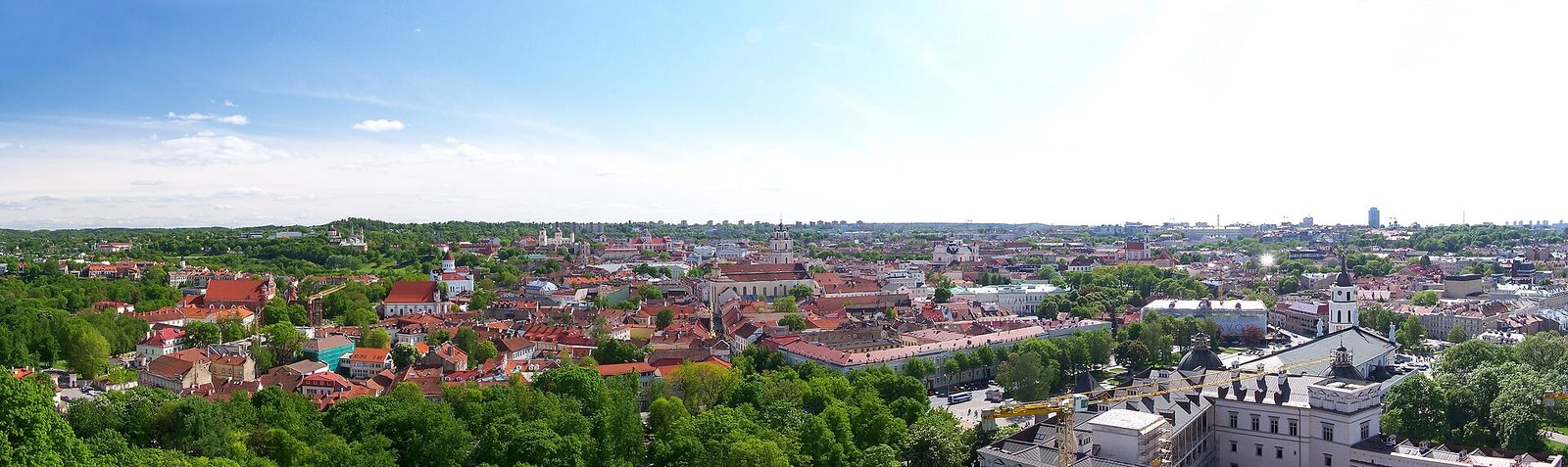
🇱🇹 Lithuania, anchored in Vilnius
Lithuania is the southern anchor of the Baltics, and almost every way of travelling it starts from the same forecourt: Vilnius, a baroque capital whose old town is a UNESCO World Heritage site, with its railway station and bus station standing side by side at the old town's southern edge. From that one corner the country fans out in legible spokes — Trakai's island castle in the lakes to the west, Kaunas on the road beyond it, the port of Klaipėda and the Curonian Spit at the end of the longest line, and, running north, the daily train that now ties Vilnius to Riga and onward to Tallinn. The Lithuanian problem is rarely distance. It is structure: which ticket system a city bus actually belongs to, why the Vilnius Pass comes in a version with transport and a version without, and whether a Baltic trip should be built as three separate capitals or as one continuous rail journey with Vilnius as its first or last chapter.
The lay of the land — a southern anchor, spokes in every direction
Read Lithuania as a hub and four spokes. Vilnius holds the airport, the main station and the old town in one compact knot; Trakai and Kaunas run west in a line, Klaipėda continues that line to the sea, and the Baltic capitals run north as a single through-journey. The table below is the whole country in one view.
| Layer | What it is | How booking works | Watch out |
|---|---|---|---|
| LTG Link trains | The national passenger railway, radiating from Vilnius toward Kaunas, Klaipėda and Trakai, and north toward Riga and Tallinn | One official home: ltglink.lt and the LTG Link app, plus station counters | The Riga and Tallinn legs carry a seat-reservation layer the domestic habit does not prepare you for — read the cross-border section before booking |
| Intercity buses | The layer that fills the railway's gaps — more departures on the main roads, and the natural link for places the rails pass by | Sold through the Vilnius bus station, which stands beside the railway station, and the operators' own channels | Train and bus leave from neighbouring buildings but run on separate tickets and separate logic — do not assume one covers the other |
| JUDU city transport | Vilnius's bus and trolleybus network, run by the city company JUDU — there is no metro and no tram | Timed tickets through the JUDU or m.Ticket apps, the reloadable JUDU card, or a contactless bank card tapped on board | Each Lithuanian city runs its own ticket system: a Vilnius answer is not a Kaunas answer |
| Vilnius Airport (VNO) | The country's main international gateway, south of the centre | A dedicated airport railway halt links it to Vilnius station; city buses cover the same ground more frequently | The airport train is quick but runs on a wide interval — the bus is the forgiving option, the train is the planned one |
The railway — one operator, one hub, one northern line
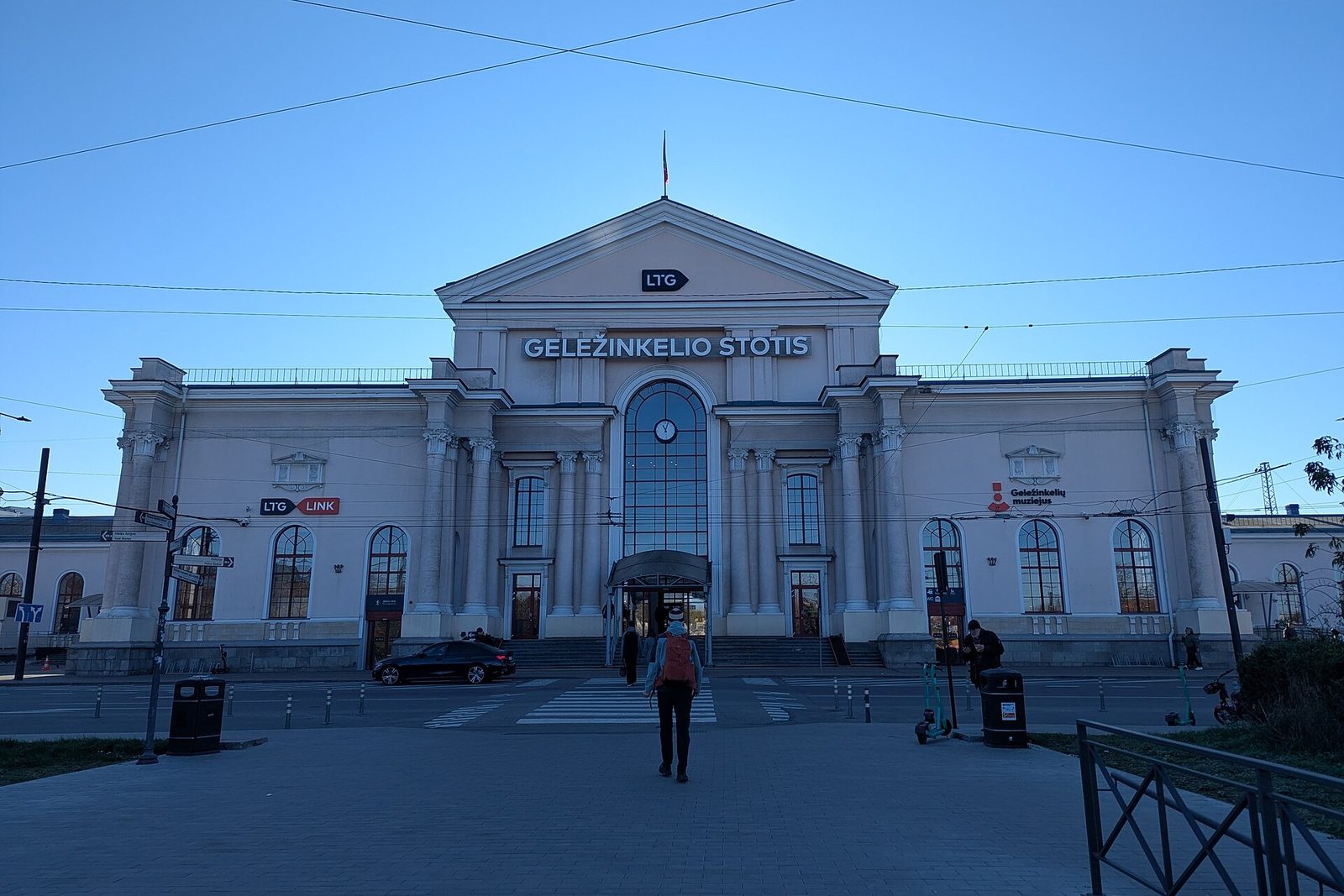
LTG Link — Lithuanian Railways National rail — one operator, one hub
Strengths
- One operator and one official booking home for the whole country: the timetable logic you learn for the Kaunas line is the logic of every line
- The busiest domestic line, Vilnius to Kaunas, is the country's spine — the second city is a rail day trip, not an expedition
- The northern line is genuinely new in travel terms: a daily direct train to Riga, and a single through ticket onward to Tallinn, sold by LTG Link itself
Watch out
- The fleet is mid-renewal: new trains are entering service route by route, so the train in a photograph may not be the train on your departure
- Cross-border legs add rules the domestic network does not have — seat reservation on the Riga line is the one that catches people out
- Westward international travel toward Poland runs on a linked, multi-operator structure rather than one simple direct product; plan it on the official pages, not on habit
Best for: Kaunas, Trakai, the coast and the whole Baltic through-journey — the frame the rest of this page hangs on.
Rail passes (Eurail) Pass — read the structure first
Strengths
- LTG Link's own pass page confirms pass holders are carried on domestic routes and on international routes within the EU — Lithuania is properly inside the pass system
- Sold by Eurail itself; we link the official site and label it as such
Watch out
- The Riga leg still asks pass holders for a seat reservation, arranged through LTG Link — a pass alone is not the whole ticket on the journey most people buy it for
- For Lithuania alone, judge the pass against ordinary LTG Link singles first: short domestic spokes are the shape a country pass finds hardest to beat
Best for: trips where Lithuania is one country among several — judge it on the whole route, and reserve the Riga seat either way.
Vilnius — the baroque base
Vilnius earns its place twice: as the station-and-airport knot every spoke returns to, and as a destination in its own right — one of the largest surviving old towns in this part of Europe, layered with gothic, renaissance and above all baroque churches, and watched over by a castle tower on its hill.
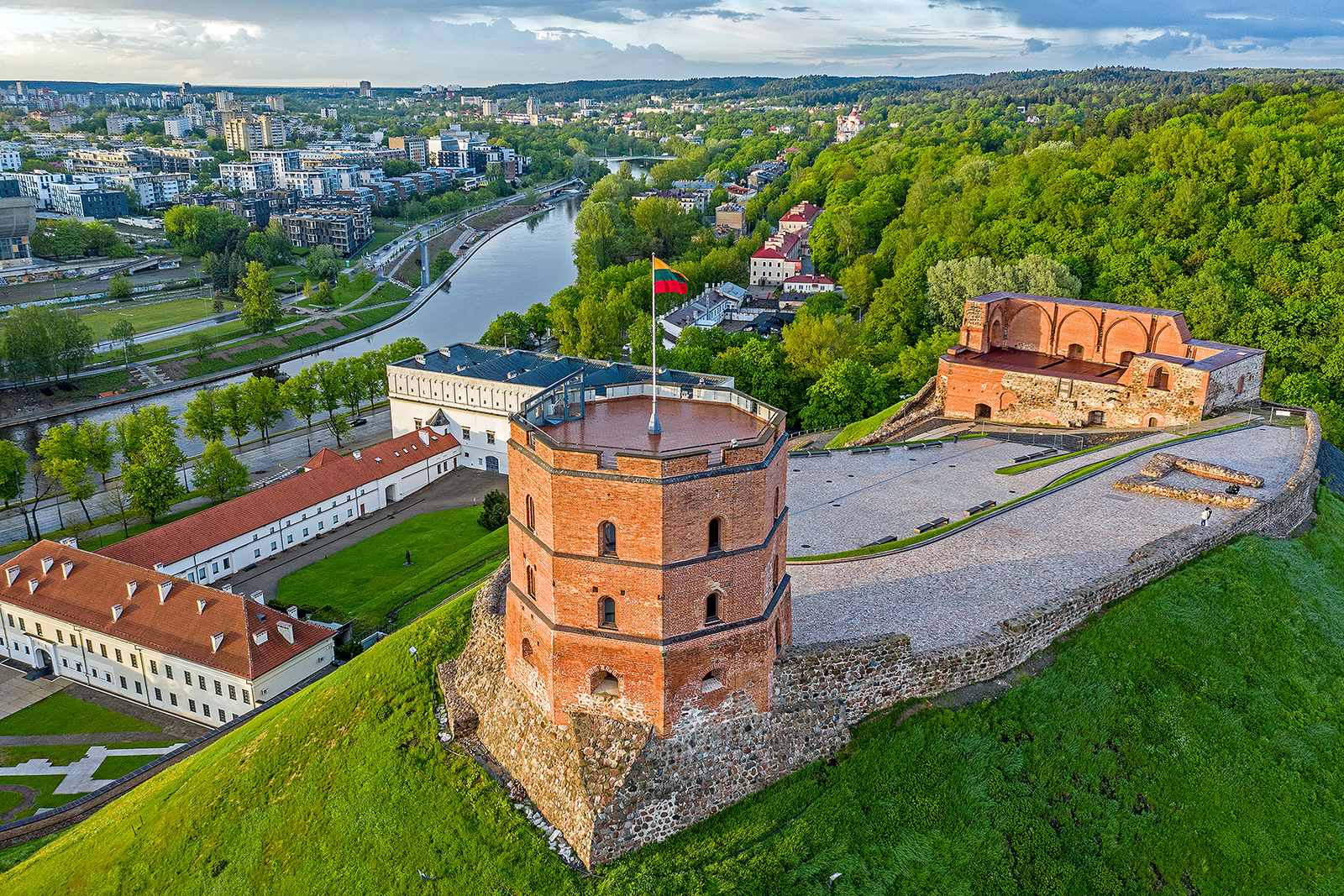
Vilnius old town & Gediminas Tower Base — the capital & the hub
Strengths
- The old town is a UNESCO World Heritage site with a legible spine: Cathedral Square at one end, Pilies Street running south through the university quarter toward the Gates of Dawn
- Gediminas Tower, the surviving tower of the Upper Castle on its hill above the cathedral, gives the whole city back to you as a panorama — old town roofs on one side, the river and the modern bank on the other
- Across the little Vilnia river, Užupis — the artists' quarter that playfully declares itself a republic — is the old town's counterweight, a short walk and a different mood
Watch out
- The old town's churches are working churches as well as sights: dress and behave for services, and expect some interiors to be closed to sightseeing at service times
- Cobbles and hills are the terrain: the castle hill paths and old town lanes reward good shoes and punish hurried luggage
Best for: the base of this whole page, and at least one full slow day of its own before the spokes begin.
See Go Vilnius →Official siteTrakai — the castle in the lake
West of Vilnius the land flattens into a lake district, and on an island in Lake Galvė stands the image Lithuania puts on its own postcards: a red-brick gothic castle, reached by wooden bridges, holding the Trakai History Museum inside its walls.
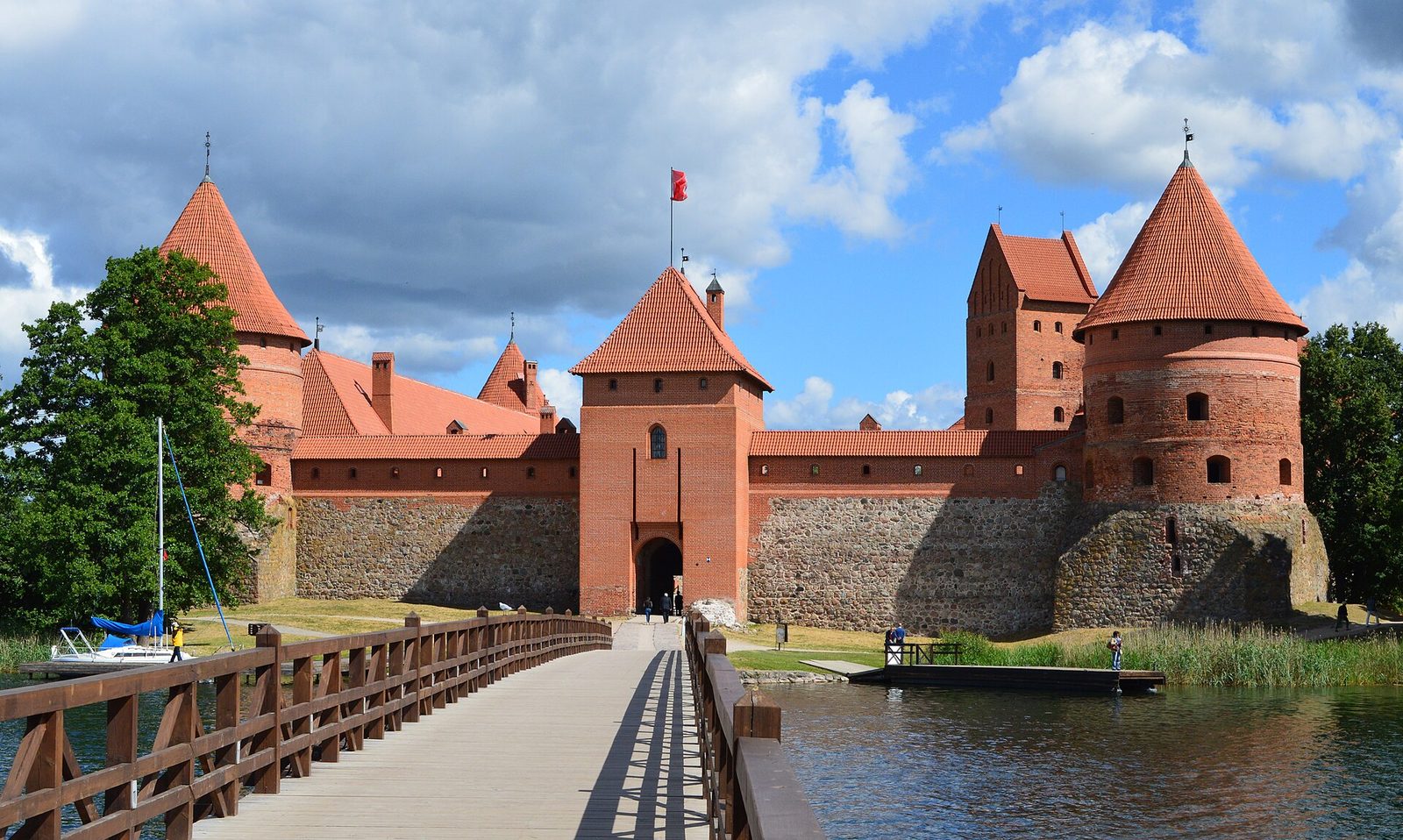
Trakai Island Castle Day trip — the lake castle
Strengths
- The approach is the sight: the castle grows across the water as you walk the bridges from the town shore, an island fortress composed for the view
- It is a real rail day trip — LTG Link runs the Vilnius to Trakai line, so the castle day needs no car and no tour bus to happen
- The town around the lake shore, with its Karaim heritage and wooden houses along the water, stretches the visit beyond the castle walls into a full, unhurried day
Watch out
- Trakai is the country's signature excursion, and in season the castle and bridges carry that popularity — the early train is not a tip, it is the product
- Check the museum's own pages for your date's opening pattern before fixing the day; a lakeside town in the off-season keeps quieter hours than its summer self
Best for: the essential Lithuanian half-day or day — the first spoke almost every Vilnius base should make.
Kaunas — the other capital
Kaunas, at the meeting of the Nemunas and Neris rivers, is Lithuania's second city and its great counter-argument to a Vilnius-only trip. Between the world wars, while Vilnius lay outside Lithuania's borders, Kaunas served as the country's temporary capital — and built like one.
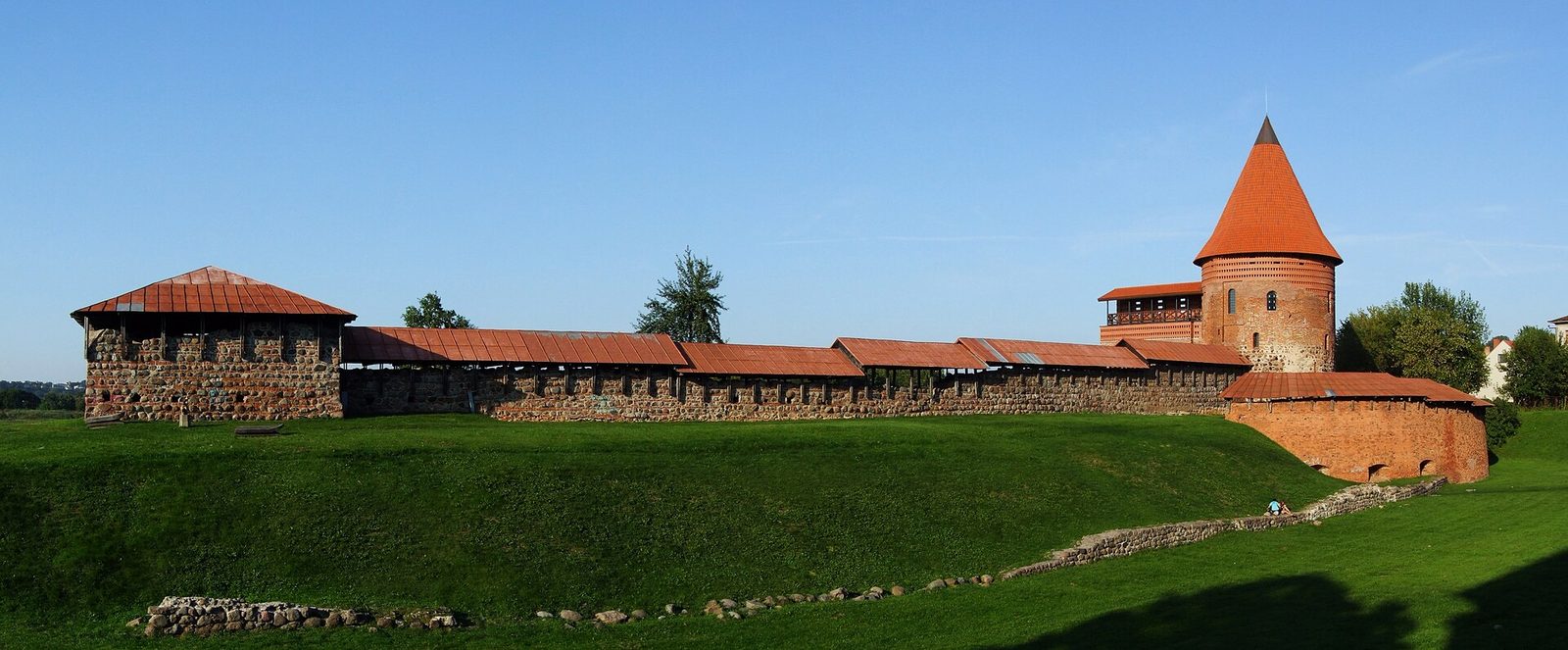
Kaunas old town & the modernist centre Day trip or overnight — the interwar capital
Strengths
- The interwar building boom left a modernist city centre that UNESCO added to the World Heritage list in 2023 — an architecture walk unlike anything else in the Baltics
- Laisvės alėja, the long pedestrian boulevard, ties the new town together, and the old town at its end holds Kaunas Castle at the rivers' confluence, presented as the city's oldest building
- It sits on the busiest rail line in the country: from Vilnius it is the easiest second city in this whole region to add
Watch out
- Kaunas runs its own city ticket system, separate from Vilnius's JUDU — the card or app habit you built in the capital does not transfer
- As a day trip it is often squeezed into the trip's last morning; the modernist centre rewards a full day, and the city makes a calm overnight before an early departure from its side of the country
Best for: the traveller who wants Lithuania beyond its capital — architecture, the rivers, and a city with its own story to tell.
See Visit Kaunas →Official siteKlaipėda & the Curonian Spit — the sea at the end of the line
Lithuania's coastline is short, and its one port city guards something out of all proportion to it: the Curonian Spit, a long, narrow peninsula of moving sand dunes between the Baltic Sea and the Curonian Lagoon, shared with Russia's Kaliningrad region and protected as a UNESCO World Heritage site and a national park.
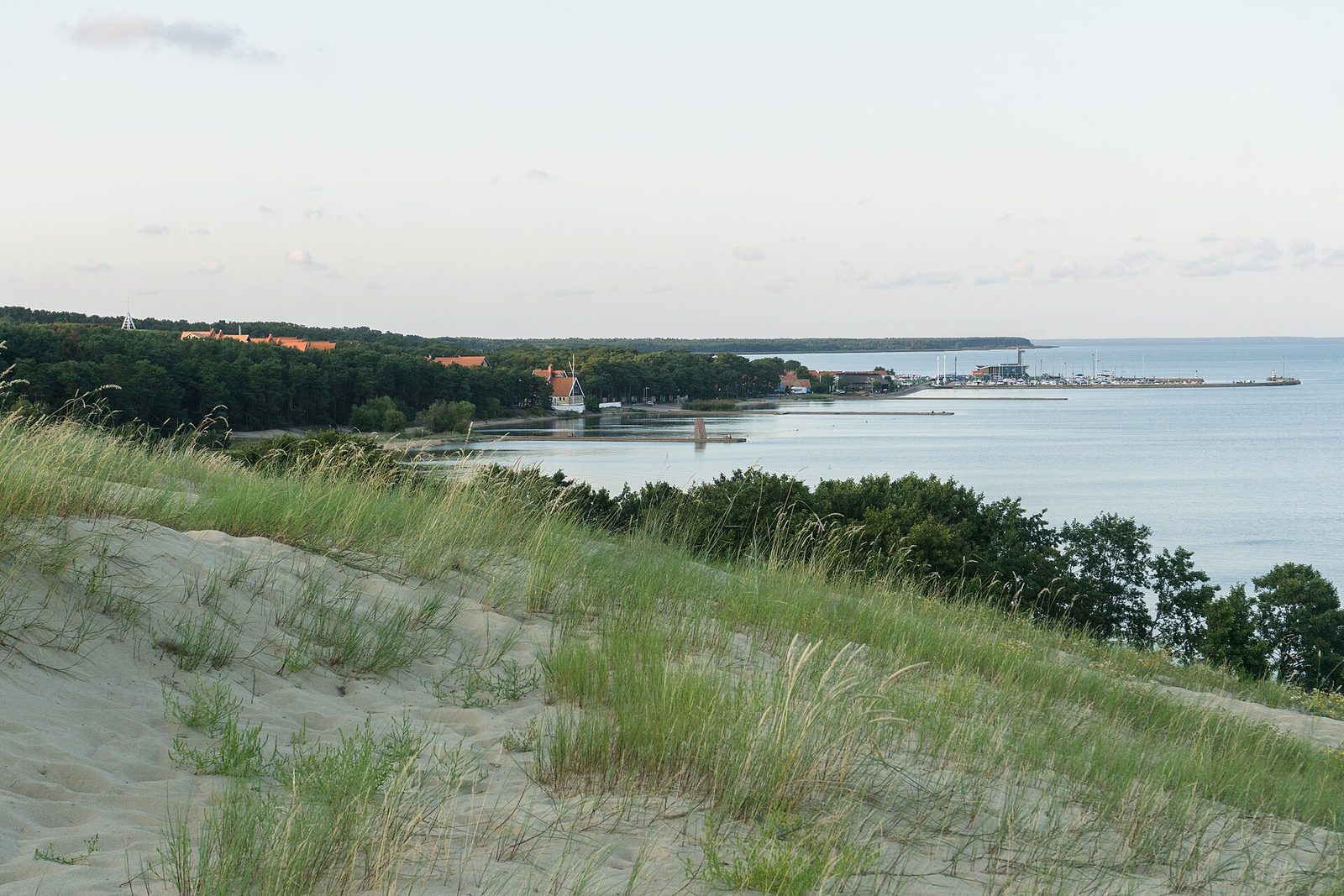
Klaipėda & the Curonian Spit Overnight — the port & the dunes
Strengths
- The crossing is short and simple in structure: a brief ferry from Klaipėda lands at Smiltynė, the spit's northern tip, where the Lithuanian Sea Museum stands among the pines
- One road runs the length of the Lithuanian spit through fishing villages to Nida, near the border — dunes, forest, lagoon on one side and open sea on the other
- Klaipėda itself, the line's terminus, gives the coast a working port city as its base rather than a pure resort strip
Watch out
- This is the one Lithuanian spoke that does not fit a casual day trip from Vilnius: the line to the coast is the country's longest, and the spit deserves a night at its end
- The spit is a protected landscape with its own park rules and, for drivers, its own entry arrangements — check the park's and ferry operator's own pages before setting out, and treat the dunes as the fragile ground they are
Best for: the trip's final chapter — the sea, taken slowly, after the cities are done.
The Vilnius Pass — read the version name before the promise
Vilnius has a city pass of its own, sold by the city's official visitor organisation: the Vilnius Pass, in versions counted in consecutive hours, opening dozens of the city's museums and attractions. Its official pages make one distinction that decides most purchases, and it is printed in the version names themselves: public transport is included only in the version that says so.
Guided tours of the same sights are a different product from the trains and tickets above. Judge a listing on what it actually includes — a Trakai or Baltic-capitals tour's transport and guiding may be the part you are paying for, or the part you already have.
Browse Lithuania tours on Viator →Affiliate link — you pay the same Browse Lithuania tours on GetYourGuide →Affiliate link — you pay the sameWhere to sleep — one anchor, honestly held
The practical layer — how Lithuania differs from a US trip
Which Lithuania is yours?
Decisions that actually matter
Can I really ride one ticket from Vilnius to Tallinn?
Yes — that is the Baltic railways' own product, not a travel hack. LTG Link sells the through journey: the same train carries you through Riga, and you change once, at Valga on the Estonian border, onto the connecting service. What the single ticket does not remove is the seat-reservation layer on the Lithuanian and Latvian legs — arrange it in the same booking, on LTG Link's own pages, and the journey stays as simple as it sounds.
Is Kaunas worth a day when Vilnius is already the base?
Yes, and it is the easiest yes on this page: the two cities are tied by the country's busiest rail line, and Kaunas is not a smaller Vilnius — it is a different chapter, the interwar capital with a UNESCO-listed modernist centre and its own castle at the rivers' meeting. The honest choice is not whether to go, but whether a day is enough or the city earns a night.
Should the Curonian Spit be a day trip?
From Klaipėda, certainly — the ferry crossing is short and the spit's villages run along one road. From Vilnius, no: the coast is the country's longest spoke, and a same-day return turns one of Europe's strangest landscapes into a railway timetable with a glimpse of dunes inside it. Sleep at the coast, in Klaipėda or on the spit itself, and let the sea have an evening as well as an afternoon.
Is the Vilnius Pass worth it?
Only in its own terms. It is a sightseeing pass covering dozens of the capital's museums and attractions in a fixed run of hours — excellent value stacked into dense Vilnius days, and no value at all in Trakai, Kaunas or on the coast. And read the version: free public transport rides only in the version sold with a transport ticket. Price your actual Vilnius list first; the spokes are never part of the arithmetic.
Train or bus from the airport into Vilnius?
Both work, and they suit different arrivals. The airport's own station makes the train the fastest ride to the main station when its timetable meets your flight — plan it, and it is the elegant option. The city buses run more frequently and forgive a delayed arrival. What not to do is assume the train runs like an airport express on a metro interval: check the departure board against your landing time before you choose.
Prices and terms change often — the booking site is the final word. Timetables, fare conditions and pass arrangements change by season and by day; check the operator's own page for your date. Facts on this page checked against providers' official pages, November 2026.


