
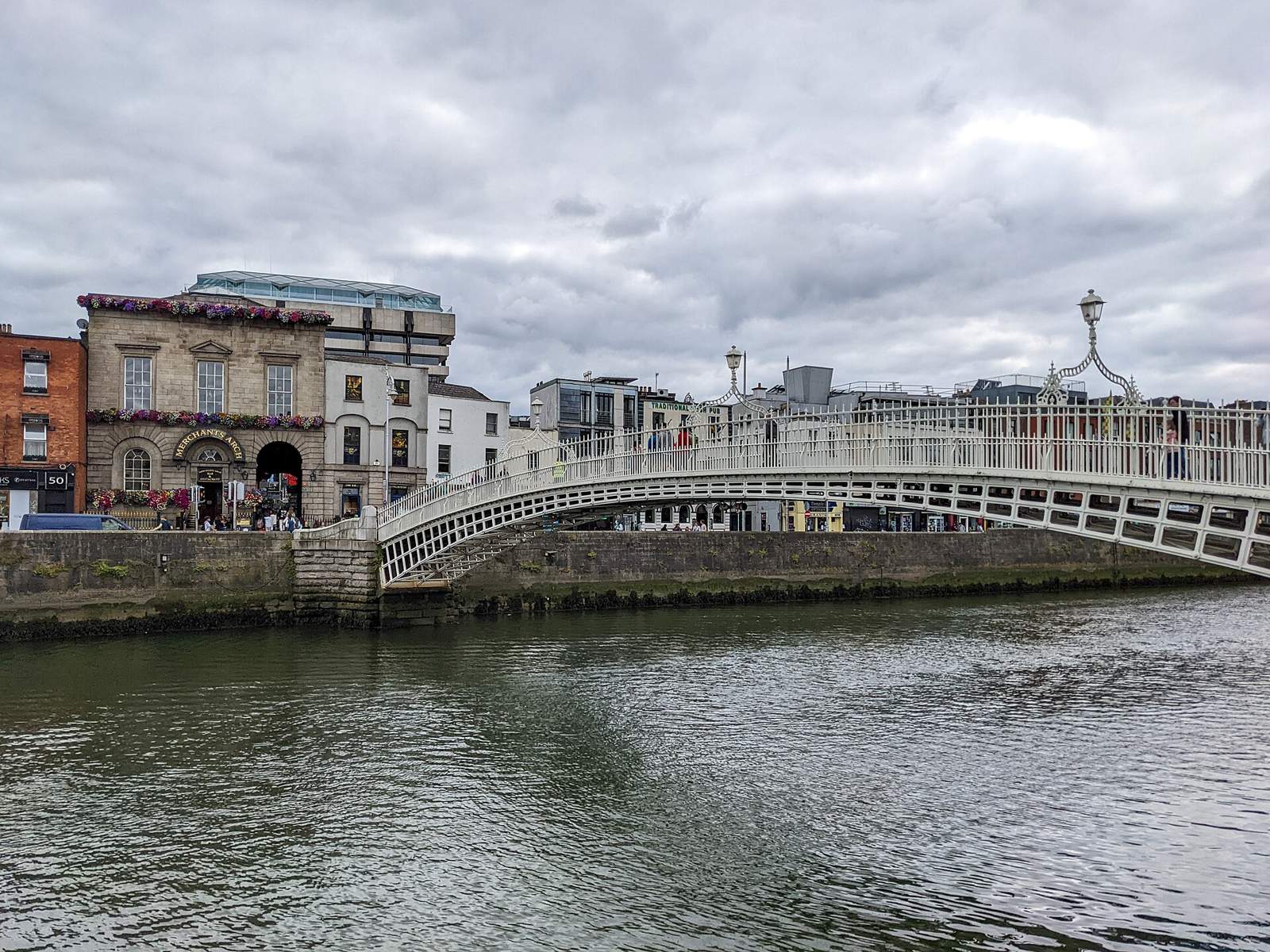
🇮🇪 Ireland — Dublin first, the west by road
Ireland breaks the pattern of the other pages in this hub, twice over. First, entry: Ireland is a member of the European Union but not of the Schengen area, so the Schengen allowance that governs a trip through France or Spain does not run here — Ireland keeps its own visitor permission, its own visa list, and a separate arrangement with the United Kingdom, the Common Travel Area. Second, transport: the trains radiate thinly from Dublin and stop well short of the coast everyone comes to see, so the west — Galway, the Burren, the Cliffs of Moher — is planned around buses, day tours and, for some, a rental car. The money, at least, is familiar: the euro. This page works through the entry exception first, then Dublin's Leap Card logic, then the rail-versus-road judgement that shapes the trip.
Entry — an EU country on its own clock
Start here, because the most common Ireland mistake is an assumption imported from the continent: that a Schengen visa or a half-used Schengen allowance has something to do with Dublin. It does not. Ireland maintains its own immigration system and controls at its airports and seaports — and the permission you need is Ireland's.
| Route in | Who it is for | How the stay works | Watch out |
|---|---|---|---|
| Visitor permission, no visa needed | Nationalities on Ireland's visa-exempt list — Irish Immigration publishes the checker for your passport | Irish Immigration frames a visit as a stay of less than ninety days; the permission is given at the border, by the immigration officer you meet | Visa-free is not entry-guaranteed: officers examine documents and purpose, and can refuse permission to enter |
| Short Stay 'C' Tourist Visa | Nationalities Ireland lists as visa-required | Applied for before travel, for visits of ninety days or less, through Irish Immigration's system | A visa lets you travel to Ireland — it does not give you permission to enter or to stay; that decision is still made at border control |
| Common Travel Area | Irish and British citizens only | Free movement and residence between Ireland and the UK, with linked rights to work, study and services — an arrangement older than either country's EU history | The rights belong to those two citizenships. Living in Ireland or the UK as another nationality does not make you part of it |
| Northern Ireland | Everyone — because the North is the United Kingdom | The land border itself has no immigration controls at all; the train or bus simply crosses | No checkpoint is not no rules: entering the UK, including Northern Ireland, must be in line with UK immigration rules, and travellers who need a UK ETA need it for the North too |
Dublin — the Leap Card is the ticket
Dublin's transport runs under one umbrella, Transport for Ireland, and one card — the TFI Leap Card — works across almost all of it: city buses, the Luas tram's two lines, the DART coastal railway and commuter trains in the Dublin fare zones. That integration, plus automatic capping, replaces most travel products sold to visitors. The DART doubles as the city's scenic line, running the length of Dublin Bay from Howth and Malahide to Bray and Greystones.
TFI Leap Card City card — pay as you go, capped
Strengths
- One reusable, pre-paid card across the TFI network — city buses, Luas trams, DART and Dublin-zone commuter rail, plus Bus Éireann and Local Link services beyond the city
- In Dublin's central zone your spending caps itself: mix bus, tram and train in a day or a Monday-to-Sunday week and the fare stops rising at the cap
- One fare structure covers most transfers within a short window across Dublin services, so bus-to-tram is not automatically a second full fare
Watch out
- Leap is stored-value, not unlimited — the standard card charges per journey until the cap; the unlimited product is the separate Visitor Card below
- Caps apply to the central Dublin zone; commuter rail counts only within its Dublin fare zones, and intercity travel is a different product
- An unregistered card cannot be replaced or refunded if you lose it — Transport for Ireland advises registering it
Best for: most Dublin stays — the default way to pay for the city, with the cap doing the budgeting for you.
See Transport for Ireland →Official siteThe rails — a thin radial, two Dublin termini
Irish Rail's InterCity map is a fan, not a network: lines radiate from Dublin to the regional cities, and little connects those cities to each other except through the capital or by road. Two Dublin stations split the fan, and knowing which one your direction uses is the basic literacy of an Irish rail trip.
| Station | Directions it serves | What leaves from there | Watch out |
|---|---|---|---|
| Dublin Heuston | South and west | InterCity trains for Cork, Galway, Limerick and Ennis, Tralee, Waterford, and Westport and Ballina | Heuston sits west of the centre on the Luas Red Line — it is not the station by O'Connell Street |
| Dublin Connolly | North, east and south-east | The Enterprise to Belfast, InterCity trains for Sligo and Rosslare Europort, plus DART and commuter services and the Luas Red Line | A Belfast or Sligo ticket does nothing at Heuston — the two termini are a cross-city transfer apart |
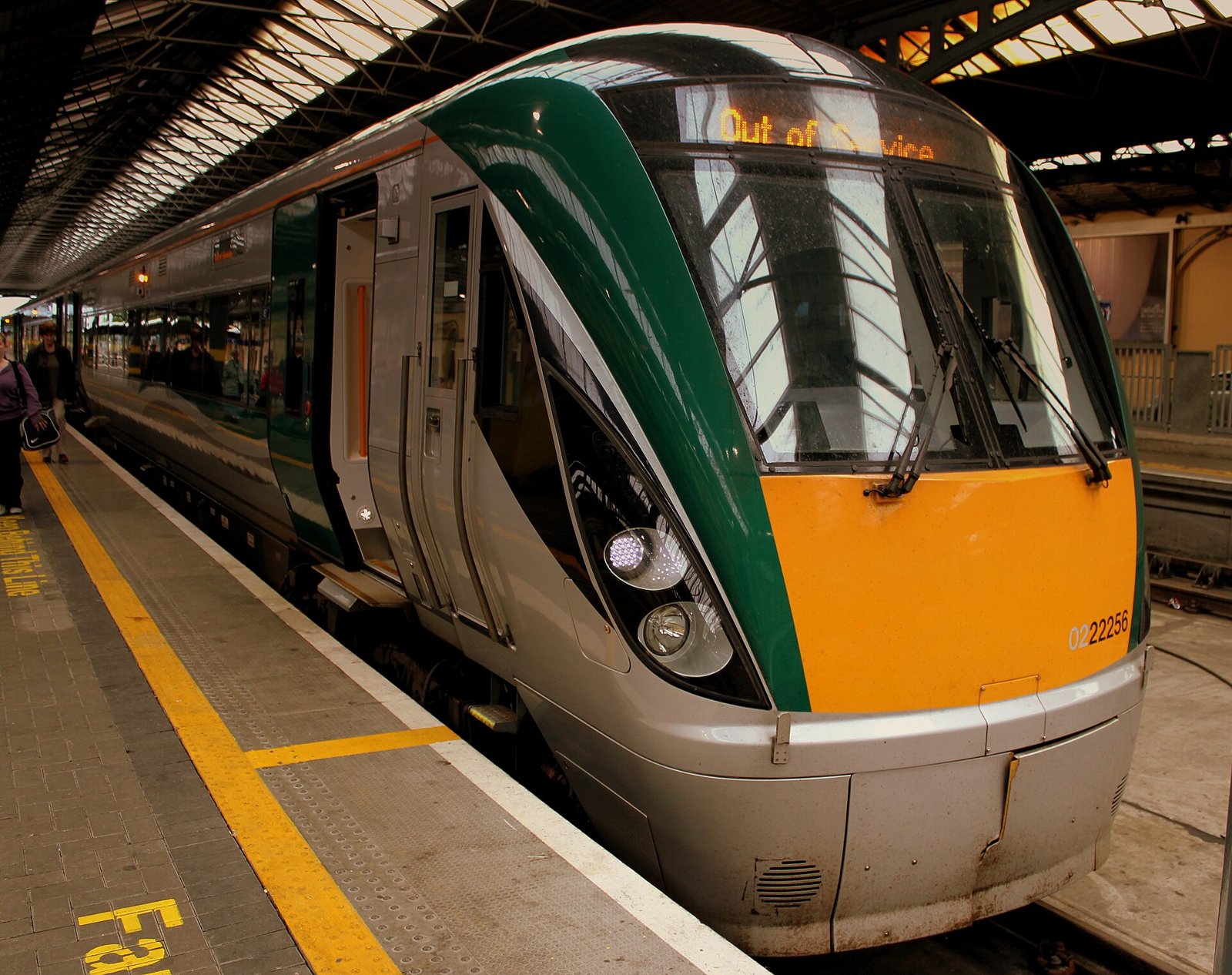
Irish Rail (Iarnród Éireann) Rail — InterCity, Commuter, DART
Strengths
- The Dublin-to-regional-city legs are genuinely good railway: Galway, Cork, Limerick, Waterford, Sligo and Belfast are all direct rides from a terminus
- One official place — irishrail.ie — sells the whole system, InterCity, commuter and DART alike
- The Enterprise gives Dublin a cross-border city pair: Connolly to Belfast as a simple day trip or second base
Watch out
- The radial has no coastal west: no train reaches the Cliffs of Moher or the Burren coast — rail gets you to Galway or Ennis, and the last stretch is road
- City-to-city travel avoiding Dublin is mostly not a rail product; Cork to Galway is a bus map, not a train map
- Two termini mean a wrong-station start is the classic self-inflicted missed train — the ticket names the station, read it the night before
Best for: the spokes — Dublin to one or two regional bases and back. Not for stitching the coast together.
Rail passes (Eurail) Pass — read the structure first
Strengths
- One pass across many trains and borders — the natural shape for a multi-country rail trip that includes Ireland
- Sold by Eurail itself; we link the official site and label it as such
Watch out
- Ireland's thin radial gives a pass fewer legs to work on than France or Germany — count your actual Irish journeys before valuing it here
- We have no affiliate arrangement here and do not summarise pass prices or reservation terms we have not verified
Best for: trips where Ireland is one country among several — judge it on the whole route, not the Irish legs alone.
Beyond Dublin — the west is a road trip
Everything visitors picture — the cliffs, the Burren, Galway's lanes, the Aran Islands beyond — sits on the Atlantic coast, where transport is buses, coaches and tours. Planning the west means choosing among the public bus network, the organised day tour and your own car. Pretending the train does this job is the one wrong answer.
Bus Éireann & Expressway Bus — the national road network
Strengths
- The state bus network reaches where the railway does not: intercity Expressway coaches between the cities, local services to the towns between them
- It is the public spine of the west coast — the Galway to Ennis corridor that serves the Cliffs of Moher is a Bus Éireann route
- Dublin's central bus station, Busáras, sits by Connolly Station, so bus and rail legs combine in one neighbourhood
Watch out
- Rural frequency is the trade: beyond the intercity corridors, services can be a handful a day, and the timetable sets the day's shape
- Expressway and local services are different products with different ticketing; check which one your route actually is on the official site
- The Leap Visitor Card does not cover Bus Éireann — a Dublin city card is not a west-coast card
Best for: the independent traveller based in Galway or Ennis, working the coast at bus pace — and anyone stitching cities together off the rail radial.
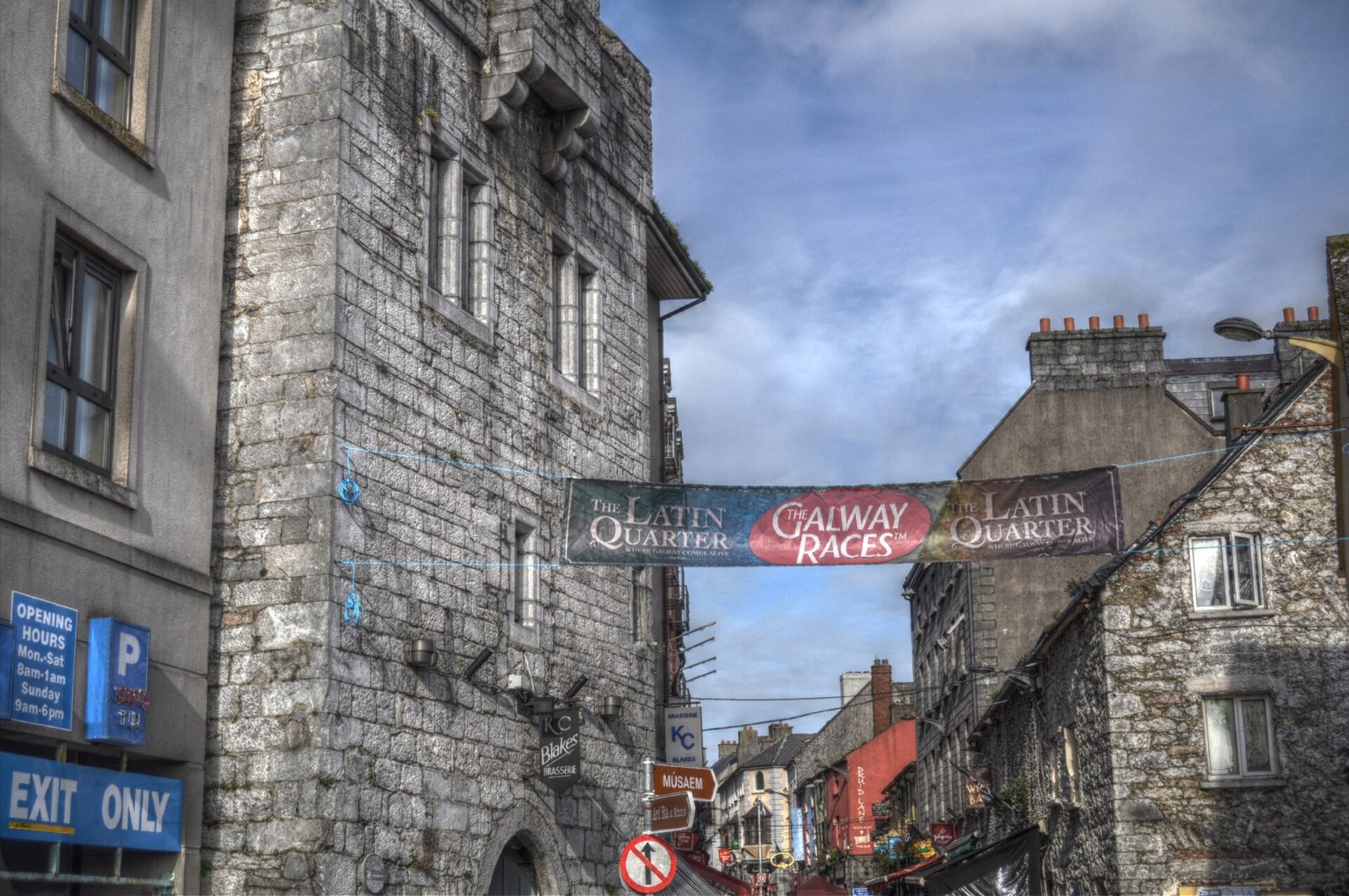
Galway Base — the west's working capital
Strengths
- The natural western base: a direct InterCity train from Heuston, the Bus Éireann hub for the coast, and a walkable centre around the Latin Quarter and the bay
- From one bed, three directions open: the Cliffs and the Burren south, Connemara north-west, the Aran ferry ports along the coast
Watch out
- Festival and summer demand concentrates in a small centre; the base works best booked as a base, for consecutive nights
- Every west-coast day out of Galway is still a road day — build them one per day, not stacked
Best for: the west without a car — sleep in Galway, and let buses and tours radiate the way trains do from Dublin.
Plan with Transport for Ireland →Official site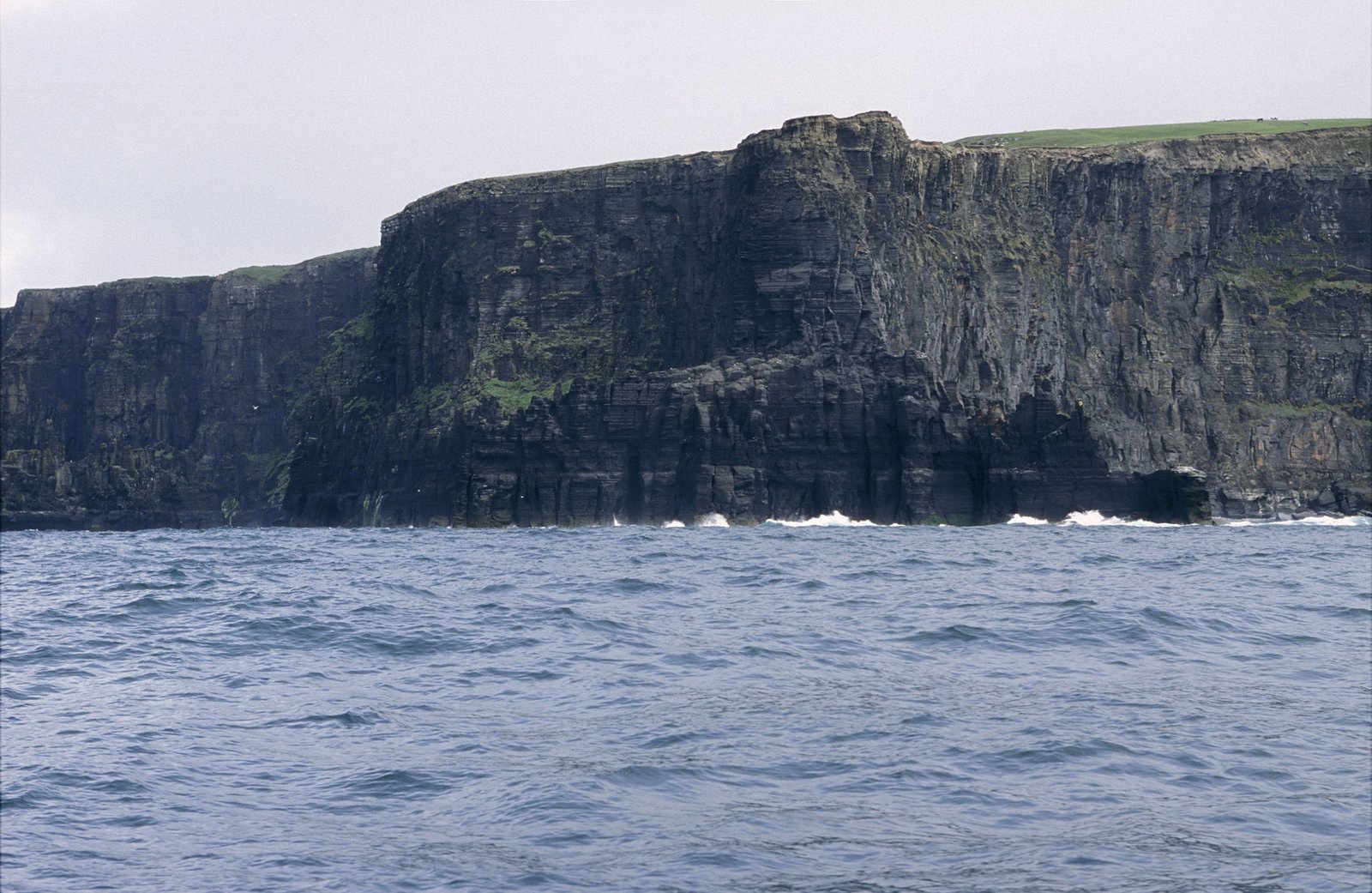
Cliffs of Moher West coast — the headline sight
Strengths
- The official visitor experience bundles the practicalities: exhibition, O'Brien's Tower and parking are inside the admission structure
- Reachable without a car: the Cliffs' own directions point to the Bus Éireann service linking Galway, the Cliffs and Ennis along the Wild Atlantic Way
Watch out
- There is no railway anywhere near it — every route in is a road route, and from Dublin it is a long day in any vehicle
- Atlantic weather is the real opening hours: wind and sea mist can take the view, which argues for a flexible day if your base allows one
- The coastal walk's sections open and close with works and safety decisions — treat any walking plan as provisional until the official pages confirm it for your date
Best for: a full day from a Galway or Ennis base by public bus, or a guided day tour from Dublin if Dublin is your only base.
See the Cliffs of Moher Experience →Official siteViator Marketplace · Ireland day tours
Pros
- The day-tour layer in one basket: Cliffs, Burren and Galway combinations out of Dublin and Galway, with operator reviews to compare
- For a Dublin-only base, a tour makes the west a single day — transport, timing and admission as one product
- Free cancellation on most products, like other Viator bookings
Cons
- A coach day is a long day: much of it is motorway, and the stops are the operator's, not yours
- Read what the product actually includes — admission, guiding and transport are bundled differently across listings that look alike
Best for: the Dublin-based traveller with one day for the west — and for comparing tour shapes before deciding a Galway base does the job better.
Browse Ireland tours →Affiliate link — you pay the sameGetYourGuide Marketplace · Ireland tickets & tours
Pros
- A large Ireland catalogue of day trips, tickets and experiences in one app — useful for comparing departure points and what a day actually contains
Cons
- The same inclusion check applies: a listing priced beside the official Cliffs admission is selling transport and guiding on top of it — compare like with like before paying for the bundle
Best for: cross-checking the tour day — routes, timings and inclusions — against the official doors.
See GetYourGuide →Affiliate link — you pay the sameThe pass & booking judgement — three small systems, not one big pass
Ireland has no single product that "does" the country. The honest structure is three small judgements, each in its own layer.
Where to sleep — two bases do the whole country
The practical layer — how Ireland differs from a Schengen trip
Which Ireland is yours?
Decisions that actually matter
Is Ireland part of Schengen?
No. Ireland is an EU member with its own immigration system. Schengen's ninety-in-a-hundred-and-eighty-days rule neither grants time in Ireland nor is used up by time spent here, a Schengen visa is not valid for Ireland, and ETIAS does not include Ireland. Irish Immigration's checker for your nationality is the document that matters.
Can I just cross into Northern Ireland?
Physically, yes — there are no immigration controls on the land border, and trains and buses cross as ordinary services. Legally, it depends who you are: Common Travel Area rights belong to Irish and British citizens, and everyone entering the UK, including Northern Ireland, must do so in line with UK rules — which for many nationalities means a UK ETA. Check GOV.UK for your passport.
Leap Card or Leap Visitor Card?
The standard Leap Card is pay-as-you-go with automatic daily and weekly caps in Dublin's central zone — the right default. The Visitor Card is unlimited travel for a set period on Dublin city services, worth it for a short stay dense with rides. Neither is an Ireland-wide pass, and the Visitor Card is not valid on Bus Éireann.
Can I reach the Cliffs of Moher by train?
No — the single most useful fact on this page. Trains reach Galway and Ennis; the Cliffs are served from both by the Bus Éireann route the Cliffs' own directions recommend, by tour coaches, and by car. Plan the last stretch as a road leg.
Heuston or Connolly?
Heuston for the south and west — Cork, Galway, Limerick, Tralee, Waterford, Westport. Connolly for the north, east and south-east — Belfast, Sligo, Rosslare — and for DART and commuter services. The station is on your ticket; the two are a cross-city transfer apart, so check the night before, not on the platform.
Do I need a car for Ireland?
Not for the trip on this page: Dublin, Galway, Belfast and the Cliffs all work on trains, buses and tours. A car earns its consideration for the rural peninsulas and for stitching small places together between bus routes — judge it leg by leg, rather than renting one for the whole stay by default.
Prices and terms change often — the booking site is the final word. Entry rules, timetables, fare caps and path closures all change by season and by day; check the official page for your date and your nationality. Facts on this page checked against official pages, November 2026.


