
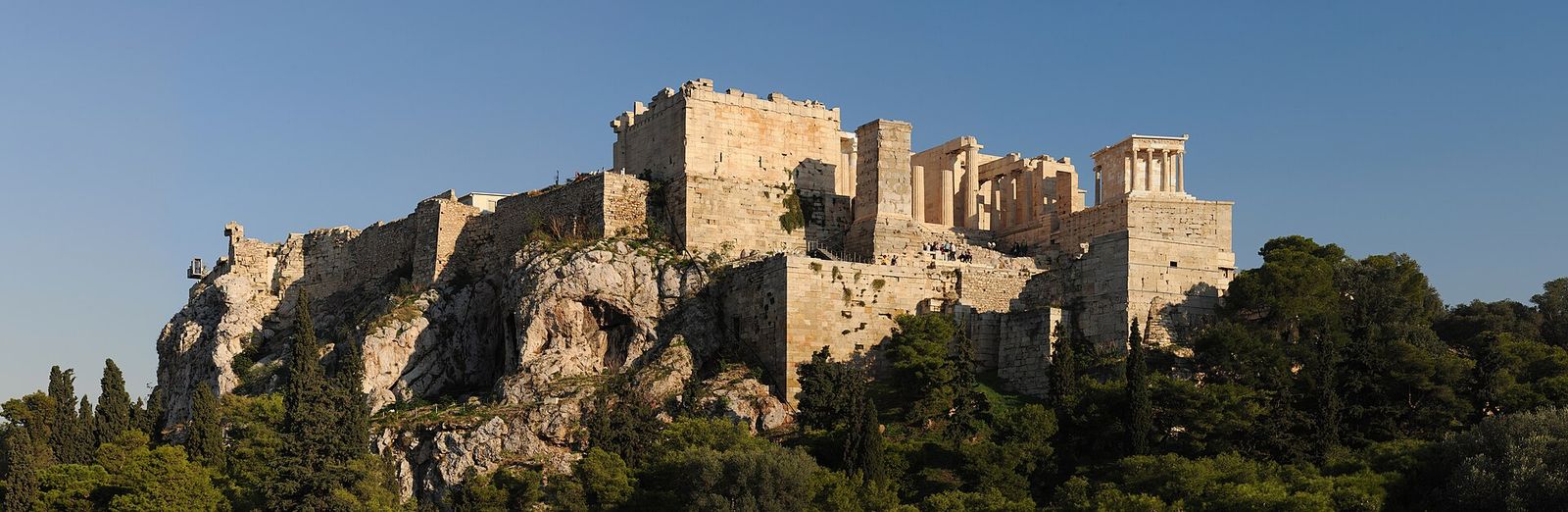
🇬🇷 Greece — the ruins first, then the ferry decides
Greece is really two trips sharing one itinerary. The first is Athens: a compact ancient core where the Acropolis runs on timed entry from the state's own ticket store, the museum at its foot is a separate institution with a separate ticket, and the other archaeological sites each sell their own admission. The second trip starts at the port. From Piraeus — and, for some sailings, Rafina or Lavrio — the ferry network fans out to the island groups, and from that point your schedule is set less by what you want to see than by which sailing exists on your date, from which port, on which kind of ship. This page covers both halves honestly: the ticket structures as the official stores actually run them, the ferry system as the port and the operators actually organise it, and the island choices that follow from season and sailing logic. It deliberately gives no ferry fares and no crossing times — those change by date, ship and route, and any page that prints them as fixed facts is guessing.
⏱️ Checked November 2026 — the time-sensitive facts, kept in one box
The ticket store moved. The Greek Ministry of Culture's own pages now route online sales for state archaeological sites to Hellenic Heritage at hh.gr, with checkout on tickets.hh.gr. The older hhticket.gr address that many guides print no longer works as a standalone starting point — start at the Ministry's store, not at an address copied from an old article.
No combined Athens pass was listed. In the official store as checked in November 2026, the Athens archaeological sites are listed with individual tickets; a multi-site combined package was not listed for sale there. Older guides describe one in detail — do not build a budget around it without checking the store for your date.
Hours step down through the autumn. The Ministry publishes summer and winter opening patterns for the Acropolis with stepped reductions in September and October and last entry before closing. Read the hours for your exact date on the Ministry's site pages — do not carry a summer closing time into an October trip.
Ferry timetables are seasonal. Summer schedules are the expanded ones; winter schedules contract. The sailing that exists in August may not exist in February, and the operator's booking result for your date is the only timetable that counts.
The lay of the land — one ancient core, three ports, five island groups
Athens holds still; the sea moves. The ancient sites cluster around one hill and its neighbouring excavations, the two great museums sit a short distance apart, and then everything depends on which port your sailing leaves from. The table is the map; the cards below carry the booking detail.
| Layer | What's there | How admission / departure works | Watch out |
|---|---|---|---|
| The Acropolis core | Acropolis & its Slopes (the Parthenon is inside this site) · Acropolis Museum at the foot of the hill | Site: timed entry from the official Hellenic Heritage store. Museum: a separate ticket from the museum's own store | Two institutions, two tickets, two stores — neither ticket admits you to the other |
| The wider ancient city | Ancient Agora · Roman Agora · Hadrian's Library · Olympieion · Kerameikos · Lykeion | Each site is ticketed individually in the official store as checked in November 2026 | Do not assume a combined package exists — check the store listing for your date |
| The museum layer | National Archaeological Museum · Acropolis Museum · the smaller state museums | State museums follow the Ministry's free-day and reduced-ticket rules; the Acropolis Museum keeps its own calendar | Free-day lists are not interchangeable between the state system and the Acropolis Museum |
| Piraeus | The main port: the mainland's link to the Aegean islands and Crete, per the port authority | Your gate is printed on your ticket; the port's official information line covers departures, arrivals and gates | The port is large and gates are spread out — a gate is not a detail, it is the plan |
| Rafina & Lavrio | The other two Attica ports covered by the same official port information service | Some sailings use these ports instead of Piraeus; the operator's booking result names the port | Never assume Piraeus: read the departure port on the booking before you plan the morning |
| The island groups | Saronic · Cyclades · Crete · Dodecanese · North Aegean | Conventional and high-speed ships run by separate operators, booked per sailing | Groups differ in sailing logic, not just distance: overnight-scale routes and short hops are different products |
Athens first — the Acropolis and its tickets
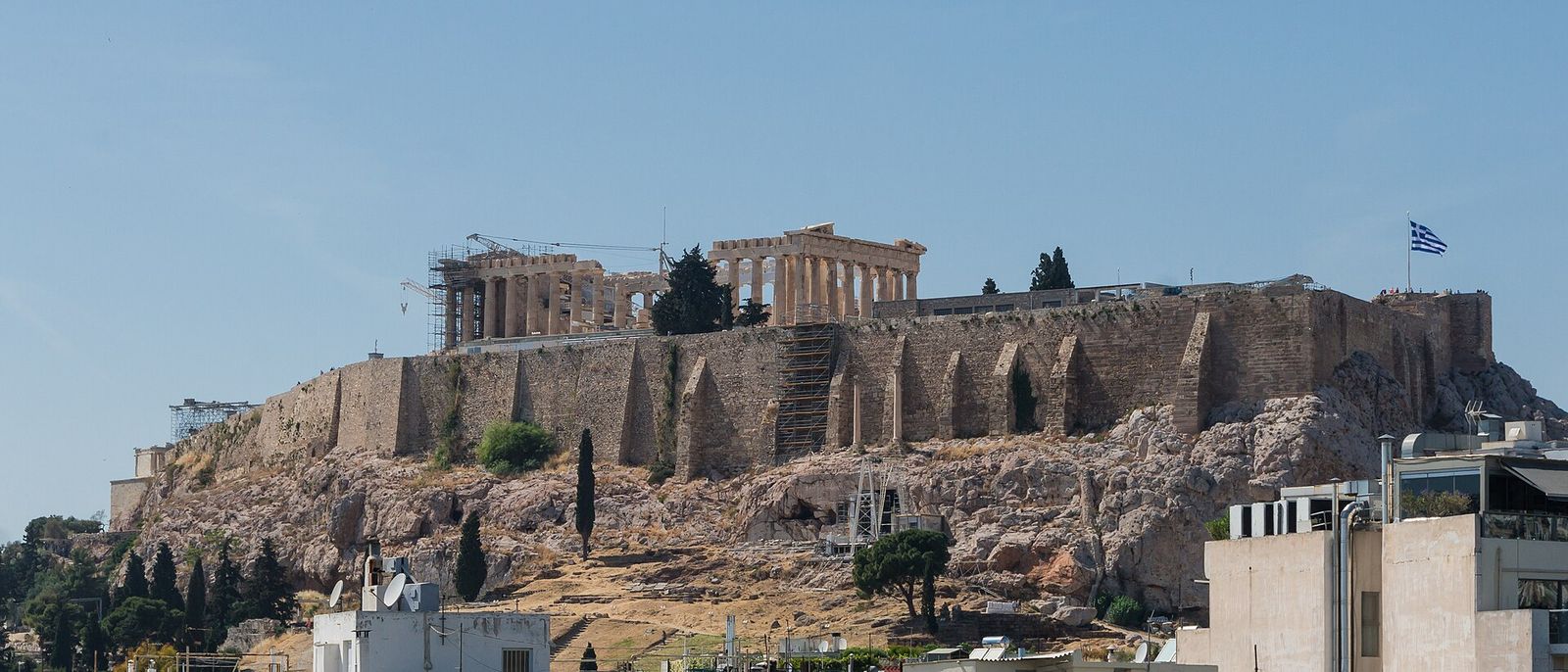
Acropolis & Slopes Archaeological site — timed entry
Strengths
- One official ticket covers the hill and its slopes together — the Parthenon, the Propylaea and the slope monuments are one site, not separate admissions
- Sold by the state's own store (Hellenic Heritage, Ministry of Culture / ODAP), so the ticket you buy is the ticket the gate runs on
- Timed entry spreads the crowd across the day instead of concentrating it at one opening surge
Watch out
- Entry is by booked time slot: the slot is the commitment, and the terms that govern changing it live in the store's checkout — read them before you pay
- There is no separate Parthenon ticket and no official product that bypasses the gate process — treat any "skip the gate entirely" wording from a reseller as marketing, not as a different kind of entry
- Opening hours are seasonal with stepped autumn reductions — a slot that exists in July may not exist in late October
Best for: the first morning of the Athens stay, booked on the official store before you travel — this is the one appointment the rest of the Athens days should bend around.
See Hellenic Heritage tickets →Official site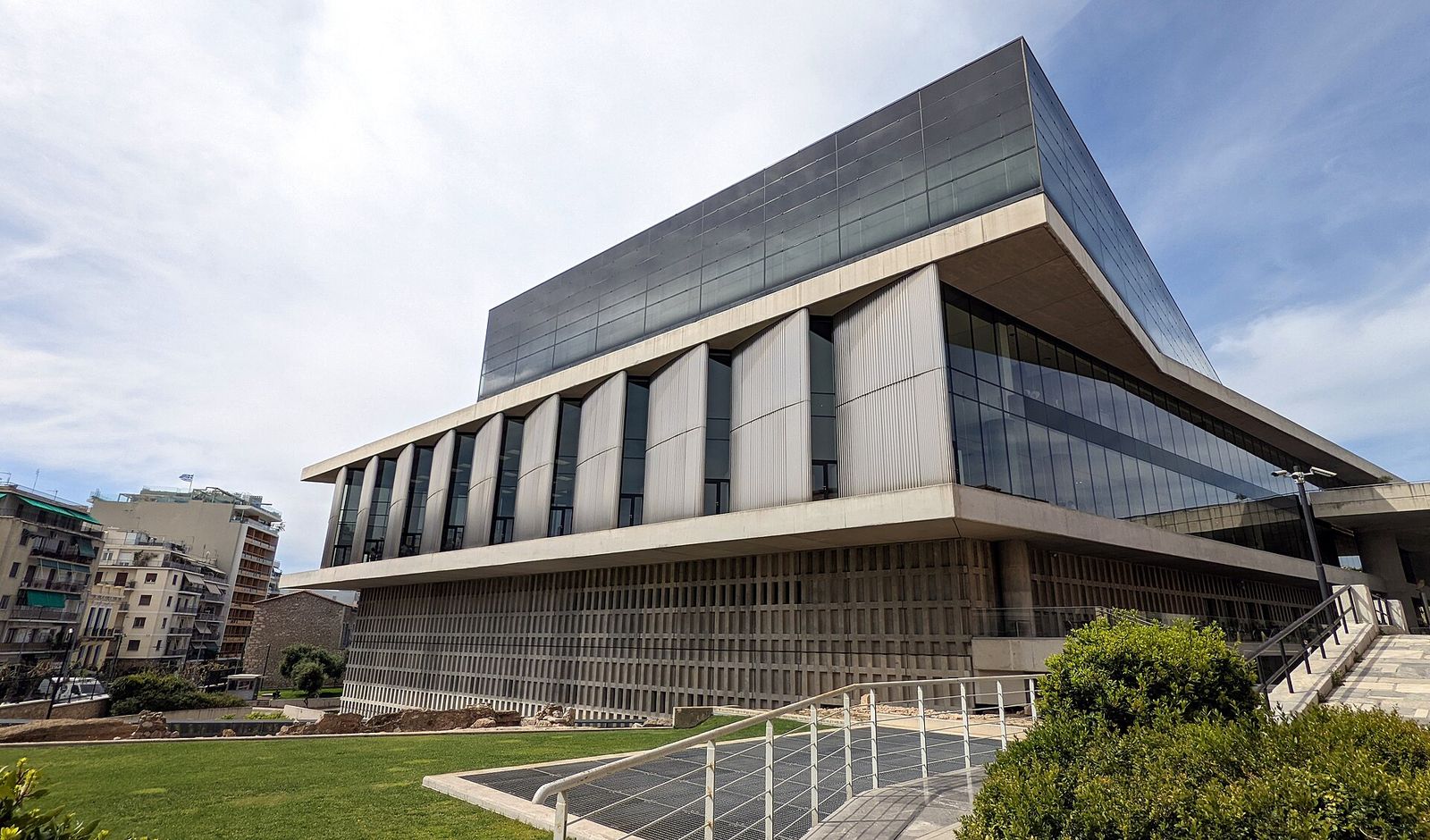
Acropolis Museum Museum — separate institution, separate ticket
Strengths
- The indoor half of the Acropolis visit: the original sculpture, at the foot of the hill, in a building designed around the Parthenon Gallery's sightline to the rock
- Its own e-ticket store sells individual tickets for a chosen date and entry time — bookable on the museum's own terms
- The natural heat-of-the-day and wet-weather counterpart to the exposed hill above it
Watch out
- It is not included in the Acropolis site ticket, and the site ticket is not included in it — two purchases, on two stores, every time
- Reduced and free categories follow the museum's own rules and proof requirements; some categories are a ticket-desk matter, not an online one — check its Plan Your Visit page first
- Groups (the museum defines them from 16 people) must reserve in advance, and unreserved groups can be turned away on busy days
Best for: the same day as the hill, sequenced after it — rock first in the cooler hours, museum when the heat builds.
See the Acropolis Museum →Official siteThe other Athens sites Ancient Agora & neighbours — per-site tickets
Strengths
- The Ancient Agora, Roman Agora, Hadrian's Library, Olympieion, Kerameikos and Lykeion complete the ancient city — most visitors who only climb the hill miss the city it ruled
- All are state sites sold through the same official store, so the buying process you learn for the Acropolis repeats
- They are quieter than the hill and absorb a second Athens day without repeating the first
Watch out
- As checked in November 2026, each carries its own ticket in the official store — a reseller bundle is a reseller's product, not the state's
- Hours differ by site and by season, and individual areas can close for works — the Ministry's site pages are the per-site word
- Free-admission days for state sites exist on the Ministry's published list, but they draw the crowds the timed system otherwise spreads out
Best for: day two in Athens — the Agora in the morning, when the hill crowd is at its thickest above you.
See the Ministry's site pages →Official siteNational Archaeological Museum State museum
Strengths
- The national collection: the objects from Mycenae, the bronzes and the Antikythera mechanism live here, not on the sites they came from
- A state museum under the Ministry's rules — its official visit page publishes the free-admission dates and reduced-ticket categories that apply across state sites and museums
- Fully indoors: the dependable anchor for a winter day or a heat-wave afternoon
Watch out
- It is a separate visit in a different part of the centre — do not wedge it into an Acropolis morning and short-change both
- Galleries begin clearing before closing time, and individual galleries can close for essential work without notice, per the museum itself
- Its free days follow the state list — which is not the Acropolis Museum's list; check the right calendar for the right building
Best for: anyone whose Athens list is about the objects, not only the monuments — and any day the weather closes in.
See the National Archaeological Museum →Official siteThe ticket judgement — three rules that replace the old advice
Most Athens advice online was written for a ticket system that has since been reorganised. Judged against the official stores as they stand in November 2026, three rules replace it.
Guided visits are the legitimate reason to buy beyond the official stores: a guide's time and knowledge are a real product. Entry alone is not — for entry alone, the official stores above are the baseline every reseller price should be compared against.
On the water — the ferries are transport infrastructure, not tours
Greek ferries are how the country moves, run by competing operators under their own booking systems, from ports administered by port authorities. There is no single national ferry ticket and no single booking site that the state runs for all of them. What exists is a structure: three Attica ports, a set of operators, conventional ships and high-speed craft, and timetables that expand in summer and contract in winter. Learn the structure and any specific route becomes a simple lookup; skip it and the route lookup will mislead you.
| Departure logic | What it serves | How booking works | Watch out |
|---|---|---|---|
| Piraeus — the main port | The widest network: Saronic, Cyclades, Crete, Dodecanese and North Aegean sailings all use it | Book the specific sailing with the operator; your gate is on your ticket, and the port information line (14541) confirms departures and gates | Gates are spread across a large port — arrive for your gate, not just for your port |
| Rafina & Lavrio | Alternative Attica ports used by some Cyclades-oriented sailings | The operator's booking result names the port — the same island can be served from different ports on different sailings | A booking from the "wrong" port is not an error to fix at Piraeus: the ports are in different places |
| Conventional ships | The large vehicle-and-passenger ferries, including the long and overnight-scale routes | Booked per sailing with seat and, on long routes, cabin categories chosen at booking | On overnight-scale routes the ship is also your hotel night — judge the cabin choice as accommodation, not as an upgrade extra |
| High-speed craft | Faster, smaller, passenger-focused sailings, concentrated in the busier season | Booked per sailing; schedules are the most seasonal part of the network | Smaller craft are the most weather-sensitive part of the system — the day's operating picture matters more, not less |
| Inter-island legs | Sailings between islands, not only to and from the mainland | Frequency follows the season and the route's own pattern; not every pair of islands has a direct sailing on every date | Island-hopping plans fail on assumed daily connections — verify each leg for its own date |
The operators — book direct, per sailing
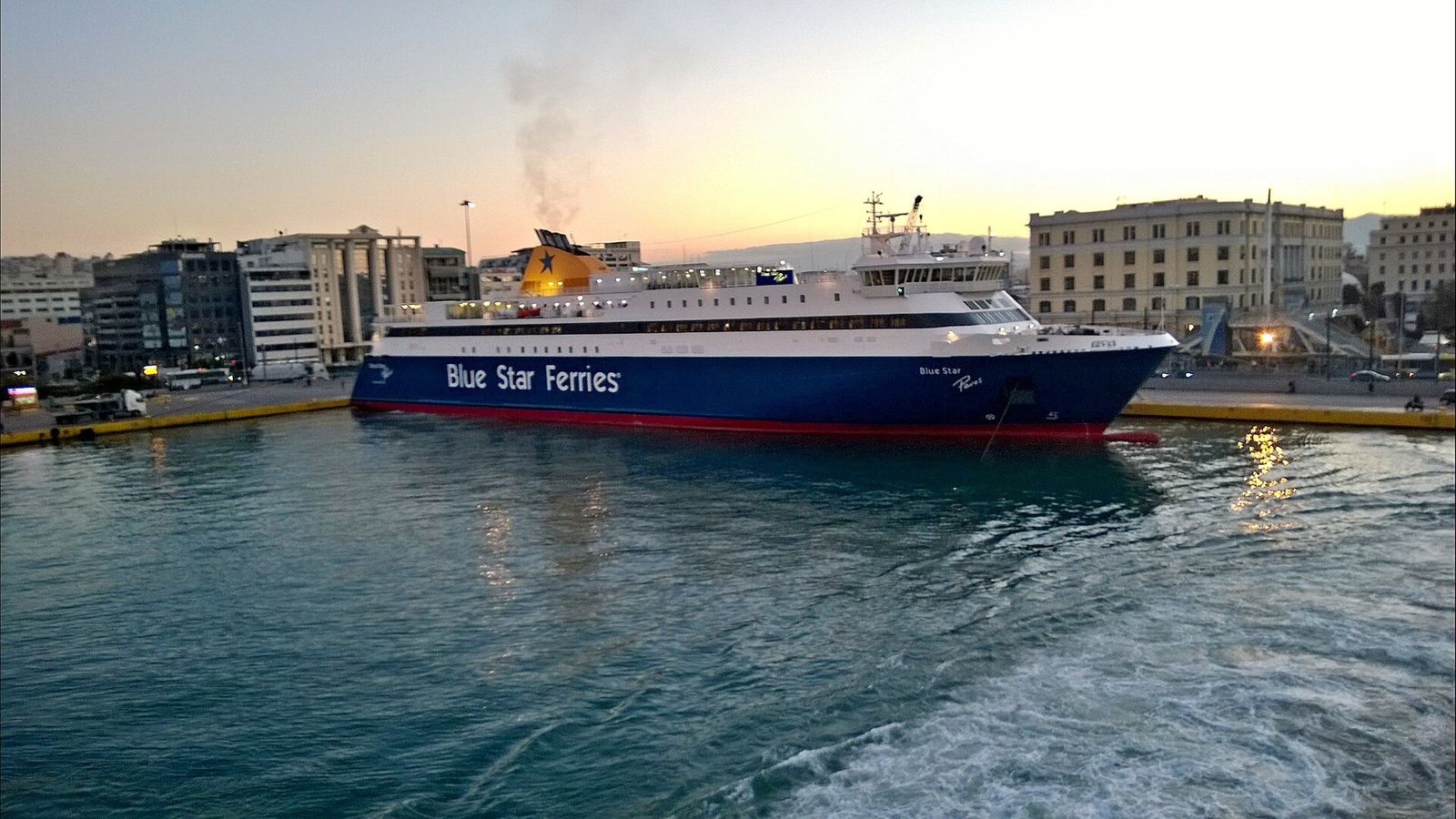
Blue Star Ferries Ferry operator — Attica Group
Strengths
- Its official terms organise the network by route families — Cyclades, Dodecanese and North Aegean; Piraeus to Crete (Heraklion and Chania); and the Saronic islands — which is the clearest official map of how the conventional network is structured
- Large conventional ships on the long routes, where the crossing is a substantial part of the travel day
Watch out
- Cancellation terms differ by route family and by high- versus low-season periods in its own conditions — the terms for your route family are the ones that apply to you
- Sister brands inside the same group sell through related channels: check which operator's name is actually on your sailing
Best for: the classic conventional crossings — the Cyclades corridor and the long Crete and Dodecanese routes.
Hellenic Seaways Ferry operator — Attica Group
Strengths
- A major operator across both conventional and high-speed services, including Saronic and Cyclades patterns
- Direct official booking, so the sailing, ship type and terms you see are the operator's own
Watch out
- Group branding overlaps with Blue Star: the same journey can appear under related brands — book the sailing, not the logo
- Seasonal high-speed patterns change by date; the booking result for your date outranks any route list, including this page's
Best for: comparing against Blue Star on the routes both groups serve — same structure, sometimes different sailing patterns.
SeaJets Ferry operator — high-speed focus
Strengths
- The high-speed specialist: its network is built around fast craft linking the mainland ports and the Cyclades in season
- Direct official booking with the ship and sailing pattern shown per date
Watch out
- High-speed schedules are the most seasonal in the system — winter availability is a different question from summer availability
- Fast craft and rough weather are uneasy partners: on a windy day, check the operator's operating updates before travelling to the port
Best for: in-season Cyclades hops where a high-speed sailing exists on your date and the conventional pattern does not fit your day.
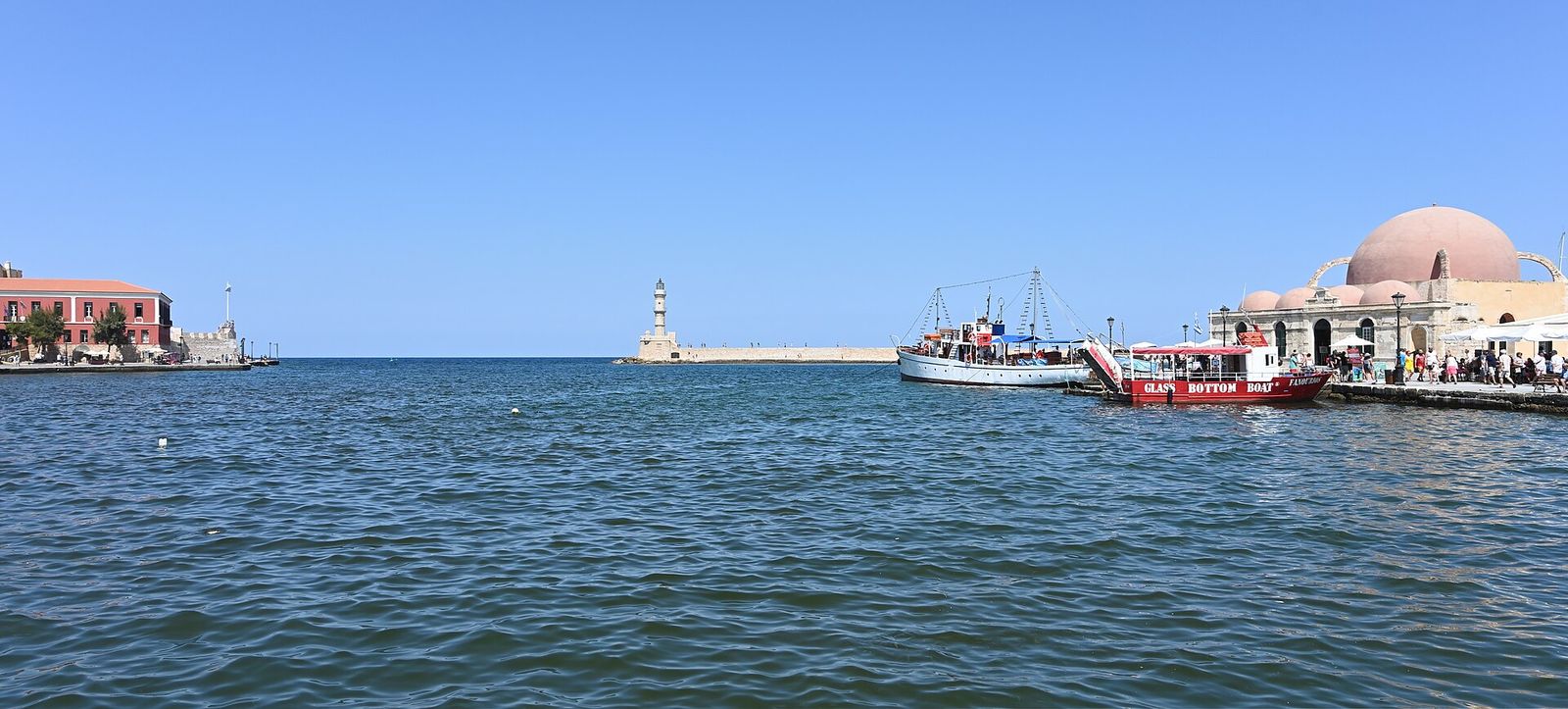
ANEK Lines & Minoan Lines Ferry operators — Crete & long routes
Strengths
- The names most associated with the Crete crossings and other long conventional routes, where the ship carries vehicles and the sailing is built around the overnight pattern
- Both sell direct through their own official booking channels
Watch out
- Crete is a destination in its own right, not a day trip: the crossing's scale shapes the whole itinerary around it
- Heraklion and Chania are different ports in different parts of the island — the port on the ticket decides where your Crete trip actually starts
Best for: Crete done properly — sail in, give the island its own block of days, sail or fly out.
There is currently no ferry booking affiliate connection on this hub: every ferry button above is the operator's official site, labelled as such. Aggregator platforms exist, but we have no verified affiliate relationship with one to disclose — so we link direct, and say so.
See Piraeus Port Authority →Official site Browse Greece tours →Affiliate link — you pay the same
Choosing islands — by season and sailing logic, not by poster
Safety & the practical layer — heat, wind and validated tickets
Getting around — Athens, the airport and the ports
Athens transport is one integrated system (OASA: metro, tram, buses and trolleybuses) with one important seam: the airport is a separate fare world. The official product families are a short-distance timed ticket, a 24-hour ticket, a multi-day ticket, and a tourist ticket whose structure includes an airport round trip — while standard urban tickets do not cover the airport metro section or the airport express buses. Choose the product by whether the airport is inside it, not by the number of days alone.
Which Greece trip is yours?
Decisions that actually matter
Is there a combined ticket for the Acropolis and the other Athens sites?
Not in the official store as checked in November 2026: the Athens sites are listed there with individual tickets. Older guides describe a combined package in detail, and resellers still sell bundles of their own — but a reseller bundle is not the state's combined ticket. Check the Hellenic Heritage store for your date before building a budget around any package.
Does my Acropolis ticket include the Acropolis Museum?
No. The site and the museum are separate institutions with separate stores and separate tickets. Book the site's timed slot first — it is the constrained appointment — then book the museum on its own site for the time that suits the same day.
Which port does my ferry leave from?
The one printed on your booking — and it is not always Piraeus. Attica has three ports in the official information system (Piraeus, Rafina and Lavrio), and the same island can be served from different ports on different sailings. Confirm the port, then the gate on your ticket, then the port authority's information line (14541) for the day's picture.
How far ahead should I book ferries?
By structure, not by a universal number of weeks: in the full summer season, popular sailings and cabin categories on long routes are the constrained inventory, so book once dates are fixed. In winter the question reverses — first confirm the sailing exists on your date at all, because the contracted timetable, not demand, is the limit.
Can I rely on a ferry to get me back for a flight the same day?
That is the riskiest joint in any Greek itinerary. Sailings are weather-exposed, and a disrupted morning ferry leaves no recovery time before an afternoon flight. The resilient pattern is to sleep on the mainland the night before an international flight — treat any tighter connection as a gamble you are choosing, not a plan we can endorse.
Are the free-admission days worth planning around?
Only with open eyes. State sites and museums publish free dates, and the Acropolis Museum publishes its own — on those days the ticket cost disappears and the crowd concentrates. If your dates happen to include one and crowds do not trouble you, use it. Travelling to Athens specifically for a free day usually trades more in time than it saves in money.
Prices and terms change often — the booking site is the final word. Ferry schedules, gate assignments, site hours and free-admission dates all change by season and by year; check the operator's and the Ministry's own pages for your date. Facts on this page checked against providers' official pages, November 2026. This is a public guide page: nothing on it is locked behind a subscription.


